About a week ago someone on Twitter posted an old photo of Ivana Trump, ex-daughter-in-law of successful real-estate developer Fred Trump. She was wearing a black dress with what appeared to be a golden belt with an actual diamond attached to it. Surrounded by golden plates and crystal candlesticks, she loomed over a huge golden basket of meat. A gilt framed painting hung in the background above a clock that looked like it belonged on a royal mantlepiece in tsarist Russia. She was grinning richly, fork in hand, looking directly into the camera as if saying “Welcome to Mar-a-Lago, make yourself at home on our million dollar sofas and be sure to get your earplugs in before my husband joins us.”
To those of you who are already dismissing the vitriol and snark in this post as evidence of “jealousy” I say: Well, obviously! I am sojealous I could lie down in the grass and blend in without issue. Some of you may be better liars people than me and would turn the other cheek but I cannot. Vitriol and snark are all I’ve got to navigate my jealousy at not having lace napkins and silver side plates like Ivana’s.
Ivana, 43, enjoys long walks, dining at home, and fannying around in St Tropez. She has never held a serving spoon before.
Actually, I’m being insincere. By 1992, Ivana was divorced due to “cruel and inhuman treatment by Mr. Trump” so the photo wasn’t actually taken in Mar-a-Lago, but rather in the dining room of her own Connecticut mansion. By that time, Ivana was developing her own business ventures mainly based around fashion. Efforts to build successful property developments largely failed, but it didn’t stop her from embarking on other ideas – she had stints on TV and, speaking on The First Wives Club, coined the striking phrase: “Don’t get mad – get everything.” She may have been speaking from experience; reports of the divorce settlement are vague – she had to sign a non-disclosure agreement as part of the agreement – but it seems that Ivana received an amount somewhere around the $25million mark when she and Donald split up.
The picture that had piqued my curiosity was from a one-off cookbook by Robin Leach called The Lifestyles of the Rich and Famous Cookbook, which documented what the great, good and just plain wealthy of the 90’s fed to their dinner guests. As well as individual interviews, exclusive menus were published too, such as from the Cannes film festival (Foie Gras, Fish, Beef, Celeriac and Artichoke, Chocolate Cake), and a New Orleans gala menu welcoming their Royal Bigots Prince and Princess Michael of Kent to Mardi Gras celebrations (Quail, Pasta, “Chocolate Breathless”, Pralines, Sugar Paste Harlequin Masks.)
Lifestyles of the Rich and Famous
Somewhat aptly, by the time the book was published, Robin Leach was himself something of a celebrity, having hosted the TV show Lifestyles of the Rich and Famous since 1984. At times, the cookbook runs the risk of reading as a list of slightly luvvie anecdotes about the time its author met so-and-so actor, or dined with royalty. But I can’t be too harsh here; I’d absolutely do the same and, given how well connected Leach was, it’s actually quite restrained.
In creating ‘The Lifestyles of the Rich and Famous Cookbook’ we discovered that the rich and famous are no different from the rest of us when it comes to cooking and entertaining… As the social “season” approaches, hard working hostesses are never found on a tennis court or yacht’s bow.
Lifestyles of the Rich and Famous Cookbook, Robin Leach.
Was it being ironic? I couldn’t work out if it was me or the celebs who were being mocked here; certainly I’ve never set foot on a yacht’s bow but it’s not because I’m too busy… (I did once find myself on a tennis court but it was purely accidental and I left as soon as I realised I was expected to actually run after the ball.)
I’m just going to copy the original caption and you can imagine my thoughts for yourselves: “Rare antique Capo di Monte dishes and Venetian glassware grace the table at Mar-a-Lago in Palm Beach.”
Anyway, back to “Ivana’s” goulash.
Ivana began her chapter by describing how her chef created wonderful meals for special occasions, specifically winter get-togethers for her girlfriends. Sixty of them. They flew in from “London, Chicago, Paris” for a “special menu that was very low in calories but also festive – the perfect combination for a ladies’ luncheon…” A low calorie meal to celebrate Christmas with sixty of my nearest and dearest: exactly what I’d want after a 12 hour plane journey…
In another depressingly telling comment about the pressures to be a rich and famous woman, Czech-born Ivana mentioned that she found Czech food “fattening” and “terrible for the waistline”, despite clearly wishing she could eat more of it; she lists her favourite foods with increasing gusto, describing the dishes as “fantastic” and saying she was “in love with the cuisine.”
It all sounded delicious and, as a non-celeb who’s only ever been papped when driving too fast, I was looking forward to seeing how her fattening, indulgent goulash would turn out. Though the book called it “her” goulash, in reality it was actually Ivana’s unnamed chef’s goulash – she just got to have her photo taken with it.
Traditional goulash recipes are more of broths, rather than stews like Ivana’s version below. They can range from the incredibly simple to the more complex, and the rich flavours are generally achieved by cooking the ingredients on low, slow heat to release the full range of flavours over a long period of time. Many of them contain chunks of starchy veg as well, to add texture and bulk.
Beef Goulash for two, not sixty.
Since I wasn’t cooking for sixty of my closest girlfriends but only my family, I halved the recipe. After doing an obligatory admire of photos of Ivana posing by enormous mirrors, silk and damask curtains, and gold leaf covered servants, I began.
The first thing to do was melt a tablespoon of butter with a tablespoon of olive oil in a casserole dish. Once this was done, I added diced beef shin, dusted in flour and paprika, to the fat and sautéed.
The next step was to add one medium diced onion and a clove of crushed garlic and cook until they became translucent. Ivana’s recipe said this would take two minutes. Two minutes. I didn’t know it at the time, but this was the first in a series of misleading statements made throughout the recipe. Clearly, Trumpian vagueries began well before 2016.
After the onions had gone see-through – about 15 minutes – I added a cup of water, followed by a sprinkle of marjoram, salt and pepper, and then placed it in the oven to cook for about an hour. I found this surprising; other recipes for beef goulash seemed to require upwards of two and a half hours to cook. Some Hungarian recipes also included ingredients like wine or rich beef stock, whereas Ivana’s was staunch in its dedication to water and…nothing. True, original goulashes used only water, but for a recipe described as “fattening” in a cookbook called Lifestyles of the Rich and Famous, I began to wonder whether Ivana’s definition of what was and wasn’t “fattening” was the same as mine.
After an hour’s cooking I added a skinned, chopped tomato and half a diced green pepper. Then, with the goulash coming to an end of its cooking time (I added an extra half an hour in the end) I boiled some egg noodles and drizzled them with a tablespoon of melted butter before serving on the fanciest plate I could find, à la Trump.
God I hope that stuff on the sides comes off in the dishwasher…
My husband was so excited when he saw me setting the table. Champagne? At lunchtime? Who did I think I was – Melania Trump?
The goulash looked and smelled good, but when I tasted it, I was a bit underwhelmed. There was nothing unpleasant about it at all, but it wasn’t as indulgent as I’d been expecting, given who its author was.
The beef was slightly chewy. Not inedible, not unpleasant, but hardly the melt in your mouth texture I’d expect – and it certainly didn’t scream “luxury” at me. There was a pleasant sweet heat from the paprika, but it was a background flavour; Ivana had specified no more than 3 teaspoons of the stuff.
The noodles were buttery but that was about all you could say for them. They swam, slightly, in the goulash liquid which was a fairly insipid mixture of water and fat. The diced pepper was still a little crunchy and together with the tomato lent a negligibly bland veggie element.
All in all, it was fine – and if a professional chef had prepared this it would probably have been great. The trouble was that the book wasn’t about professional chefs; it was about ordinary people copying professional chefs, with instructions that maybe weren’t as accurate as they could have been – with disappointing results.
No, we didn’t open the champagne for this in the end.
As mentioned, some more traditional goulashes use only water and their main flavour comes from the abundance of paprika, slowly released beef fat and gently sweated onion. Ivana’s recipe wasn’t totally inauthentic to only use water – but it fell down because it tried to do everything too quickly – translucent onions in 2 minutes, tender beef shin in 1 hour?! I wondered why she considered this relatively plain version such a “fantastic” treat when there were far better ones out there.
Perhaps it was because for Ivana, this was fantastic? How many times did she mention her weight or calories in the first few paragraphs of her introduction? I counted no fewer than three separate references. She must have been hungry most of the time. Buttered noodles and beef must have seemed desperately indulgent to someone who was constantly watching what they ate. And if a chef always prepared it for her (as she admits), she may not have realised how much time and effort it genuinely took to make a good goulash before she sold her version to Robin Leach.
Perhaps, in the end, I just made it incorrectly, or maybe her instruction to “season the stew with salt” was actually rich-person code for “add a whopping great quantity of cream and sauvignon”.
Whatever her reason for classing this as a fattening “favourite” – it was a perfectly adequate Monday lunch. Sure, we were both a bit “meh” by the end of it, but it did the trick and we couldn’t complain about not being full. In fact, I was even left with enough stamina to begin planning my next experiment – a banquet to feed 100 people on no more than 10 calories per person.
E x
Beef Goulash
450g diced beef shin 1 tablespoon plain flour 1-3 teaspoons of paprika (sweet Hungarian if you can get it) 2 tablespoons of butter 1 tablespoon of vegetable oil 1 medium onion 1 small garlic clove Pinch of marjoram Salt 1/2 green pepper, diced 1 diced tomato, peeled and de-seeded 400g egg noodles
Preheat the oven to 190 degrees C.
Dust the beef with the flour and paprika.
In a pan, melt half of the butter with the oil in an oven proof casserole dish.
Add the beef and sauteé until browned.
Reduce the heat and add the diced onion and garlic and cook until translucent.
Add enough water to cover the beef and add a pinch of marjoram and salt.
Cook for 1 hour, replacing water if needed.
After an hour, add the tomato and pepper and cook for a further 30 minutes.
Cook the egg noodles in salted water according to the instructions on the packet.
Drain the noodles and melt the remaining butter over them.
Oh my God, it’s hot. It’s so hot that when my daughter went to the kitchen to look for an ice-cream she found that the heat had somehow penetrated through the freezer door and vaporised an entire box of her Fabs – wrappers and everything. Truly nature is a wonderous thing.
In weather like this, what else is there to do but have a barbeque?
My husband was delighted when I suggested BBQ for lunch but his joy quickly turned to apprehension as I announced gleefully “not just any barbeque! A history barbeque!”
All I had to do was find some inspiration.
Today’s experiment is from Athenaeus’ The Deipnosophists, specifically book seven: “The Phagesia”. Deipnosophists was an early 3rd century Greek work which somehow managed to fuse the two genres of philosophy and cookery together in a fairly entertaining way, despite being fifteen books long. Maybe it was just the translation I used, but I was able to read quite a few chapters without wanting to pull my brain out through my eye sockets in boredom and confusion, as can sometimes happen with ancient philosophical texts (looking at you, Plato’s The Republic.)
A 17th century version of Deipnosophists depicting the fusion of philosophy and food: the birth of “Plat-ato”…
Put simply, Deipnosophists is a fictional account of the Greek rhetorician Athenaeus’ time at various banquets where he spoke with educated and philosophically minded guests. In it, he recalls the conversation between the guests on all manner of things, but one thing in particular stood out for me: the food.
Book seven is long and entirely dedicated to discussion of fish. Every kind of fish is discussed with various epithets attributed to them: “gold brow’d fish”, “sacred fish”, high-backed fish”, even “girl-like fish” (I don’t know why either.) In fact, fish are so exulted in this book that early on Athenaeus reminds us of the words of the 4th century BC Athenian poet Amphis: “Whoever buys some relish for his supper and, when he might get real genuine fish, contents himself with radishes, is mad.”
Equally important to bear in mind is the information that if you found yourself on Rhodes and came across the chance to eat a “fox-shark” you should resort to any means possible – even stealing – in order to taste it; according to one guest, the experience of tasting fat fox-shark can compose even those about to be executed and allow them to “meet [their] fate with brow serene and mind well satisfied.”
Despite all this talk of fish, there wasn’t a huge amount in the way of practical instructions from preparing it. The guests in Deipnosophists seem more interested in showing us how well travelled, how knowledgeable, how learned they are. Guidelines for preparing food are vague at best and often left open for interpretation. What I’ve done for today’s experiment, then, is to pick a selection of foods mentioned in book seven and form a sort of guesswork meal based on ingredients and cooking methods.
The experiment
One such “recipe” that stood out for me early on was for “dainty” fish soaked in oil and covered in marjoram which was then wrapped in fig leaves and cooked under hot ash. Elsewhere, another recipe following similar guidelines used prawns. I rang my mum, who is the proud owner of a long-suffering fig tree. It has never borne any fruit and until earlier this year we really thought it might die. Only a few months ago, when she moved it to another part of the garden in an effort to save it did it seem to come back to life and grow large leaves. No fruit, still, but lots of leaves.
“You know that fig tree you only just saved?” I started by asking.
“Yes…”
“Can I come round and hack some branches off it?”
Once her screams had died down I was able to explain that actually I only needed 10 leaves. We bartered for a while and eventually I was granted two large leaves, three medium ones and one small one “just for any gaps.”
The next dish I wanted to try involved tuna. Athenaeus told of a very simple recipe, supposedly belonging to the 4th century BC poet Archestratus, for roasted tuna sprinkled with salt that I thought would cook well in the heat of the BBQ once the smoke had stopped. This could be served with a “brine sauce”, but also went very well on its own.
I returned from my jaunt to the shop (via mum’s garden) laden with prawns, tuna steak and a few green bits to make it into a full banquet.
I started by lighting the BBQ, which was very exciting for next door’s dog, who I think gets a sausage every time next door does one of their own. But at lunchtime on a Monday, when they were both trying to work, hearing the whines and door scratching of Lulu the Lab for a solid twenty minutes was probably a bit annoying. Oh well, I thought, that’ll teach them to let her dig a hole under our fence.
While the flames were flickering higher and higher and Lulu was getting more and more excited at the possibility of a tasty, juicy sausage I got to work on the first fish dish: prawns wrapped in fig leaves.
[Take] a noble and dainty fish…wrap in fig leaves and soak it through with oil and over all with swaddling clothes of marjoram…and hid[e] it like a torch beneath the ashes.
The Deipnosophistae
“Do these look noble and dainty to you?” I asked my husband, holding up a prawn against a fig leaf.
He smirked. “They’re not the biggest leaves in the world are they? No wonder Eve was disappointed in Eden…”
Absolutely useless, but he was so pleased with his joke I promised I’d put it in. Anyway, the smirk was wiped off his face when I showed him the larger leaves and pointed out that this one was in fact a small one.
No foil in ancient Greece, apparently.
With the prawns wrapped in fig leaves I turned my attention to the next dish – tuna. Now, I’m not going to lie and say this was the cheapest thing I’ve ever bought, because it wasn’t. I had no idea fish could be so expensive, but by the time the lady on the fish counter told me the price she’d already wrapped it out and printed that little sticky label so, as a true Brit, I was bound by the conventions of awkward politeness to accept the fishy parcel with a smile and a quick calculation that if we only ate beans on toast for the rest of the week it would even itself out.
That mighty fish [tuna], whose home is Byzantium. Cut it in slices, and then roast it all with accurate care, strewing on nought but salt most thinly spread; then sprinkle a little oil, then eat it hot, first dipping it in brine or if you like to eat them dry they’re good like the immortal gods in character…but if you once forget and vinegar add to them, then you spoil them.
The Deipnosophistae
Because of the price tag I was very, very unwilling to go too off piste with the recipe. Not that there was a lot to go off piste with, but the fear was there. I sprinkled salt onto the tuna steaks, made a mental note not to add any vinegar to them, and set them aside to focus on the accompaniments.
Obviously I had to make something with radishes, if only to check I hadn’t gone mad. Spring onions were described in ancient Greece as early as the 4th century BC and it was believed that they had certain medicinal properties such as “balancing the blood” which could help prevent things going wrong with the body – handy, then, for putting right any temporary radish-related madness. I sliced the radishes finely using a side of the cheese grater I’d never really understood before now (you know the bit I’m talking about, don’t pretend), and put them in a bowl with the chopped spring onions. To this I added two tablespoons of olive oil, a tablespoon of red wine vinegar and a dash of garum (nam pla).
Asparagus was also mentioned in Deipnosophistae along with its various medicinal properties. There were no cooking instructions but I knew it was renowned for being quick to cook thanks to the Augustan expression “as quick as cooking asparagus” to describe something as being fast. With this in mind I imagined that the ancient Greeks, especially Archestratus (of tuna recipe fame) who was renowned for promoting simplicity in food, would have cooked asparagus using the easiest method to hand. For this meal that meant dowsing them in olive oil and salt and placing them on a grate over the ashes of the BBQ to roast.
After fifteen minutes or so of the prawns cooking under the ash and the tuna and asparagus roasting on the grate above them I felt it was time to taste. Tentatively, I removed the coals and and pulled each fig parcel out of the pit. The tuna was placed on a plate with the asparagus and the radish mixture was brought to the table.
So satisfying to unwrap.
Firstly, let me say that unwrapping food from hot leaves, covered in ash and smelling vaguely of fruit and smoke was such a treat. I felt like a child opening a present it was that exciting. The prawns were a rich pink colour and surprisingly juicy considering they’d been right among the coals. There were little pools of moisture in the fig leaves from the meat juices which meant the prawns must have steamed and roasted at the same time. In terms of taste: delicious. The fig leaves did make a difference, albeit a subtle one. It was an unidentifiable sweetness, reminiscent of the sultana filling in peshwari naan, but much less noticeable.
The tuna was cooked to perfection, which I was doubly relieved about as it meant our money hadn’t been wasted and also that I’d managed to keep to Archestratus’ exceptionally vague instructions to “judg[e] by instinct of the time it takes to be completely done without being burnt.” Helpful, right? It was tender, juicy and so flavoursome that I double checked the recipe – surely these elegant and sophisticated tastes were modern creations, not ones that were thousands of years old?
I think this might be the best photo I’ve ever taken.
The asparagus was slightly crunchy – we ate the tips and left the very bottom of the stalks – but rich and oily and salty all the same. My husband squeezed some lemon over his asparagus but I abstained since there’s some debate as to whether lemons were used in ancient Greek cooking – the lemon was used in Roman cooking from the 1st century AD, but whether it made it into Greek recipes soon after is unclear.
I had to admit that by this point I was sure radish-hating Amphis had been right; who would ever choose a bowl of raw veg over meals such as this? And then I tried the radish and spring onion mixture. It was the perfect relish for the tuna – tangy and crunchy. I know that Archestratus had been very clear that adding vinegar to the tuna would ruin it, but maybe he hadn’t tasted good vinegar. Or maybe he had and it was my taste buds that were unsophisticated and uncultured (after all, Deipnosophistae was also known as the “The Learned Banqueters”, and I wasn’t sure I fit that description.) Whatever the case, the radish was so delicious that even after the fish had all been finished I was still eating it out of the bowl.
Okay, the skewers weren’t authentic, but I had a pepper and some spare prawns to use up.
Overall, this looked and tasted incredibly modern. Possibly that’s because I was allowed a little more creative freedom to interpret the recipes in this one, so I chose techniques and flavours that I’d be used to, but I’m not so sure. Rather, I think that ancient Greeks just knew really, really good food when they saw it. I will absolutely be making this again – just as soon as we’ve saved up enough for two more tuna steaks.
E x
Prawns in fig leaves
Two fig leaves per person Three to four raw, shell off king prawns per fig leaf Olive oil Marjoram
Tuna steak with salt
Tuna steak (1 per person) Salt Olive oil
Accompaniments
200g Asparagus spears 150g radishes 4 spring onions Olive oil Red wine vinegar Nam Pla Salt
Light a barbeque to give the flames a chance to die down.
Rub each prawn with olive oil and cover with marjoram
Wash the fig leaves and then place three or four prawns on the leaf. Fold the edged of the leaf over the prawns until you have a small parcel. Flip over so the the weight of the prawns keeps the fig leaf from opening up.
Rub the tuna steaks with olive oil and sprinkle with sea salt.
Grate the radish into slivers and chop the spring onions. Place both into a bowl.
To the bowl add the oil, vinegar and nam pla. Stir well.
Rub the asparagus with olive oil and salt. Place the asparagus on the BBQ.
When the flames have stopped, carefully remove the grate with the asparagus on and move aside the charcoal and place the fig leave parcels on the bottom. Pile the ash and charcoal over the leaves.
Replace the grate and turn over the asparagus to ensure all sides are cooked.
Place the tuna steaks onto the grate with the asparagus. They will only need a few minutes on each side depending on how hot the BBQ is so keep an eye on them for when they start to flake.
After ten to fifteen minutes of cooking (again, depending on the heat of your BBQ), the fish should be cooked. Remove the tuna, fig parcels and asparagus from the BBQ.
Give the radish mixture one last stir and serve it all up.
Ever wondered what it would be like to have dinner and dessert at the same time? Don’t lie, of course you have – what child hasn’t?
What about instead of just serving the two courses at the same time, you served both of them in the same bowl?
What if the bowl was actually a four turreted, freestanding pastry castle?
What if the castle was on fire?
I imagine these are just some of the questions that went through the head of Richard II’s master chef when he designed Chastletes and committed this frankly bizarre but brilliant dish to the pages of Forme of Cury. Settle in because this post is a long one…
According the the British Library, Chastletes translates as “little castles”. Essentially, it was a recipe for an open-top pork filled pie, with battlements cut along the edge, and four open-top pies surrounding it, each filled with a different filling: almond cream, ginger marzipan, fruit puree and egg custard. What was slightly confusing was the term “little”; Forme of Cury seemed to suggest that the pastry be rolled out to a foot in length and width before being shaped into castles, which didn’t scream “little” to me.
By the way, if you use incorrect terminology when discussing castles you’ll give a lot of nerds terrible migraines.
And as I’m vying to become Queen of the Nerds I can’t have that, so here’s a crash course.
Put incredibly simply: the earliest form of castle in Britain was the motte and bailey, for which we have the Norman invasion of 1066 to thank. You may remember this type of castle from school when your mum built a model of one for your homework and it sat at the back of the classroom for two terms before mysteriously vanishing, never to be seen again.
These castles were simple, quick to build wooden towers (the keep) which were constructed on the top of man-made hills (the motte). Mottes provided an excellent vantage point to spot approaching enemies and gave an elevated position for the keep to sit on; an enduring symbol of Norman oppression over the Anglo-Saxon population. A wooden fence (the palisade) ran around the bottom of the motte, forming a courtyard (the bailey), which was often big enough to house several small buildings in which soldiers, provisions, animals – anything, really – could be kept.
This famous section of the Bayeux Tapestry, showing a motte and bailey castle being built, documents the gentrification of Hastings. The next scene shows the construction of a Starbucks.
After a few years, castle builders realised that though wooden keeps were relatively cheap and quick to build, they had several major flaws: they rotted over time, they were susceptible to arson (or just wayward candles), and they couldn’t be build too large. From the 12th century aristocrats began to update their wooden castles and replaced them with stone ones (known as stone keep castles). These were an improvement in defense, thanks to the incredibly thick, inflammable walls.
By the start of the 13th century, those with stone keep castles realised that, yes, things were generally less aflame since they’d upgraded, but there was still work to be done. The motte, for example, provided invading forces with ample opportunity to tunnel under and up, thus undermining the keep’s foundations. The palisade, even if upgraded to stone, was often a weak, easily breached structure. A new defensive strategy slowly took over, moving the focus from the keep to gatehouses and fortified walls, sometimes more than one.
From the 14th and 15th centuries onwards, as the threat of invasion diminished, new castles became less about fortification and more about comfort for the families who owned them. Palace-fortresses, as they became known, were the epitome of luxury for anyone who could afford the astronomical renovation bills. Whatever you kitchen extension cost – triple it, easily. New quadrangular castles had no keeps – the buildings and rooms were built into towers at the four corners that connected the curtain walls and enclosed a central courtyard. These castles were predominantly for show – their owners rarely anticipated invasion or siege, and as such made use of features such as large windows to bring in more light.
According to Professor Chris Woolgar, given its castle shape and brightly coloured fillings, Chastletes fits in with a type of dish called an entrement: a dish that arrived at a banquet table in between courses and was designed to entertain and delight guests. The entrement was a status dish; usually highly decorated and coloured, it could only be eaten by certain social classes and was intended to highlight wealth and show off the skill of the cook. By the end of the 13th century some entrements had become set pieces that conveyed certain messages. One apparently popular entrement depicted a knight (a grilled capon) with a paper helmet and lance sitting astride a roast piglet. I don’t know exactly what message that one was meant to convey, but I bet it was both hilarious and thought-provoking if you were a medieval lord.
Anyway – the design of Chastletes seemed to be a mash up of a quadrangular castle – thanks to the four towers at the corners – with an additional stone keep. This also fits in with the time frame; Forme of Cury was compiled around 1390 – right on the cusp of the 15th century when quadrangular castles were at their most popular. The recipe is very vague and open to interpretation, though, so it’s possible that multiple versions existed.
Take and make a foyle of gode past with a rollere of a foot brode, & lynge by cumpas, make IIII coffyns of þe self past uppon þe rollere þe gretnesse of þe smale of þyn arme, of VI ynche depnesse, make þe grettust in þe myddell, fasten þe foile in þe mouth upwarde, & fasten þee oþere foure in euoury syde, kerue out keyntlyche kyrnels aboue in þe maner of batelyng, and drye hem harde in an ovene, oþer in þe sunne.
Take and make a sheet of good pastry, using a rolling pin, one foot wide and long by computation, make four coffins of the same pastry upon the rolling pin, the size of your wrist and six inches deep. Put the greatest in the middle, fasten the sheet in the mouth upwards, and fasten the other four on each side. Carefully carve out the battlements above in the manner of parapets and dry them hard in an oven or in the sun.
Forme of Cury. Translation by Christopher Monk.
I couldn’t find much evidence online for what my version of Chastletes should look like for sure. The kitchen gurus at Hampton Court Palace recreated a version of the recipe for Chastletes in 2016, but they opted for circular towers throughout in a nod to the Henrician Device Forts – 16th century stone circular castles built during the reign of Henry VIII.
By the 14th century, entrements were known as subtleties (this term would later refer exclusively to sugar paste models). Though the medieval term subtlety meant clever or surprising rather than understated, I still couldn’t help but snort when I read this; there was nothing subtle about Chastletes.
An example of a Renaissance era sugar banquet with sugar subtleties on a table.
To start with, it was over a foot long and tall. In a slightly foreboding jolt of realisation, I realised I’d made a subtlety in the shape of a building before – when I attempted a marzipan model of old St Paul’s. It hadn’t quite gone to plan and rather than a towering sugar cathedral I’d ended up with a model of what St Paul’s might have looked like if bulldozers had existed in the 17th century.
In order to avoid a repeat of the marzipan fiasco, and as it would be just me and my family sampling this dish, and not the worthy guests at a king’s banquet, I scaled it down a little and started by making the main keep. As usual, there were no instructions in the recipe for pastry making, other than it should be “good”. The use of pastry in medieval England is quite complex. Traditionally, it’s believed that the pastry crusts on medieval pies were nothing more than flour and water and weren’t intended to be eaten, instead just acting as vessels for meat and gravy, but recently that theory has been challenged as some recipes for pastry used ingredients designed to enrich the dough, like eggs, which implies the mixture should be edible. Medieval pastries didn’t use fat, such as butter or lard, however, so getting a lovely flaky melt-in-your-mouth pie crust was unlikely for this experiment.
For this “good” pastry I chose to use flour and egg yolk, which yielded a strong dough that was robust enough to hold its shape well and baked into a hard structure – ideal for holding the fillings – as well as being something that could be eaten without too much complaint.
I used a mould to create the main keep. When I say “mould”, I don’t mean I had a handy castle-shaped frame to push the dough into (although I’ve literally just caught sight of my daughter’s bucket and spade in the garden…), I mean I draped the dough over a small upturned lasagne dish. It probably wasn’t 100% authentic, but it was the only way I could ensure straight, even edges. Once shaped and any excess dough trimmed, I cut out squares from the top edge for the battlements. I moved the keep to a sunny area of the garden to dry out a bit before baking, and got on with the turrets.
Who’s to say Richard II’s cooks didn’t use upturned buckets and bowls to help them create the right moulds?
In all honesty, these were the bits I was most daunted by. How was I going to ensure I created four equally sized turrets? How were they going to support themselves? How could I ensure they were watertight for when the various mixtures were poured into them? Designs like these turrets have contributed to a belief that medieval pastry, especially when it had to be freestanding, was incredibly thick, but some argue that the idea of medieval pastry being inches thick comes from 18th century pie making techniques and perceptions of the medieval world as being unrefined.
If the turrets, which were smaller than the main keep, were supposed to be filled with stuffings and custards then it seemed to me that cooks wouldn’t want what little space they had to fill them taken up with thick pastry. Given how robust the keep had turned out, I was confident I could create a reasonably thin – certainly thinner than an inch – pastry wall, thus maximising the amount of space inside to pour the fillings into.
I began to experiment first by freestyling the turret and shaping it by hand. Though this worked to an extent, the turrets weren’t very uniform and looked a little like they’d been designed by Gaudi. Amazing architect though he was, he wasn’t in business during the 14th century so I rolled them up and started again.
This time I had the idea to shape them round something, which is actually what Forme of Cury seemed to suggest, if I’d bothered to double check. The rolling pin proved a bit cumbersome and it was difficult to achieve flat bottoms on the turrets, but then I hit on a solution: spice jars. They were almost the perfect width and height – the only issue was how to get the jar out its pastry casing before baking. I buttered the jars and wrapped them in greaseproof paper and wrapped the pastry round them. It seemed to work, and by leaving a little tuft of greaseproof paper exposed I could fairly easily pull the jar out of its pastry casing, leaving a hollow space behind.
In another life I could have been an engineer.
“Why is there butter all over the cinnamon? And the nutmeg? And the ginger?” my husband asked later.
“It was for the pastry turrets, obviously.” I told him.
It’s a testament both to his patience and how resigned my family has become to this hobby of mine that he didn’t ask any further questions.
With four turrets completed and the keep nicely dried out it was time to blind bake the castle in the oven for twenty minutes or so, just to help it set. At this point I realised that the keep could have done with being a couple of inches taller to make the proportions more even, but by this point it was too late. A tip for next time perhaps (as if!)
God, I’ve never been so smug and self satisfied as I was when this all came together.
Once the pastry was baked and cooling, I began work on the fillings:
In þe myddel coffyn do a fars of pork with gode powdour & and ayroun raw with salt & colour hit with safroun, and do þi a noþer creme of almaundes, and held in anoþer creme of cowe mylke with ayroun, colour hyt with saundres. In a noþur manere: fars of fyges, of raysouns, of apples, of peres & holde hit broune. In a noþer manere, do fars as to frytours blaunche, and colour hyt grene, put þis in þe ovene & bake hyt wel & serue hit forth with ew ardaunt.
In the middle coffin put a forcemeat of pork, made with good powder and raw egg and salt, and colour it with saffron; and do thee another with almond cream; and put in another a cream [custard] of cow’s milk with eggs; colour it with sanders. In another, differently: a forcemeat of figs, raisins, apples and pears; and colour it brown. In another, differently: put a forcemeat like that for frytour blaunched, and colour it green; put this in the oven and bake well and serve it forth with brandy.
Forme of Cury. Translation by Christopher Monk.
Forcemeat of figs
This was by far the easiest of the fillings to recreate: figs, apples, raisins and pears went into a blender and were blitzed until they resembled something akin to baby food. Or rather, something akin to what my daughter left for me in her nappy after eating baby food. Not pleasant. Thankfully, however, it smelled nothing like baby food (pre or post digestion) and tasted perfectly pleasant. There were no spices to be added so it wasn’t out-of-this-world, game-changingly tasty, but it made a pretty decent palate cleanser. Although the easiest to make, it was also possibly the hardest to recreate accurately, given that I was unable to get hold of any of the original varieties of apple or pears that grew in England in the 14th century. Descriptions of apples from this time period use the word “sweet” a lot, so I opted for a Royal Gala apple to try and emulate the original flavours.
Almond cream
What was this? Cream mixed with almonds? I checked elsewhere in Forme of Cury and found a recipe for créme of almaundes that said that, yes, essentially it was. Okay, it didn’t specify cream per se, just that the almonds should be blaunched and then ground to form a thick paste. In order to create an extra creamy version of these, I blitzed some whole almonds and added them to warm whole milk – just enough to form a thick pap. The recipe then said to add a sprinkle of vinegar and sugar so I added the tiniest amount of vinegar – less than half a teaspoon – and a teaspoon or so of sugar and stirred.
Forcemeat of frytour blaunched
Frytour blaunched appears in Forme of Cury as small pastries fried in honey and wine, stuffed with an almond, ginger and sugar paste – like a spiced marzipan. This sounded lovely, and I dutifully prepared the filling that would go into the third tower. Slightly less lovely, however, was the instruction to “colour it green”. The vibrant colour would have delighted guests and might have been procured from crushed parsley or other green plants. Professor Woolgar highlights that though medieval people rarely mixed colours to achieve the necessary shade, green was a bit of an exception; it was discovered that if saffron was mixed with, say, parsley, a much brighter shade could be produced. The English called this “gaudy green” and it helps go someway to disproving the notion that colours were muted affairs in medieval cooking. I tried making my own green shade out of spinach leaves and though it was partially successful, I worried that adding too much would alter the flavour of the marzipan so, choosing style over substance (which, given the essence of the dish wasn’t a totally anachronistic choice to make), I added a few drops of green dye to help the mixture along.
Creme of cowe milk
Custard, to you and me. Again, this was pretty straightforward despite not having a comprehensive recipe to work from, other than it should contain egg yolk. I added three yolks to double cream and whisked over a low heat. A spoon of sugar was added, to enhance the flavours and provide a little sweetness. Once it was beginning to thicken, I coloured it red (again, using a combination of beetroot juice and a drop of food dye) and poured it into the first turret…
…where it promptly seeped out of the bottom.
In a panic, I poured it from the first turret into a second one, hoping this wasn’t going to be a recurring problem. Success! This time the custard stayed put and the pastry walls remained unbreached. The other three turrets were slowly filled and then the whole structure was popped back into the oven to resume baking for another half an hour or so until the pastry was cooked and the fillings had baked.
Pork forcemeat
Meanwhile I began work on the main pork stuffing. This was a fairly straightforward recipe of pork mince, powder fort, saffron and salt. There seemed to be nothing else, but I remembered from making Tartlettes – another Forme of Cury recipe that used a forcemeat of pork, salt and saffron – how well currants had worked in the mixture, so I chucked in a handful, confident they’d complement the various fruit and nut elements of the dish. The pork mixture was coloured yellow and then, once it had fried for a while, was added to the keep and baked along with the rest of the fillings.
And that was that – after a full day’s cooking I had a recognisable castle filled with five different coloured fillings ready to serve to my family.
“Looks impressive”, my mum said when she saw it. “What’s it meant to be?”
Except. Except.
That little two word phrase right at the end of the recipe: “ew ardaunt.” What did it mean? The answer came back: probably that the whole thing, having been lovingly and painstakingly created over several hours, should now be doused in brandy and set alight. I felt my blood pressure rise as I recalled how, a few hours earlier, I’d fashioned thirty six individual tin foil hats to protect the pastry battlements from burning in the oven. And now I was expected to set them on fire on purpose?
Having never flambéed anything before, I was advised to watch a few videos on YouTube of Christmas puddings being set alight in preparation. The blurb for one – that I shouldn’t try this at home and that the demonstrator was a “combustion physicist” – didn’t fill me with confidence, but I was sure I’d seen my dad (very much not a combustion physicist) do a flaming pud before, so I invited my parents round for dinner on the understanding he’d do the pyrotechnics.
The scene was set, half a bottle of brandy was heating in a pan, mum was standing by with a huge jug of water: it was time. The pan of brandy lit up beautifully and was dutifully poured over the castle, but the pork stuffing sucked it up like a sponge, meaning that the overall effect was of an underwhelming year 7 chemistry experiment rather than a glorious towering inferno. I managed to capture the first few seconds of the torching, but have had to turn the sound off to block out my dad’s voice repeatedly ordering us to “stand back!” followed by muttered disappointed obscenities when he saw the limited extent of the blaze.
Once the fire had abated I carved the castle up. I was delighted to see that the fillings of the turrets had all set, even the custard, and held their shape nicely. The egg custard was a clear favourite and tasted just like a slightly less-sweet custard tart from today, despite it’s vaguely alarming pinky hue.
The next favourite was the green marzipan, which had a subtle gingery kick to it. Less smooth and sweet that modern marzipan, it was everyone’s second favourite filling and being baked gave the whole thing a nicely toasted taste.
The almond cream had set into a fairly firm, sliceable mixture after cooking. It was creamy but not sweet, and slightly gritty. I could imagine it going well with a stronger flavour – maybe drizzled over coffee ice cream, for example – but on its own it was a little bland and uninspiring.
Baking had done little to improve the forcemeat of figs’ overall appearance, apart from solidify it into a more meaty looking mass. In fact when I served this, everyone expected it to be some sort of sausagemeat stuffing. The consistency was still very smooth, like purée, and wasn’t as sweet as you might expect a dish of just fruit to be.
Obviously what everyone was most intrigued by was pork stuffing which took pride of place in the centre keep. Despite being a fairly impressive golden yellow, it was, unfortunately a little under seasoned and therefore slightly bland. This was my fault – the recipe had made it clear that salt should be added, but I’d been too restrained in my interpretation of how much. The flavours of the powder fort were present such as cloves and nutmeg, for example, but not overwhelming and more of an aftertaste at the back of the throat. Given the rate at which the forcemeat had sucked up the flaming alcohol, one of the initial flavours was, unsurprisingly, brandy – which maybe explained why my husband went back for seconds!
In the end there were several elements of this dish that wouldn’t be out of place on modern dining tables; the lurid colours were reminiscent of brightly decorated cakes and the presentation of it was on par with the showmanship of Crêpes Suzette being served tableside. The castle shape might be a quintessentially medieval design but the idea of shaping food into quirky designs is still popular today; it’s only been a few decades since the rise of the cheese and pineapple hedgehog, for example.
Having said that, there was much that was very medieval about this dish. The flavour combinations – sweet and savoury in the same dish – were jarring to my modern palate. Certain spices were dominant throughout – ginger, saffron, cloves – in a way that they aren’t perhaps in food today. And the pastry, though perfectly edible, wouldn’t fare well in a competition against modern flaky or shortcrust.
“It’s an odd little thing,” my dad, ever the philosopher, declared at the end. I’m not sure Richard II would have appreciated this opinion but I had to agree; “odd” was a fitting description. My daughter, who was offered some non-alcoholic parts of the leftovers, had a much blunter judgement: “Yuck. Can I have a yoghurt?” Clearly the subtleties of this particular subtletywere lost on my family, but I still felt a sense of achievement for trying it anyway.
Overall, if anyone’s looking for a medieval themed challenge then Chastletes, with its five differently coloured fillings, freestanding shape and serving suggestion: “on fire”, is the dish for you. Just make sure you’ve roped someone else into helping you clean the kitchen after.
E x
P.S. My neverending thanks go once again to Dr. Chris Monk for introducing me to Chastletes, sharing his notes with me, and giving up his free time without complaint to offer expert advice and patient reassurance every time I contacted him with queries. An absolute legend.
Chastletes
For the castle: 700g plain flour 6 egg yolks Water
For the pork forcemeat: 500g pork mincemeat Powder fort Saffron 30g currants Salt (Yellow food dye if needed)
For the fig forcemeat 4 figs 1 sweet apple (I used Royal Gala) 1 pear 30g raisins
For the almond cream 100g ground almonds 2 or 3 tablespoons of whole milk 1/2 teaspoon of white wine vinegar 1 teaspoon of sugar
For the frytour blaunched 100g blanched whole almonds 1/2 teaspoon of ground ginger 2 teaspoons of sugar A splash of water Greed food dye (or spinach water)
For the creme of cowes milk 3 egg yolks 175ml of double cream 2 teaspoons of sugar Red food dye (or beetroot juice)
Combine the pastry ingredients and knead into a stiff dough. Using 400g of the dough, roll it out into a large sheet and drape over an upturned rectangular dish, approx. 20cm x 12cm in measurement.
Trim off excess dough and carve out small battlements along what will be the top of the pastry case. Place somewhere warm and dry to firm up.
Divide the remaining dough into quarters and shape each one into a tower. I did this by rolling the dough out, wrapping an standard spice jar in greaseproof paper and rolling the dough around this, before closing the bottom off to create a watertight well. The jar can then be removed from the dough by pulling the greaseproof paper up and out of the pastry case, leaving a deep indentation in the dough.
Make sure all seams are pinched tightly closed and carve out battlements in the towers.
Flip the rectangular structure over so that the battlements are pointing upwards. Without removing the rectangular dish, place the structure on a non-stick baking tray and attach the towers to each edge – try to get it so the seams of the towers are pressed against the corners of the keep and therefore hidden.
Blind bake for 10 to 15 minutes at 180 degrees C until solid.
Begin on the fig forcemeat. Combine the fruit in a blender and blitz until a purée forms. Pour this mixture into the first tower once it is out of the oven and slightly cooled.
Begin on the almond cream. In a pan, combine almonds and milk until a thick paste, the consistency of wall paper paste, forms. Stir in the vinegar and sugar and add to the second tower.
Begin on the frytour blaunched. In a blender combine almonds, ginger and sugar. Blitz until a marzipan like consistency is reached (you can add a few spoons of water if needed). Add the food dye and spoon into the third turret (make sure to press this one down.)
Begin on the creme of cowes milk. Combine egg yolks, cream and sugar in a pan and heat slowly until the mixture just starts to thicken. Colour it red and pour the mixture into the final turret (cross fingers it doesn’t leak!)
Place the castle, with the filled towers, back in the oven at 180 degrees C and bake for about 30 – 40 minutes, or until the custard seems set. You may want to place tin foil over the battlements to stop them from burning in the heat.
Begin the pork forcemeat. In a blender, combine pork, powder fort, salt and currants and blitz until the consistency of sausagemeat. Fry this in a pan and add a few strands of saffron that have soaked in a little water to release the colour. If the colour doesn’t turn a deep enough yellow, add a few drops of food dye. Once the pork is almost cooked through, add it to the centre of the castle in the oven to finish off cooking with the rest of the fillings.
When the fillings are all cooked, remove from the oven and set aside. In a pan, heat a few tablespoons of brandy until very hot in a metal saucepan or metal ladle.
Once the brandy is hot, set fire to it while still in the pan or ladle and pour over the main section of the castle.
Don’t worry; this is still just your everyday food history blog and not a recipe page by Hannibal Lecter.
Florentines. We’re all familiar with them, aren’t we? They’re the nutty, fruity, chocolatey biscuit that you can buy in packs of no more than 4 at the cost of a small house. The kind of biscuit we all go “ooh, lovely” at when we’re in the cake shop, before picking out a whopping great cream doughnut instead. The Queen probably gives them out at afternoon tea like I give out chocolate digestives – but I doubt she serves them alongside mugs of builder’s brew for dunking.
If that’s what florentines are to you then turn your computer off, go outside and revel in the paradise of your naive ignorance. How I wish I still could. Anyone who’s read any other posts on this blog, however, will know that things from history bearing the same names as things from today are rarely what we expect them to be. Sometimes that’s okay and the only differences are the addition of a few extra spices here or an eggless pastry crust there. In this case though, the Tudors took it a little bit further. You know that scene in the original Toy Story where all the broken toys come out from under the bed and they’re all monstrous, deformed lab experiments which frighten the normal toys? Well that’s the best analogy I could think of when comparing 16th century florentines to modern florentines.
I still have nightmares about Babyface. Credit here.
So, what was a Tudor florentine of flesh, really? The Oxford Companion to Food points out that, historically, the term “Florentine” meant small tarts or pastries stuffed with meat or fruit, which is exactly what I was dealing with today. The history of the chocolate florentine is hotly contested, but given that chocolate was enjoyed only as a drink in 16th century Europe, it’s likely the sweet version came into existence after the savoury one – so technically it’s the modern chocolate florentine that’s the scary spiderbaby creation.
Today’s recipe was found in the anonymously authored A Book of Cookrye. I couldn’t find a great deal of info about A Book of Cookrye, so had to piece a little of it together. The text states that the recipes within were “gathered” by “A.W.”, who remains nameless throughout. As far as I could work out, the purpose of the book seemed to be an instructional manual for rich households planning on entertaining guests, rather than a sort of everyday recipe book. Instead of recipes, the book actually begins with a five page plan of “the order how meats should be served to the table with their sauces”. This plan not only covered the sauces for each meat, but also specified which meats should be served at which meal and during which courses. There are impressive but relatively simple recipes for meat pottages, goose pie and roasted capon as well as more exotic offerings: peacock in wine sauce, stork in mustard and vinegar sauce and roasted porpoise in vinegar.
Fortunately I wasn’t dealing with something as illegal as porpoise for my fleshy florentines. Instead, the recipe called for veal kidneys chopped up with dates and currants and baked in a rich pastry “cake”. It seemed I was dealing with a steak and kidney pie without any of the steak but a lot more fruit.
A. W. seemed to be the only author to give this dish the unnecessarily metal name “A Florentine of Flesh”, but the actual meal seems to have been very common (there are two other florentine recipes in A Book of Cookrye itself), and English recipes for almost identical veal kidney dishes popped up frequently in my research, including one from 1596 just called “A Florentine“, and one from 1615 called “A Florentine of Veale“.
Veal has a bit of achequered past – until 2007, most EU veal meat was obtained by force feeding calves and keeping them in crates to stop them exercising, thus keeping the meat tender. Critics of this practice pointed out that calves lacked much needed social interaction by being kept in individual crates and suffered abnormal growth from an inability to exercise and develop bone and muscle mass. More recently there has been an increase in “ethical veal” farming, which allows calves freedom to move around and suitably controls diets to ensure an appropriate amount of nutrients are provided to each animal. Advocates of ethical veal farming also point out that veal comes from male dairy calves who, unable to produce milk, become surplus to dairy farm requirements and are therefore frequently culled while still very young anyway. Using the meat from these calves ensures it isn’t wasted and also helps create a regulated industry which results in more humane conditions for the animals.
I don’t think wealthy Tudors had any such ethical qualms regarding veal and before I could decide what my own stance was, I realised nowhere near me was selling veal kidneys anyway. In fact, getting hold of any kidneys at all proved tricky and the only kidneys I could get were lamb kidneys, which wasn’t ideal in terms of comparable flavour to veal, but it was all I had to work with. This did mean that the recipe took yet another step further back from what a modern day diner might expect from a dish called “florentines”. Those broken toys from Toy Story? Yeah, think of my version of these florentines as the doubly-broken toys that they kept under their own beds. A frightening thought.
Take the kidneies of veale and chop them very small with courance, dates, sinamon and ginger, sugar, salt, and the yolks of three egs, and mingle altogither, and make a fine paste with yolks of egges, and butter, and let there be butter in your dishe bottome, then drive them to small cakes, and put one in the dish bottom, and lay your meat in, they lay your other upon your meat, and close them togither, and cut the cover and it, when it is baked then strew sugar and serve it out.
“A Florentine of Flesh”, A Book of Cookrye
First I minced the lamb kidneys and mixed them with currants, dates, chopped ginger, spices and egg yolk. The mixture became worryingly liquidy and I was instantly filled with regret, but I continued on. I ignored the headache inducing spelling and grammar (standardised spelling wasn’t really a thing until the end of the 18th century) and tried to make sense of the pastry element of the dish. There was no recipe given – other than it should include eggs and butter – so I made a simple pastry of flour, eggs yolks and butter and kneaded it to a smooth paste.
Modern florentines are small and round, but the recipe here seemed to suggest that I should make one big pie with my pastry and filling rather than multiple ones. I rolled 3/4 of the pastry out and placed it into a well buttered pie dish. The very sloppy filling was poured into it. Part of me wanted to stop there, because I feared that putting a lid on it would mean it wouldn’t have a chance to solidify, but the recipe seemed insistent that a pie lid be added. The only hint I had that maybe, just maybe, the mixture was supposed to be quite runny was that the next instructions were to cut holes into the top, presumably to let moisture out. I cut three slashes, crossed my fingers and placed it in the oven.
I hadn’t told my husband what I was making because part of the fun of making these slightly odder creations is seeing the look on his face when he realises I expect him to eat them. I find that if I pre-warn him he has time to adjust his expectations and the pay-off isn’t so good, so I kept quiet until it was time to eat.
“Fancy a florentine?” I asked innocently.
His eyes lit up, as I knew they would. Ha.
Actually, I don’t think this would be improved with chocolate.
I can only describe the range of emotions that flickered across his face as he took his first bite as “mixed.” Later, he explained that his reaction was initially dismay at not being served a chocolatey treat, resignation that he was going to have to try the thing offered instead, and finally a rush of relief as it turned out to be somewhat palatable.
As expected from an enriched dough, the pastry was very buttery and pretty delicious in its own right. Amazingly, the moisture had evaporated and the filling held its shape when I cut into it rather than spill out like a gravy. The taste of the filling, however, was a singularly odd mixture of sweet and savoury that my modern Western palate wasn’t really accustomed to. It wasn’t totally unpleasant, but I definitely struggled to think of a modern equivalent. As well as the sweetness there was also a bit of a fiery hit from the chopped ginger which tasted fine but did nothing to help me categorise the dish.
Though the dates, currants and sugar in the florentine meant that it would be wrong to refer to this as a strictly savoury meal, the undeniable meaty offal taste stopped it fitting comfortably into the sweet category, too. It was a weird in-between recipe and I checked to see if The Book of Cookrye had anything to say about when these were florentines were meant to be served. It didn’t – at least, not specifically – but a glance through the order of service showed that A. W. advised veal dishes to be served towards the end of meals along with custard dishes – so the ambiguous sweet/savoury element of this dish sort of made sense in context, where the delicate flavour of the veal was probably a slightly subtler, sweeter taste than lamb alternative I used.
Overall, it may be that the Queen, who seems to be a bit of a stickler for tradition, has been serving slices of these original florentines at her afternoon teas all along and her guests are just too polite to comment on it, but both my husband and I agreed that this was one experiment when we’d much rather have the modern version. Intriguing as it was to make, it wasn’t a patch on a proper biscuit so Liz, if you’re reading this (and assuming there’s an invite for me in the post), let me bring the chocolate digestives and you just make the tea, okay?
E x
A Florentine of Flesh
360g kidney (any should do) 50g dates 50g currants 3 egg yolks 1/2 a thumbs worth of ginger, peeled. 1 teaspoon of salt 1 teaspoon of sugar 1/2 teaspoon cinnamon
For the pastry: 125g butter 250g plain flour 2 egg yolks
Preheat the oven to 180 degrees C.
Mince the kidneys, dates and currants in a blender.
Chop the ginger finely and add it to the mixture.
Add the cinnamon, egg yolks, sugar and salt and mix well.
Make the pastry by combining the egg yolks, butter, flour (and a little water if needed) and kneading into a smooth dough.
Set aside 1/3 of the pastry for the lid, and roll out the other 2/3s.
Butter a pie dish and lay the pastry in it.
Pour the filling into the pie dish.
Roll out the other half of the dough and cover the filling with it. Pinch along the edges to seal it shut, brush with melted butter or egg wash and pierce the top to let steam out during cooking.
Hopefully you’ve given the correct answer – Domino cake – and not the answer that my soon to be ex-husband gave when I asked him: “you”.
What I’m trying to recreate today is probably better known under its modern day name “Battenberg cake”. Or rather, it’s a close variation of it. Or rather rather, it’s the cake that Battenberg cake is based on.
The origins of Battenberg cake are hazy to say the least. An oft-repeated story goes that Battenberg cake was created in 1884 to celebrate the marriage of Prince Louis of Battenberg to the Queen’s granddaughter, Princess Victoria. The novelty cake was supposedly presented to the happy couple with the alternating coloured panes representing the bond and unity between the groom, Prince Louis, and…his other Battenberg brothers. We don’t have a record of Princess Victoria’s reaction to being given a cake celebrating her husband and his family – but not her! – on her own wedding day, but the gift serves as an important reminder that, when it came to royal weddings from the past, the bride wasn’t necessarily the most – or even second most – important person there.
Princesses Irene, Victoria, Elisabeth and Alix: where was their bloody cake?!
Deep seated though this origin story is, there’s actually very little contemporary evidence to support it. Even the eminent food historian Ivan Day (who has written not one but three excellent blog posts about the history of Battenberg cake) could find little in the way of conclusive proof of the provenance of this cake.
Day points out that recipes for cakes with coloured sections wrapped in marzipan were published in England towards the end of the 19th century, but that the earliest cakes going under the name “Battenburg cakes” (with a ‘u’, not an ‘e’), originally had nine panes, which casts the whole four-Battenberg-brothers tale into doubt. Perhaps there were five extra secret brothers history is unaware of – in which case the cake maker should have been recognised as the most important wedding guest (have you ever tried to make an original nine panelled royal wedding cake?!) – but it seems unlikely.
In another blow to fans of the wedding cake theory, these nine sectioned “Battenburg” cakes didn’t appear until 1898 – a full fourteen years after the royal wedding took place. Queen Victoria – grandmother to the newly wedded bride – was considered something of a trend setter in her day. It seems unlikely that a brand new cake, created to honour the marriage between a member of the British royal family and a German prince (and his eight siblings?!) wouldn’t, therefore, have been copied in high society.
Whatever the truth is, the scaled-down four paned Battenberg cakes we’re familiar with today don’t appear to have been produced until the early 20th century when Lyons & Co. began to mass produce them. Again, the oracle Day suggests that the switch from nine panels to four may have been a decision based on what was easier to mass produce.
A four paned cake was going to be tricky enough to recreate in one morning, but nine panes was going to be a challenge. Furthermore, Domino cake wasn’t just content to up the cake content, but included additional ingredients like alcohol – making it a sort of grown-up version of Battenberg.
Domino Cake
The original recipe can be found in the Victorian magazine The Table, which was edited by Mrs Agnes Marshall: “Queen of Ices” and author of four highly successful books dedicated to the production of ice cream (which sort of makes it a shame she didn’t pick the better nickname “Ice Queen” instead.) As well as publishing cookbooks, Mrs Marshall was an successful entrepreneur and inventor, patenting a design for a machine which could freeze cream in five minutes and starting a business with her husband selling cookery products. Food historian Emma Kay called Marshall “one of the fiercest, most ambitious and successful women of her generation” and Robin Weir placed her on a par with other celebrity chefs of her time.
Despite her moniker, public knowledge of Mrs Marshall’s works is slim. This is partly because when she died in 1905 the rights to her works were bought by Ward Lock, the company that published Mrs Beeton’s Book of Household Management. This publishing house was, unsurprisingly, not interested in publishing another Victorian cookbook and jeopardizing the lucrative market they’d cornered by promoting Mrs B’s relatively bland offerings at the expense of other 19th century cooks, so they let the collective works of Mrs Marshall fall into obscurity. The final nail in the coffin for Mrs Marshall’s reputation came in the 1950s, when a fire destroyed the archival collection of her works.
In the July 1898 edition of The Table, the recipe for Domino cake is under the fancy French name “Gateau à la Domino” and it appears to be an original Marshall creation, long before the time of mass produced cakes from Lyons & Co.
Mrs Marshall’s cake featured the classic nine paned pattern wrapped in marzipan, but it was decidedly more upmarket than similar “Battenburgs” of the time. For one thing, the marzipan contained maraschino and vanilla essence. The quantity and quality of ingredients were also greater than the average Battenberg, with lemon peel and almond essence being incorporated into the genoese sponge and an extra sweet apricot glace (rather than bog standard apricot jam) being used to hold the cake sections together.
I began by making the sponges, which Mrs Marshall called Genoise Paste. First, I mixed butter and lemon peel together then hand beat the mixture with sugar for ten minutes, or until my arm fell off. I added five eggs, baking powder, almond essence and 8oz of plain flour to the batter before dividing it into half and colouring one half red. Mrs Marshall called for “carmine” to be used to colour the mix red, which during her time would have been from the cochineal beetle. Despite my most lacklustre efforts, I couldn’t find enough beetles to squeeze a really good measure of liquid from and a promisingly juicy worm turned out to be an old pink shoelace. I had to use “Red Red” food colouring instead which was, in fairness, more red than any beetle could have produced anyway. And less…crunchy.
Once the batter was baking in the oven I started work on the marzipan – or almond paste, as Mrs Marshall referred to it. This was pretty straightforward but after ten minutes of vigorous butter-beating my arm was tingling in a peculiar way and I could hear my wrist click with every gesture, so I snorted at Mrs M’s suggestion to hand knead ground almonds (as a true entrepreneur, she advised using her own brand of ground almonds), icing sugar, maraschino and egg white into a stiff paste, and bunged it all into the blender.
When the cakes were cool, I cut them into 6×1 inch rectangles: four pink and five white. This meant we had a bit of spare cake left over, but I’m not sure anyone in my household saw that as a problem. At least, not one that wasn’t easily overcome.
The moment you need a tape measure to make a cake is the moment you have gone too far.
With the cake rectangles arranged in a checkerboard pattern on top of the rolled out marzipan, I heated half a jar of apricot jam with 2oz of caster sugar and a little water until all the sugar had dissolved and pushed the mixture through a sieve. This was the apricot glace which would stick the cake bits together.
Once each cake piece had been given a coating of glace, the marzipan was gently rolled up the sides of the cake and smoothed down. The edges were trimmed off – Mrs M was very insistent that the ends of the cake should not be covered – and the whole thing was given a light dusting of icing sugar.
Actually, not a bad wedding gift after all.
I stepped back. It actually looked like something resembling a Battenberg cake! In fact, it looked better than a Battenberg cake because of the extra five panes and for a mad minute I thought about applying to Bake Off; after all, hadn’t they used Battenberg as a technical challenge before? And here I was more than doubling the amount of squares like it was no big deal.
“Yeah, but that was a celebrity Bake Off,” my husband informed me. “It’s like the pre-school version of Bake Off where you get marks just for knowing how to use a spatula.”
Celeb Bake Off or not, I reckon Paul would have given me a handshake for this one; it had nine identifiable and pretty much identical squares, the marzipan was of an even thickness and, most importantly, there was no trace of a soggy bottom.
Though it looked very much like a pimped up Battenberg, the taste and texture was a little different. Despite containing sugar, icing sugar and sweetened jam it was still far less sweet than I was used to which I suppose just goes to show how sugar laden mass produced cakes can be. I was a bit worried the cake would be dry, but the apricot glace helped prevent that and the sweet apricot flavour went well with the other fruit and nut flavours.
What I was most surprised by was the marzipan, which was far less almondy than I expected. Instead, the primary flavour was a sort of bitter cherry thanks to the maraschino – not at all unpleasant, but not what I was used to. I found myself picking off the marzipan coating and eating it without the cake to try and pinpoint the exact flavours.
Overall, for a cake that required the use of a measuring tape, this wasn’t as complicated to make as I thought it would be. It was also really interesting to make something that looked so similar to a modern day favourite, but with just enough differences to make it slightly unfamiliar – it was like looking at another piece of a puzzle you thought you’d already completed.
In the end I have to take back my earlier, snarky comments about this being a wedding present. I don’t know how Princess Victoria might have felt upon receiving a cake celebrating her husband and his eight brothers on her wedding day, but if it had been me I wouldn’t have cared at all – as long as I didn’t have to share it with them.
If you ask any adult who was primary school aged in 2005 what the biggest event of that year was they’ll all say the same thing.
No, not the inauguration of George Bush, or the launch of Youtube. A few may comment that the biggest event might have been the first screening on the new Doctor Who, but they’d be wrong. I am, of course, talking about the time Jamie Oliver banned turkey twizzlers from school dinners.
If you didn’t live through this event you can’t understand just how deeply it shattered the nation. I’d go so far as to say no school dinner based scandal has ever rocked the foundation of our society like it since – including the horse meat fiasco of 2013 (actually, had turkey twizzlers not already been discontinued, they may have been caught up in that one too…)
For those of you who don’t know (and those of you who just love the drama of it all), in 2005 celebrity chef Jamie Oliver launched a nation-wide campaign to remove lunches that he saw as being overly processed and heavy in fat and salt from school canteens. His plan was to replace these “fast-food” school dinners with ones cooked from scratch that included wholegrain and fibre on the ingredients list, and vegetables that didn’t contain E-numbers. Had he simply sought to add healthy options to school dinners, rather than remove all the deep fried offerings from the menu, then it’s unlikely I’d be here today, reminiscing about these lardy, fatty, spirals of meat. But that was never his plan; Oliver was unwavering in his stance – all unhealthy food must go.
It was a daunting quest for an age when a school meal could be nothing more than a pastry shell filled with melted cheese served with a side of Panda Pop cola (another school dinner great, taken too soon.) My lovely village primary once served me a lunch of nothing but custard, for example. But when Oliver embarked on his campaign, in the mess of potato smilies and chocolate cement, there was one lunch that quickly stood out as a particularly nefarious meal: the turkey twizzler.
It’s hard to describe a turkey twizzler to someone who didn’t grow up with them. How do you explain the rationale behind making a meal for kids out of spirals of turkey scrapings from the abattoir floor, mushed to a pulp with lard and breadcrumbs, coated in sugar and spices, and deep fried in oil? It doesn’t matter, the point is kids went wild for them. Standing in the lunch queue the whispers would trickle down the line with growing excitement: “it’s turkey twizzlers for lunch!” You can imagine the despair when they became the object of Oliver’s wrath.
Sides were picked in preparation for the Great Twizzler Conflict and the media did its best to represent each one fairly: on one side – an alliance of fast food junkies with no plans to live beyond forty and freedom-fighting parents who feared their little darlings would explode upon contact with something as healthy as even a baked bean. On the other – organic loving, vegetarian hippies who ate nothing but pure sunbeams and crapped out smugness. The battle ground was readied, a time for the fight was decided and the war cries were heard: parents would meet outside the school gates at lunchtime.
And meet they did. In scenes not dissimilar to humanitarian aid workers handing medicine through the fences of detainment camps, mothers slotted McDonald’s fries through the lattice work of school gates for their offspring to fight over. Business savvy parents with dubious scruples ran takeaway rackets, collecting money for daily orders and delivering them to rabid pre-teen hoards through gaps on the playing fields. On the other side of the war, parents rallied round Oliver and formed vigilante groups, calling themselves Ninjas, and stormed school kitchens to ensure not one trace of fat was found. Others formed collectives and took it in turns to cook meals for the school community while alternative catering companies, ones who couldn’t even spell “turkey twizzlers” let alone make them, were being sought.
In the end, Oliver was successful, and despite manufacturers offering to rejig the recipe to reduce the fat content, turkey twizzlers were removed from school lunches before being discontinued towards the close of 2005. But the landscape of school canteens was forever changed. No longer did we live off carbohydrate and grease. When the whispers filtered down the line they carried messages of despair and dismay: “it’s runner beans again.” The fall of the mighty twizzler heralded the end of other school lunch staples and in 2007 the government introduced compulsory rules for school caterers to follow under the document “Nutritional Standards”. The document pointed out that, in 2007, nearly a quarter of all children starting primary school in England were classed as overweight or obese. Similarly, three fifths of five year olds showed signs of dental decay.
Initiatives to combat such startling figures were drawn up and included the “eatwell plate” – a chart highlighting what the ideal nutritional makeup of a child’s meal should be. These plans were rolled out to parents and schools; every classroom had a glossy poster of the eatwell plate and pupils searched it with growing anxiety: where were the chips? The nuggets? Goddamn it, where were our potato waffles? All gone. In their place: fish, legumes, wholewheat bread and pasta. With growing horror we realised an entire third of the plate was labelled “fruit and vegetables”.
The eatwell plate. I achieve this maybe once or twice a year. Credit here.
Fried food was to be “restricted across the whole school day” and could be served no more than twice a week. In addition to this, there were to be two days across the week where no meat, battered, breadcrumbed or pastry-based food was to be served and instead only wholesome vegetarian meals were to be dished out to fill hungry bellies.
Worse was yet to come. Under the new legislation, schools were banned from selling chocolate, confectionary or crisps. Cakes and biscuits were to be eaten only at lunchtime as part of the eatwell plate. Fizzy drinks were outlawed. Blackmarket tuck-shops boomed and kids took out payments from playground loan sharks when they couldn’t afford the extortionate prices for a packet of Smarties. You had to be careful, though; miss a repayment and the sharks would come round to your locker and break all your crayons.
Fortunately for me, I had ended my time in primary education by 2007 and had escaped to the land of secondary school and packed lunches. The eatwell plate lost its power over my cohort and became an object of ridicule in PSHE lessons. People ate KitKats with reckless abandon in the corridors, and the bins were overflowing by the end of the day with such brazen items as crisp packets and shop bought sandwich wrappers. It was like a paradise.
Cowed though the nation had become, hardcore twizzler fans never gave up the fight. Almost immediately after their demise, appeals sprang up to reinstate them to their former glory and a 2017 petition to “bring back turkey twizzlers” has been signed by over 27,000 people – and the number is still growing. In 2019, the Telegraph warned (or celebrated, depending on your view) that turkey twizzlers could even make a comeback to school canteens after a no deal Brexit.
Given that the turkey twizzler was a mass produced, factory manufactured item, rather than a recipe as such, recreating it with 100% authenticity was impossible. What I did find, however, was a list of ingredients from the original product. Some of the ingredients I’d only ever seen in chemistry lessons, and many of them were just strings of numbers and letters; hardly the sort of stuff available in Sainsbury’s. What I’ve tried to do, therefore, is stick to accurate ratios and focus on the main ingredients while leaving the additives out.
Turkey twizzlers were a peculiar food, not because of their ability to transform a nation into a furious, additive-reliant mob, but because of the amount of fat in them. Let me explain: turkey isn’t an exciting meat. It can be bland and underwhelming, but what it does have going for it is its low-fat content relative to other meat. So it remains a mystery to me why anyone would take the main selling point of turkey and flip it on its head by adding so much lard that, when cooked, just over 21% of a turkey twizzler was just fat.
The other weird thing about turkey twizzlers was that, despite the name, they only contained 34% of turkey. The rest of the twizzler was fat, water, rusks and additives.
No-one ate twizzlers in bumper cars, I don’t know why this is the image Bernard Matthews chose.
I started with the two percentages I knew I had and worked out that if I was to make 500g of turkey twizzlers I’d need no more than 170g of turkey meat. I chose turkey sausage meat as it contained on the label some of the additives I’d not been able to buy myself, without adding anything that wasn’t on the original twizzler list. The ingredients in twizzlers were listed in order of predominance, with the ingredients used in the greatest amounts listed first. After turkey (34%), the next ingredient on the list was water – but the “recipe” I found didn’t provide a quantity. Pork fat, however, was the third ingredient and I already knew that twizzlers were found to contain 21% of fat after cooking, meaning that the amount of water in my twizzlers had to be somewhere between 106g and 170g. I didn’t want sloppy twizzler, so I opted for a relatively reserved 110g.
Rusk was the fourth item before we embarked into a list of E-numbers and spices. I decided, therefore, that it had to be a relatively high percentage of a twizzler since so far there was nothing to “bulk up” the meat. I chose to add 100g, leaving about 15g or so wiggle room for spices, salt and flour.
The turkey, rusk, lard and water was blended in a food processor along with a tablespoon of flour and a teaspoon of salt until it resembled the infamous “pink slime” of reconstituted fast food. I shaped out five sausages and ran skewers through them before putting them in the fridge to firm up.
Homemade pink slime.
To create the iconic spirals that gave twizzlers their name, I cut into the sausages right to the skewer and angled up, so that the meat was sliced in one continuous spiral. Each twizzler was rolled in a mixture of BBQ, tomato, mustard and salt spices and then shallow fried in vegetable oil for a few minutes on each side. Because I wasn’t sure they were done I also finished each one off in the oven for fifteen minutes, just to ensure they were cooked all the way through.
By now the kitchen smelled like, well, the inside of a school canteen circa 2004. There was grease and oil spatter up the walls and a smoky, fried smell in the air. My skin and hair smelled like the inside of a deep fat fryer, no matter how much soap I scrubbed with. On the plus side(?!), I was inching ever closer to what promised to be an early grave as my turkey twizzlers finished off their cooking.
Once they were done I pulled the skewers out of them and marvelled at how springy and successful the spirals were. They were clearly a homemade version of the iconic school dinner, but they weren’t a bad take. Because they’d been made from scratch and I’d skipped all the additives, I even wondered if they might pass the government’s Nutritional Standards guidelines. Not likely, I thought, as the fat pooled off them and filled up a side plate.
The filter I used for this was called “nostalgia”.
Now might be a good time to admit something: I’ve never actually tried a turkey twizzler. Well, I had a clandestine forkful of one once, when my friend didn’t want to finish hers. My parents, wary of school dinners before the Great Twizzler Conflict even began, put me and my sister on the school register as being vegetarians – even though we weren’t. Rather than turkey twizzlers, beef burgers and chicken nuggets we were served cheese flan, cheese omelette and cheese quiche (which was cheese flan, but with a sprig of parsley on top to make it fancy.)
I don’t remember loads about my one mouthful of turkey twizzler, other than that I was seriously underwhelmed. It was chewy, fatty and the flavour was indistinguishable. My husband, on the other hand, had no restrictions placed on him, and punched the air with delight when I said I was going to try to recreate them. I therefore deferred to his judgement when deciding how successful this experiment had been.
The first tentative mouthful brought back the memory of the texture: crispy on the outside, springy and smooth inside. Though my twizzlers were larger than the original, I was pleased to see I’d pretty much nailed the springiness of the spirals in at least two of them.
In terms of taste – they were, as my husband put it “like turkey twizzlers without the MSG.” The flavours were very close to what he remembered in that they were a mix of fat and fried meat with a smoky coating, but without the chemicals and flavourings they lacked something of the fizz, the addictive quality, of the old twizzlers.
In the end we didn’t finish these beyond a few exploratory bites. As kids, the idea of deep fried lard and turkey might have been appealing, but having been part of the process I couldn’t wait to bin the lot and drink a pint of kale smoothie. In one afternoon I felt I’d done what Jamie had been trying to do for the best part of his career; in the end he hadn’t needed to campaign and fight against the pro-twizzler faction – all he’d had to do was teach people how to make them.
E x
Turkey Twizzler
170g turkey sausage meat 110g water 106g pork lard 100g rusks 1 tablespoon plain flour 1 teaspoon salt Vegetable oil for frying
For the coating: 3g sugar 3g BBQ spice 2g tomato powder 2g flour 1/4 teaspoon salt
Add the turkey, lard, water and rusks to a food processor and blend until a smooth paste forms. Add the tablespoon of flour and teaspoon of salt to bind the mixture together more. If you think it is still too loose, add another spoon of flour.
Shape the turkey paste into 5 large or 6 medium sausages. Push a skewer through each one and place int he fridge for several hours to firm up.
Mix up the ingredients for the coating and spread over a plate.
Remove the meat from the fridge and with a sharp knife, cut up in a spiral from the bottom to the top of the sausage, making sure to cut deep enough to hit the skewer. You may need to wiggle the spirals down the skewer slightly to ensure even frying.
Roll each skewer in the coating and shall fry, one at a time, in a frying pan of vegetable oil.
Fry each twizzler, turning every minute, for about 7 or 8 minutes. Alternatively, you can bake them for 18 minutes at 180 degrees C.
I’m working my way up to dormice but I’m not quite there yet. One day, I promise. Maybe.
The Romans were, like most ancient civilisations, extremely resourceful when it came to food. I suppose if famine was a very real threat, and you didn’t have supermarkets to just pop in to for bits and bobs, you’d learn pretty damn quickly how to use every part of an animal or which flowers were pretty and edible. To the modern cook, the Romans do seem to have taken that survival instinct to the extreme though; they didn’t just know how to survive on the weird and wonderful – they seemed, at times, to revel in it. In 2005, archaeologists excavating a food quarter in ancient Pompeii discovered the bones of a giraffe leg – complete with butcher marks – in the gutter of an ancient diner. Similarly unnervingly, the most famous Roman cookbook, Apicius, had not one, but two recipes for roasted flamingo and added, as a footnote, that if one fancied, “parrot [may be] prepared in the same manner.”
Of course, that’s not to say that every Roman ate this sort of nonsense everyday. Far from it. Flamingo tongue, for example, was considered a delicacy even for the wealthy – and the poor were lucky if they got within 10 feet of the grease of the plate (I’m assuming; I don’t actually know how greasy flamingo tongue is?)
Most Romans ate a diet of fish and meat or cheese, legumes, vegetables and bread; fairly normal stuff. Dormice didn’t appear on menus as frequently as popular history would have you think. Though Apicius appears to have been a manual used by experienced cooks (including slave-cooks), only the wealthier classes would have had access to some of the more frivolous recipes in it, and even then some of these recipes would have been enjoyed only at very special occasions; like eating caviar as a canape instead of in a sandwich (unless you’re like my husband’s grandfather, who was given some caviar as a gift but had no idea what to do with it and unknowingly created the most expensive butty in the world for his work packed lunch…)
I’ve talked a little bit about the background of Apiciushere, but the headlines are basically that it was an instructional work to guide the accomplished cook in the preparation and cooking of everyday meals – as well as meals for banquets – for their wealthy masters. The name Apicius has been attributed to the 1st century gourmet Marcus Gavius Apicius, though historians now doubt he wrote the manual himself. More likely is that thanks to his reputation as an unrelenting glutton of the most expensive food (Pliny wrote that Apicius was “equipped for every ingenuity of luxury”), his name became a byword for “gourmand” and seemed a fitting title for the work, which was probably composed by a series of educated cooks.
Goat isn’t anywhere near the same “unusual food” league as flamingo tongue or giraffe. In fact, it’s relatively common in parts of the UK with high African and Caribbean populations, and in other countries it’s as easy to get hold of as chicken is here. My dad, who lived for a few years in Nigeria as a boy, enjoyed it regularly in curries. Unfortunately for me, the nearest butcher that sold goat meat (I couldn’t find it on Sainsbury’s shelves) was in Leicester, which is still in a strict lockdown. Much as I love historical cooking, I wasn’t about to take a jolly into a city still very much in the grip of a pandemic, so looked elsewhere and found that I could get goat meat delivered from the Dorset Meat Company, an ethical grass-fed, outdoor-reared butcher in my second favourite county. Win!
And…I could end the post there. You’d all be thinking that this was a lovely, educational experiment using ingredients I was unfamiliar with to create a semi-authentic Roman meal. But you’d be wrong. So, so, dead wrong. I almost didn’t write this post up, believing that the end result was so disastrous that there was nothing anyone would gain from reading it. Alas, my ego and need for attention spurred me on.
The recipe I attempted was one of 10 possible recipes in Apicius for goat. It was essentially a roasted dish, with an accompanying sauce. Some of the other recipes were pretty simple, such as kid stew which was cooked in chunks with onion, wine and various herbs and if I’d only stuck to these ones, there may have been a very different outcome to this experiment. The recipe I chose to follow, however, lured me in because of its precise measurements and quantities. That’s right, it was that most rare of historical recipes: one with exact instructions. I should have known it was too good to be true.
“Another kid or lamb syringiatus: one pint of milk, 4 ounces honey, 1 ounce pepper, a little salt, a little laser. Oil, liquamen, a spoon of honey, 8 [ounces] crushed dates, a good glass of wine, a little starch.
(Huge apologies for dodgy translation, I used a combination of Google translate and already translated versions to try and get as accurate picture of the original recipe as I could.)
Anyway, Sally Grainger’s version seemed to have converted most of the original quantities to modern day equivalents, so I used her translation as guidance. The first thing to do was to roast the goat. Underneath the original recipe was another recipe which appears to have become disjoined from the first, but clearly belongs to it as it gives instructions for preparing the raw goat. I was to rub the meat with oil and pepper and sprinkle on liberal pinches of salt and coriander seeds before roasting. So far, so simple and even delicious; the smell of meat as it roasted with coriander was mouthwatering.
You know what a roast looks like.
Having never cooked goat before I’d done a little research and knew that there was a danger, thanks to the low fat content, of it becoming too dry and tough. In order to combat this, modern cooks (as well as Apicius!) advised regular basting throughout the cooking process. Some cooks even suggested cooking the meat in a tin foil tent to trap any escaping moisture. I rolled my not-technically-authentic foil out and dutifully shaped it so it would fit over the meat before setting regular timers on my phone to remind me to baste it.
The Romans took a lot of their understanding of insanity from the Ancient Greeks, and certain schools of thought taught that madness was a divine punishment; a common trope in Greek mythology or epics. The 1st century Roman physician Celsus subscribed to the belief that insanity could be visited upon a person by “phantoms” which could cause a person to descend in to one of two types of madness: the “depressed” or the “hilarious”.
I’m telling you this so you’ll understand why I decided, halfway through roasting the goat, to remove the cot sides from my toddler’s bed – a task that in itself took over half an hour – and then expected her to go to sleep without any issues. Whatever phantom it was that inspired me to do this was clearly a fan of schadenfreude.
I sat on the floor of the landing as the smell of roast goat grew stronger and shepherded my daughter back into her new bed when she appeared at her doorway, wildeyed and wailing, every 45 seconds. To add to the madness, the alarm on my phone went off every ten minutes to remind me to baste the meat. I ignored it nine times; the foil tent would have to do on its own.
After just over an hour and a half of battling the world’s most resistant toddler there was silence. I checked in on her: she had pulled her pillow and blanket onto the floor and had fallen asleep under the bed…we clearly had much work to do. The work would have to be done another night, though, because by this point it was almost 9pm and I hadn’t even started on the sauce to go with what I presumed was now incredibly burned goat.
As I headed back into the kitchen, I saw that the foil covering I’d been relying so heavily on to stop the meat from drying out had been left in a neat tent on the side – in my mad rush to take the cot-sides off my toddler’s bed I had forgotten to actually cover the goat with it. Any “hilarious” aspects of the phantom madness that had gripped me earlier began to fizzle away and were quickly replaced by “depressed” ones.
Truth be told, by this point I was ready to jack it all in and order a takeaway – I’d try a goat curry in the spirit of it all if necessary. But the masochist historian in me forced me to see this thing through to the bitter end, so I began work on the sauce.
I added the milk, pepper, honey and salt to a pan along with a little asafoetida. The ingredient “laser” was an ancient herb that has since become extinct, but was believed to be closely related to asafoetida, which made a reasonable substitute. While it was heating enough to dissolve the honey, I blitzed the dates with more honey, oil and liquamen – I used nam pla as a modern alternative. Nam pla has a very distinctive smell and despite being used in countless Thai recipes, it’s a smell I just can’t get used to. I fully understand that it transforms dishes with its umami flavour but once I smelt this I just couldn’t get the scent out of my unsophisticated nose and I knew I was going to struggle to eat dinner. Unfortunately for me, Grainger’s reading of the recipe called for a full 70ml of it – not an inconsiderable amount.
Once the dates and liquids had been transformed to a runny paste, I transferred it to a pan, added a small glass of wine and heated the mixture slightly. I strained the warmed milk and combined the two and stirred like a madwoman to try and stop it from curdling too much. Once I was sure I could stop stirring, I added a tablespoon of cornstarch to thicken it slightly over heat. I may have added too much because after a while the sauce became as thick as wallpaper paste, which did nothing to add to my anticipation of the meal.
The goat had been roasting on a low heat for about two hours now. I took it out, drained the pitiful amount of meat juice into the date sauce and rested the goat under foil to reach the warm but not hot temperature that it would have been served at.
Roman diners often ate roasted meat in slices and dipped each slice into small bowls of sauce, rather than cover the meat entirely. I decided to copy this method of serving: partly for authenticity reasons but also on the off chance that, if the goat wasn’t too tough, I didn’t ruin it by drenching it in cheesy smelling sauce. Despite being called stuffed goat, it actually wasn’t clear where the stuffing occured, and I wasn’t about to risk it by filling the meat with the dubious sauce.
At least the bowl was pretty.
We sat, apprehensive, in front of our plates until my husband went first and took a bite. He chewed thoughtfully. He chewed some more. After what felt like a solid minute of chewing, he stood up and wordlessly made his way to the kitchen to put some chips in the oven.
“Oh God, is it that bad?” I asked.
“No,” he lied (still chewing). “I just thought it would go with chips.”
I took a bite. The quality of the meat had been very good, so this tasted very similar to lamb with only a subtle “goaty” hint to it. However, my fears of it being too tough were right – it was so chewy that I felt like the stereotypical image of Henry VIII, tearing meat off in chunks with his teeth and eating with his mouth open, as I ate.
The sauce, though not as bad as I’d thought, failed to save the meal. It was too thick, for one, and clung to the meat rather than soaked it which therefore did nothing to alleviate the dryness. It was faintly sweet and creamy, but with an alcoholic tang. Though you couldn’t taste the fish sauce on its own, there was a lingering scent of it (I couldn’t work out if it was from the sauce or from remnants in my nose), and so with each bite there was a slightly cheesy retronasal smell that I found pretty off-putting.
In the end we continued determinedly through about 1/3 of the meal before giving up and sharing the bowl of chips. Late into the evening I made brownies, too; it seemed like that kind of night. I was determined not to waste the leftover goat, though, so I have plans to mince what was left and add it to a ragu.
Overall, the night did not end as I thought it would. My toddler was asleep on the floor, all the windows were open to drive the smell of fish sauce out and our dinner lay mostly uneaten on the side. I’m not saying an experiment with flamingo tongue would have been better, but it couldn’t have been much worse.
E x
Stuffed Goat
1kg goat (or lamb) leg Small handful of coriander seeds 12g black peppercorns 300ml whole milk 110g honey Pinch of asafoetida powder 4 dates 70ml fish sauce 70ml olive oil 150ml white wine Tablespoon cornflour
Rub the goat with olive oil and cover in salt, pepper and coriander seeds. Roast, under a foil tent, for 2 hours at 160 degrees C. Baste regularly.
When the goat is roasted, take out and keep covered in foil. Begin the sauce.
Crush 6 peppercorns and add them and the rest of the peppercorns to a pan with the milk. Add 40g of honey, the asafoetida and some salt. Heat gently.
Grind the dates in a food processor with the rest of the honey, the fish sauce and oil. Transfer to a pan and add the wine. Heat.
Strain the milk and add it to the date sauce, stirring whilst adding.
Take the meat out of the oven and allow to rest a little. Pour the meat juices into the date sauce and stir.
Transfer the sauce to small dishes, carve the meat and serve at just above room temperature.
My husband had an important work call to make on Tuesday morning. You know the kind – the ones you have to put in your calendar so you absolutely do not forget about them. The kind people ask “are you all ready for it? Let me know if you need anything.” The kind that you spend weeks worrying about and might, just might, treat yourself to some sort of calorie laden confection as congratulations for getting through it once it’s over.
In my husband’s case, this was an extra large bag of Haribo. He’d bought it a week or so ago in anticipation of The Call and lovingly stashed it at the back of the cupboard behind the beans and spaghetti hoops where it waited patiently for its time to come.
Unfortunately, that time actually came three days too early when, in a fit of sudden dinnertime anxiety about our terrible eating habits, I raided the cupboard looking for rice, wholewheat pasta or lentils to make something wholesome and disappointing with. As I pushed aside a jar of alarmingly red tikka sauce I saw the Haribo bag lurking in the shadows, hoarding its gummy bears, fizzy cola bottles and sour cherries.
It wouldn’t be decent to describe what happened next. Needless to say, my husband ate a plate of wholewheat spaghetti on his own as for some reason I wasn’t too hungry anymore.
And that was the end of that. Until Monday evening, when my husband turned to me with gleaming anticipation in his eyes and told me how much he was looking forward to devouring the Haribo after he’d got through The Call in the morning. They were really helping him focus on the prep work, he said. He didn’t know what he’d do without them as a motivator, he said. If something, anything, should happen to them, he’d be utterly destroyed.
Okay, maybe not as dramatic as that. The point was, he was an earnest and very nervous man and I was a terrible wife.
Obviously I replaced the bag (I’m not a total monster), and The Call went well. But it got me thinking about how I could crowbar it into this blog and the answer came thusly: make some medieval sweets.
Yeah nice one, not a tenuous link at all.
In my defense, when reading through the recipe for these I was struck by how they might pass as a medieval version of gummy sweets. So not totally tenuous..?
Medieval people knew very well about the setting properties of gelatin: recipes in Forme of Cury describe the process of cooking pig’s feet, ears and snouts – along with calve’s feet – in a mixture of wine, water and vinegar to make an enticing dish called Gele of Flessh. What I couldn’t find any evidence of, however, was sweet jellies. And if there were no sweet jellies then it wasn’t too much to assume that gummy sweets were out of the question as well.
Forme of Cury, not telling me how to make jelly babies.
I knew that by the end of the 16th century marmalade was being made that resembled something akin to gummy sweets (rather than our modern version); Hugh Platt’s 1600 recipe for orange marmalade was supposed to be so thick it could be served in jellied lozenges. Likewise, the popular 17th century sweet quiddany – quince paste – was supposed to be so solid it could be set in moulds and turned out without losing its shape. But I couldn’t find much evidence of this type of solid-set jam being made in England during the middle ages. A medieval dish from Forme of Cury called Connate came close to these 17th century pastes, but it used lard and raw egg yolk to set it, rather than pectin alone.
What I did find was Leche Lumbarde. Thinking back to my year 9 Spanish lessons I was fairly confident, before reading the whole recipe, that this would include milk – so I almost didn’t bother, thinking it wouldn’t be anything like what I was searching for. In reality, the Leche Lumbarde I found contained no milk, but plenty of dates and sugar (or honey) cooked in wine and set into slices. Okay, it wasn’t a jelly baby or a fizzy cola bottle but it was about as close as I could get.
Other medieval recipes for Leche Lumbarde included meat, such as the 15th century version from Thomas Awkbarow’s Recipes which started off by boiling brawn to a pulp, and the Forme of Cury version, which involved ground pork. It may have been that the makers of Haribo tried an edition of brawn or pork flavour gummy worms, but the packet that my husband had been so looking forward to seemed to rely mostly on fruit flavours, so I skipped these versions in my search.
The recipe I used came from Two Fifteenth Century Cookery Books: Harleian MS. 279 & Harl. MS. 4016. Harlein MS. 279 seems to date from around 1430 and Harlein MS. 4016 dates from around 1450. The recipes within these manuscripts were heavily influenced by continental (especially French) cookery and many of the titles of the recipes have bastardised English names – the milk-based recipe Letlardes, for example, is clearly based off an earlier French one: Layt Lardé.
I still couldn’t shake the idea of the Spanish sounding name, though. And the more I thought about it, the more annoyed I was that I’d spent all that time in Spanish lessons only for history to deny that milk didn’t belong in recipes entitled “leche”. If many of the recipes in Two Fifteenth Century Cookery Books were based on recipes from France, then surely it wasn’t outside of the realms of possibility that some Spanish influence had crept in too? There must be a connection, I thought – there must be an original, milk-based Spanish recipe for Leche Lumbarde that had somehow become muddled on its way to England.
A 13th century Spanish cookbook called TheAnonymous Andalusian Cookbook had a recipe for “A Sweet of Dates and Honey”, which was almost near identical to the recipe I had for Leche Lumbarde. Unfortunately, this recipe didn’t contain any milk, so wasn’t all that helpful in proving the milky origins of the dish. Furthermore, given that 13th century Andalucía wasn’t the region referred to as Andalucía today, but instead referred to all the regions in Spain under Arab Muslim control, it was likely that the original name of this dish (which had been lost) would have been Arabic, so unlikely to contain the Spanish word leche, anyway.
After hours of research I still couldn’t find anything. And then, in desperation, I stopped pushing the very limited Spanish and access to medieval Spanish cookbooks I had beyond their extremes and banged “leche” into the online Middle English Compendium to see if it could point me in the direction of anything I’d overlooked.
“Leche” it sang back to me. “Of lesche, laiche, leske ‘a thin strip, a slice’. Cook. (a) A strip, slice; (b) any of a number of jellylike dishes prepared from various ingredients and usually cut into strips or slices.”
Oh.
I’d spent an afternoon chasing the belief that I was about to unearth the global transformation of a dish from its milky Spanish origins to a milk-less English sweet – a discovery that as far as I could see, no one else had made. For good reason, it turned out, because it didn’t bloody exist.
In this particular context, “leche” was truly nothing to do with milk at all. If I’d paid attention to the other, meaty versions of Leche Lumbarde I’d have seen that they too avoided milk. “Leche Lumbarde” was just another way of saying “sweet slices in the Lombardy fashion”. What the original Lombardy recipe that had inspired the 15th century English version looked like was anyone’s guess; I was too crushed to begin that particular treasure hunt and already on the way to the shop to buy yet more, consolatory, Haribo.*
What a fantastic waste of time. Are you going to cook now?
It was all turning into a bit of a disaster; I’d spent so much time chasing a misguided hunch that I had very little accurate history to talk about. In fact, I was at risk of having to include my dead-end research in lieu of proper information about the dish…
But onto the actual cooking. Milk or no milk, Leche Lumbarde was pleasingly easy to whip up and contained relatively few ingredients: dates, sugar, white wine and spices. Though the original recipe made it seem like there were lots of steps involved, in reality the last few sentences were guidance for what to do if the dish didn’t set properly; mine did, so I didn’t need to follow the end points.
Leche lumbarde. Take Dates, and do awey the stones; and seth hem in swete wyne; and take hem vppe, and grinde hem in a morter, and drawe hem thorgh a streynour with a litull swete wyne and sugur; and caste hem in a potte, and lete boyle til it be stiff; and then take hem vppe, and ley hem vp apon a borde; and then take pouder ginger, Canell, and wyn, and melle al togidre in thi honde, and make it so stiff that hit woll be leched; And if hit be not stiff ynowe, take hard yolkes of eyren and creme thereon, or elles grated brede, and make it thik ynogh; take Clarey, and caste thereto in maner of sirippe, whan thou shall serue hit forthe.
Two Fifteenth Century Cookbooks
First I heated dates in a pan of white wine – I chose a Pinot Grigio as the recipe specified “sweet” (though I’m not a big wine drinker and in reality it all tastes very similar to me; sorry!) The dates simmered for a couple of minutes until they were softened and just starting to fall apart. I added them – without the wine – to a blender and blitzed.
Why couldn’t it have been milk instead of wine?!
Once suitably pulverized, I added a spoonful of the now syrupy wine back to the dates, poured most of rest of the wine away (I set a couple of spoons aside for the final part of the recipe), and returned the dates to the pan. The recipe called for sugar to be added at this point but, like all medieval recipes, didn’t specify how much. I ended up settling for just under half the weight of the dates, aware that this was meant to be a sweet and should therefore be, well, sweet.
The date and sugar mixture was stirred into a thick paste and then heated until it bubbled. Though there was no indication of what temperature to cook it for other than until it was “stiff”, I checked with a food thermometer and took it off the heat at about 106 degrees C, to be sure it had at least passed the setting point of jam. In all honesty, it looked pretty thick and stiff before it reached this temperature but I wanted to make sure.
Once it was off the heat, I added a pinch of powdered ginger and a pinch of cinnamon, stirred it through and turned the whole lot out onto a covered board. It was still boiling hot, so rather than use my hands, as suggested, and risk melting the skin on my palms, I patted it into a rectangle with the flat side of a spatula.
It seemed like it was already thick enough to slice but if it wasn’t the recipe provided some strikingly helpful pointers, by medieval standards. To thicken up the mixture, it suggested, one could crumble in hard egg yolk or grated bread which would provide some additional setting qualities. As it was I only had to cool mine an hour before cutting it into slices (and shaping it into cola bottles).
So similar it’s like “Where’s Wally?” but with Haribo.
The final part of the recipe called for clarey – a type of spiced wine sweetened with honey – to be drizzled over the finished slices like a syrup. I added a spoon of honey to what was left of the date-infused wine I’d set aside earlier, added a little ginger and heated it. Once the honey had dissolved I let it cool a bit so it didn’t melt the sweets and drizzled a couple of teaspoons over the slices.
Did these taste like Haribo? No, not at all. Did they feel like Haribo? Also no. They were much stickier and softer than gummy sweets, so fans of very chewy sweets would be disappointed. In terms of taste, they were sweet but not painfully so; most of the flavour came from the dates, so it was a very sticky, jammy type of sweetness. It almost felt like eating the inside of a fig roll.
The wine made them richer and somehow smoother, but there was no discernible alcoholic taste. Similarly, the spices – ginger especially – gave each piece a kick, but it was a subtle heat rather than a strong flavour.
In the end I’d made a relatively small batch, enough for four medium/large slices (or leches, I guess.) It turned out that this size was right – pleasant as these date sweets were, they weren’t an acceptable replacement for real gummy bears or cola bottles and we found it hard to finish them in a way we’d never struggled with before with Haribo. I guess, if anything, this experiment taught me that replications, no matter how interesting, can never replace the authentic thing.
Oh – and that unless you have half a day to waste shouting at Google Translate and listening to the Spanish national anthem “to get into the right mindset”, it’s best to leave the proper research up to the experts.
E x
* If it turns out that I’ve made yet another mistake and that “Lumbarde” doesn’t, in fact, mean “in the Lombardy fashion” please be sure to highlight this by writing me a letter and popping it straight in the bin. Or, if you must let me know, email theforeignpantry@gmail.com along with a subscription to a years supply of Haribo.
Heat the dates in simmering wine until they are soft.
Remove dates from the wine and blend to a pulp. Set aside 3 tablespoons of wine and pour the rest away.
Place dates back into the pan and add 1 tablespoon of the wine. Add the sugar and stir until all incorporated.
Heat the date and sugar until it is thick and bubbling and can hold its own shape (about 105 degrees C.)
Remove from heat and stir in the spices.
If you don’t think the mixture is thick enough to cut when cooled, add in 50g of breadcrumbs or one hard boiled egg yolk, crumbled, and mix in thoroughly.
Tip mixture onto a non stick surface and shape into a rectangle a couple of cm thick. Allow to cool entirely.
Slice and, if adding the sauce, heat the remaining tablespoons of wine with a tablespoon of honey. Add a pinch of ground ginger and then drizzle over the slices.
I’ll start by addressing the elephant in the room and dive right in to explain the name of this dish and answer the question everyone’s asking: Portingale simply means made in the “Portuguese-style”. In 1480 the merchant Martin Rodkyns imported 4,000 farts from Portugal at the surprisingly modest cost of 6s. 8d. (approximately £230 in today’s money) suggesting that supply of farts outstripped demand and/or farts weren’t valuable enough in their own right to tax heavily. Nevertheless, farts were clearly considered something of a treat and were served along with other “subtleties” at the enthronement feast of Archbishop Warham in 1504.
All clear? Excellent.
The second thing it’s probably good to get straight is that most 16th century culinary “farts” were small, lightly puffed up, air filled pastries. Naturally the name of this dish necessitates discussion of certain unpleasant wind-based bodily functions, so to avoid confusion over which type of fart is being discussed, I’ve tried to use “fart” when talking about today’s experiment, and the playground term “trump” to describe the revolting, odious, loathsome and uncouth blowing of hot air.
Part of what makes this dish so interesting is that the name is a bit of joke – both to us and to people of Renaissance England (this may be one of the few examples of humour surviving time travel to the 21st century!) The Middle English Dictionary shows that “fart” had been used to mean breaking wind since at least the 14th century – (in)famously in the Summoner’s Tale of the Canterbury Tales where a corrupt friar finds himself in the firing line of a particularly loud and noxious one – but its etymological roots go back much further than that.
So why, if the word “fart” meant what I’m halfheartedly calling “trump”, was it used in the title of a dish? Was it just an unfortunate typo that was repeated over and over again? If not, who was it who thought that a gazpacho of guffs; a fricassee of flatulence; a bowlful of bottom burps – call it what you want – was just what the diners of the country needed? Well, in this case it was Thomas Dawson; English foodie and writer of The Good Huswifes Handmaid for the Kitchen– a text on the main points of the preparation and presentation of meat.
Dawson’s entry for Farts of Portingale is infuriatingly cool; there are no puns and no tongue in cheek comments that lesser writers might resort to in order to make their writing seem more interesting and funny. (When my husband found out what I was making today he made me swear I wouldn’t make more than three fart jokes. I’m trying, I’m really trying.)
How to make Farts of Portingale.
Take a peece of a leg of Mutton, mince it smal and season it with cloues, mace pepper and salt, and dates minced with currans: then roll it into round rolles, and so into little balles, and so boyle them in a little beefe broth and so serue them foorth.
‘The Good Huswifes Handmaide for the Kitchen‘
“Alas,” she sighed. “All this meat and veg when all I really want is a good fart.”
You can see that in order to find any reason why these were called farts I had to dig a little deeper than Dawson’s recipe alone.
A second 16th century English recipe for fartsthat predated Dawson’s version by three years was markedly different; it included an early form of meringue, sugar and dough. Likewise, a 14th century French recipe called pets d’Espaigne also seems to have been some sort of bitesize pastry and meat treat and, jumping forward, the 1651 culinary text LeCuisiner François included a recipe for small pastries called pets de poutain. The respective translation for both these dishes? “Spanish farts” and “whore’s farts.”
Even more interestingly, a lesser used French word for stuffing (which is essentially what Dawson’s recipe is) is farce. A very good linguist friend of mine (who probably never imagined she would need to use her skills to look up the linguist connections of the word “fart”) suggested that a humorous mistranslation of the French dish farce could be to blame for the English dish of “farts”, before the newly minted joke was translated back into French, pets. Whatever the truth, it’s clear the obsession with food-based farts wasn’t limited to English cuisine or any one type of meal.
The deputy chief editor of the OED, Dr. Philip Durkin, suggests that the common theme shared between these three dishes was that they all included dough which was intended to inflate slightly with hot air when cooking – could the puffed up quality be the inspiration for the name? It’s a possibly tenuous link, especially when you think about all the other historical puff pastry dishes that have existed separate from the “fart” motif, but it does highlight how difficult tracing the ideas and theories behind certain types of food can be. (Which is a fancy way of saying I give up and am happy to leave it to the experts to ponder!)
It would be easy to assume that Farts of Portingale was, as mentioned, a typo made by a careless (or teenage) writer that was then copied out over time – a slip up when writing a recipe for the similar sounding Portuguese tarts, perhaps. But given the prevalence of the equivalent word for “fart” in other European cuisines it seems unlikely – what’s more compelling is that the dish was actually part of a wider culinary theme. Furthermore, the use of crude humour in food isn’t uncommon; even today there exist recipes for French-Canadian “nun’s farts”, Italian palle di nonno (“Grandad’s balls”) and Sicilian cassatella di sant’Agata (“Saint Agatha’s breasts”.) Are we really prepared to believe that it’s only in the last few decades that humans have found mixing food and rude words together can create funny results, or that the people of medieval and Renaissance England didn’t find such crass things as farts amusing? (If you do it’s because you didn’t click on the Summoner’s Tale link. Gotcha.)
Anyway, after all this I was expecting to deal with a small pastry tidbit, in keeping with the other fart dishes I’d looked at. But instead I was met with another mystery: Dawson’s recipe made no reference to pastry at all. Was this because by Dawson’s time a fart could describe any dish of bitesize morsels? Or was it because the “fart” element wasn’t to do with puffed pastry after all, but something else? I had no idea. I also didn’t really care either; having spent a solid four hours destroying my internet history with searches like “farts in food” and “the history of farts”, I felt I’d reached the limits of my research ability.
Firstly, I blitzed some mutton in a food processor. To this mushed up mutton mince I added dates, currants, some powdered cloves, mace and salt and pepper. Once it was all incorporated I rolled the mixture into meatballs and brought a pan of good beef stock to simmer (unfortunately not homemade), which I plopped the balls – farts? – into one by one.
A plateful of farts – delightful.
Each fart cooked for between five and seven minutes, by which time they had lost their vibrant bloody and raw colours and had turned a wholly dull grey/brown. Certainly, they were reminiscent of the colour you might expect a fart or “trump” to be, though thankfully they didn’t smell like one.
It was unclear whether these were meant to be served in the beef stock or not. I double checked with the medieval French version of the same dish (petz d’Espaigne) in The Viandier of Taillevent which seemed to suggest serving the farts without any of the broth they’d cooked in. Dry farts, if you like.
I did my best to arrange them in an appetising fashion, but it’s actually very hard to take a meatball photo that induces salivation – unless you’re IKEA, of course. Needless to say, the name of the dish meant put these little meatballs on the back foot a bit, so I felt an obligation to increase their attractiveness when I served them.
Soft focus, pointless greenery, finickety plating: it’s the grandslam of wankerish food photos.
“You go first,” my husband said immediately.
I bit into one.
“It’s fine!” I said with what I hoped was enough enthusiasm to disguise the relief in my voice.
They really were “fine.” More than fine, actually. The cloves were the dominant spice flavour but in a bold rather than overpowering way. Both my husband and I agreed that because of this we couldn’t stop thinking about Christmas, which seemed a bit weird in the middle of July, but there you go.
Overall these were like moist balls of very festive stuffing. Having never eaten mutton before, I was curious what it would taste like but I found that in these small mouthfuls, boiled in beef stock, the flavour was like a slightly game-y, richer lamb.
They were also surprisingly sweet. I’m always amazed at the power of the humble date and how much fruity sugariness it can pack and it was no different here. Dried fruit like currants and dates were important in 16th century cooking, partly due to their ability to add subtle sweetness, and were regularly imported. During previous centuries these fruits had been the preserve of the nobility but, as Clarissa Dickson Wright notes, by the end of the 16th century some of these fruits could be found in various recipes of the wealthy middle classes too – recipes such as Farts of Portingale.
At the end of writing, I’m still not sure I’m any wiser as to why these were called farts, or what made them “Portuguese”. All I can do is hope that the reasons for the name are mostly innocent and not based on any digestive issues one may suffer hours after eating a plateful of them. Fingers crossed.
E x
Farts of Portingale
500g mutton or lamb, minced 1/4 teaspoon of powdered cloves 1/2 teaspoon powdered mace A good pinch of salt and pepper 60g pitted dates 60g currants 1l beef stock
In a blender, combine the mutton, spices, salt, pepper, dates and currants. Whizz until the dates and currants are minced and incorporated evenly through the mutton.
Heat the beef stock until it is simmering.
Roll the minced fart mixture into meatball sized portions and drop them into the beef stock – about six or seven at a time.
Cook in stock for no more than seven minutes.
Remove the farts with a slotted spoon and allow to drain on a warm plate while you cook the rest.
It was world chocolate day yesterday, apparently. Normally these celebrations pass me by a bit – there’s a world meatball day, a coffee day, a hamburger day and a porridge day. Obviously I’m looking forward to 24th October – world tripe day – but mostly I’m a bit cynical and imagine that behind the merriment and random recipes there’s a big fat corporation greedily counting its money.
But it didn’t escape my attention that 7th July was designated world chocolate day. Call me boring, call me clichéd but that’s one food day I can get behind and you’ll be happy to know that I made sure to celebrate by eating as much of it as I could – chocolate biscuits, chocolate bars, chocolate cake, hot chocolate. All enjoyed with appropriate solemnity for the occasion, of course, and not at all gorged with reckless abandon as I attempted to prove the “share” part of a family sized bag of Buttons was more a guideline than a rule.
I’ve not done too many chocolate recipes, mostly because the glorious stuff wasn’t known about in Europe until the 16th century and so recipes containing it (in a modern format) are fairly limited. Its history is fascinating, though.
Who are these people that get paid to take photos of chocolate and how can I get that job? Photo by Pixabay on Pexels.com
There’s a lot of terminology around chocolate but modern experts tend to refer to cacao as the unprocessed plant or bean while chocolate is the word for anything made from the processed beans. Whatever you call it, chocolate in all its forms was a highly prized item. In pre-colonial Mesoamerica, where it originated, cacao was used as a symbol of wealth; when Cortés arrived to plunder Tenochitlan in 1519, he and his men witnessed a ceremony where Montezuma II was served over 50 jars of chocolate to drink. Cortés and his men might not have fully grasped the awesome display of wealth they were seeing, but to other Mesoamericans the excessive amount of chocolate drink would have signified Montezuma’s extreme power because of the number of beans needed to make so many drinks. Similary, a 16th century document tells us that cacao was valuable enough to the Aztecs to use as currency – in 1543 40 cacao beans were paid daily to workers in maguey fields.
The Spaniards didn’t think much of chocolate at first, describing it as “a bitter drink for pigs“, but brought it back to Spain nonetheless where it continued to be largely disregarded until someone realised that if you added cane sugar or honey to it, it suddenly became an indulgent sweet drink. By the 17th century sweetened chocolate drinks were being enjoyed by the rich all over Europe for its taste but also for its supposed medicinal and aphrodisiac properties (Casanova was apparently a great fan.)
It wasn’t until 1828 that Coenraad van Houten invented the cocoa press, which separated out the cocoa fats from the bean and left a powder which could be added to milk, much like a modern day hot chocolate. This process also meant that chocolate could be mass produced, making it cheaper and more available to the wider public. In 1847 J. S. Fry and Sons realised that combining the fat and liqour from pressed cocoa and adding sugar could create a mouldable solid and voila! the chocolate bar was born.
These early bars were dark and were enjoyed in small quantities as the taste was still fairly strong and bitter. Cadbury’s had some initial success in 1861 with boxes of luxury chocolates, branded ‘Fancy Boxes’. The small chocolates in these boxes were branded as indulgent gifts and were designed to be enjoyed in small dainty mouthfuls (a scientific impossibility as experts* on chocolate consumption have since discovered.)
Eventually, in 1875, the Swiss chocolatier Daniel Peter had the novel idea of adding milk powder (after trying and failing with liquid milk, which caused the chocolate to seize) and created milk chocolate, which was an instant hit. Rival chocolate firms scrabbled around to imitate the creamy taste and in 1905 Cadbury’s released the first Dairy Milk bar, which boasted a higher percentage of milk than any other competitor brand.
Is all this background info just your excuse to try different types of chocolate?
No, actually.
I don’t like dark chocolate. It’s high up on the list of sophisticated tastes that adult palates are supposed to enjoy that I don’t, along with red wine and liquor, blue cheese; strong coffee. In theory I should be a beacon of health, right? In reality I’ve overcompensated for not liking these foods by developing a palate as fond of sugar and fizz as that of a child – frosted cereal, milkshakes, entire jars of Nutella on one slice of toast. Okay, fine – it’s the palate of a child with irresponsible parents. So what? I had a great childhood and my fillings light up a room when I smile.
Because of this I was only sort of excited to try Mrs Beeton’s recipe for chocolate soufflé, given that it was published in 1861 – a full 14 years before anyone had successfully manufactured milk chocolate. My husband, who’s a certified signed up Adult(TM), was, however, delighted by the idea of this experiment (even though I made it for breakfast in rebellious solidarity with my inner child.)
First I separated four eggs and added a few teaspoons of sugar and flour to the yolks. Mrs Beeton then told me to add 85g of “best chocolate”, which unfortunately meant dark chocolate. I used Bournville because even though it wasn’t sold until 1908 – and it definitely isn’t the best quality – it was what was most readily available at 8:00am when I decided to make soufflé. I just had to hope that the average bar of 2020 Bournville chocolate was as good as a very good bar of 1861 chocolate. It took forever to grate, but eventually I had a small pile of very finely grated chocolate, which I mixed into the egg yolks.
My next deviation from the original recipe was to use an electric whisk to whip the egg whites into stiff peaks. Stiff peaks formed, I folded the egg whites into the yolk and chocolate mixture trying not to beat all of the air out of it. The soufflé was then portioned out into buttered ramekins and baked for 20 minutes.
Little fluffy clouds in a pool of sewage.
Once they were in the oven I found I was filled with dread that they wouldn’t rise and I’d be left with two deflated eggy messes. I started to do initially nonchalant but increasingly neurotic soufflé inspections: I began by wandering into the kitchen every couple of minutes to check on the oven, pretending that I’d left the milk out or the hob on. Then there were a couple of innocent peeks through the door to check that they were rising properly and before I knew it I was kneeling on the floor, face pressed against the hot glass, hissing “rise my beauties, rise!”
And rise they did. The second wave of dread washed over me as I read “the proper appearance of this dish depends entirely on the expedition with which it is served…if allowed to stand after it comes from the oven, it will be entirely spoiled, as it falls almost immediately.”
Entirely. Spoiled.
Has a more terrifying phrase ever been written? And what was worse is that it seemed totally unavoidable – I could have absolutely nailed the recipe, even use the very best of best chocolate – and it would all be for nothing if I shuffled instead of sprinted to the table when serving it.
I prepped myself for the worst, took a deep breath and whisked the soufflé’s from the oven so fast I was at risk of breaking the sound barrier.
“Stand back!” I roared at my husband as I ran to the table to photo them before they deflated.
In the end Mrs Beeton had maybe exaggerated the delicate nature of soufflé; yes, they sunk slightly within a minute or so of being out of the oven, but they were hardly “spoiled.” At least, not spoiled enough to render them inedible for breakfast.
Totally forgot to add powdered sugar when they came out of the oven which entirely spoiled them.
Not only did they look like chocolate soufflés, but they damn well tasted like them too; rich and dark without being too sweet. My husband particularly enjoyed this aspect to them because he said it made them feel “healthier”. Inside they were light and airy, but as they deflated they got a bit gooier and more unguent.
I didn’t finish all of mine because, well, dark chocolate. But my husband, buoyed by the seemingly wholesome nature of these, managed to finish off his own and the rest of my ramekin. Dark chocolate soufflé for breakfast: approved by Real Adults.
World chocolate day might be over, but I’m already counting down the days to next year when I can make a (milk chocolate) version of these again. Also, if someone could tell me the shortcut for the acute accent so that I don’t have to keep copy and pasting the “é” every time I write “soufflé” in the future, I would be forever indebted to you.
E x
* It’s me; I’m the expert on chocolate consumption.


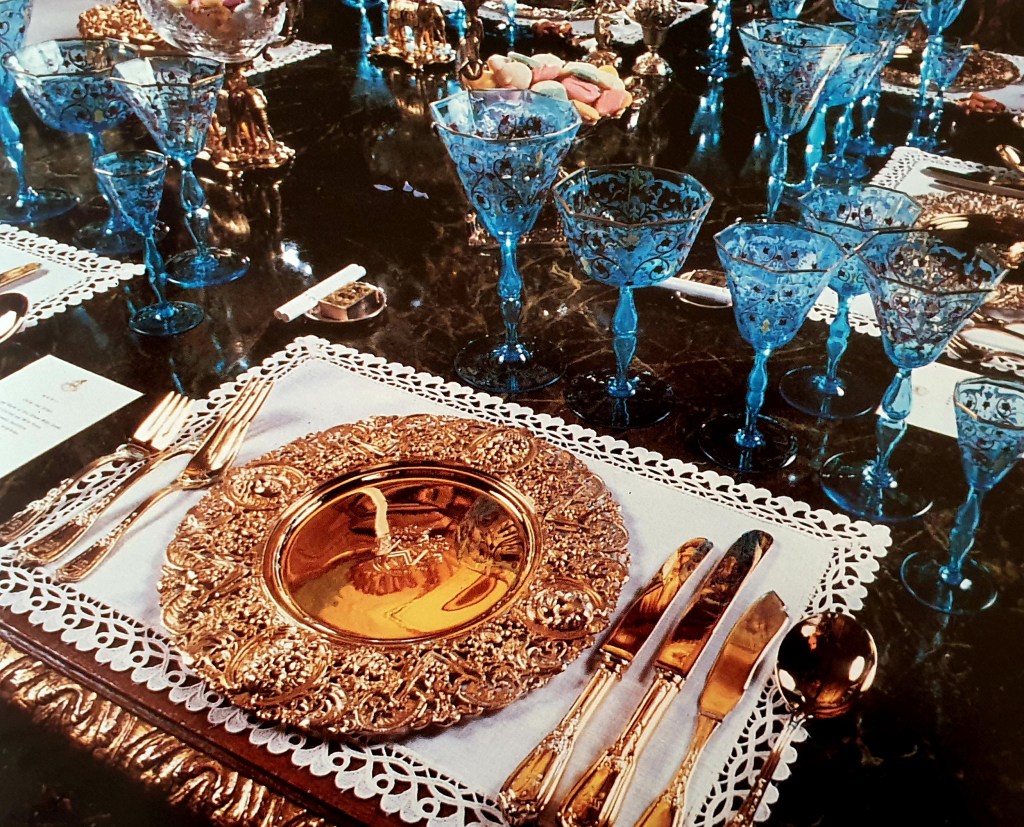

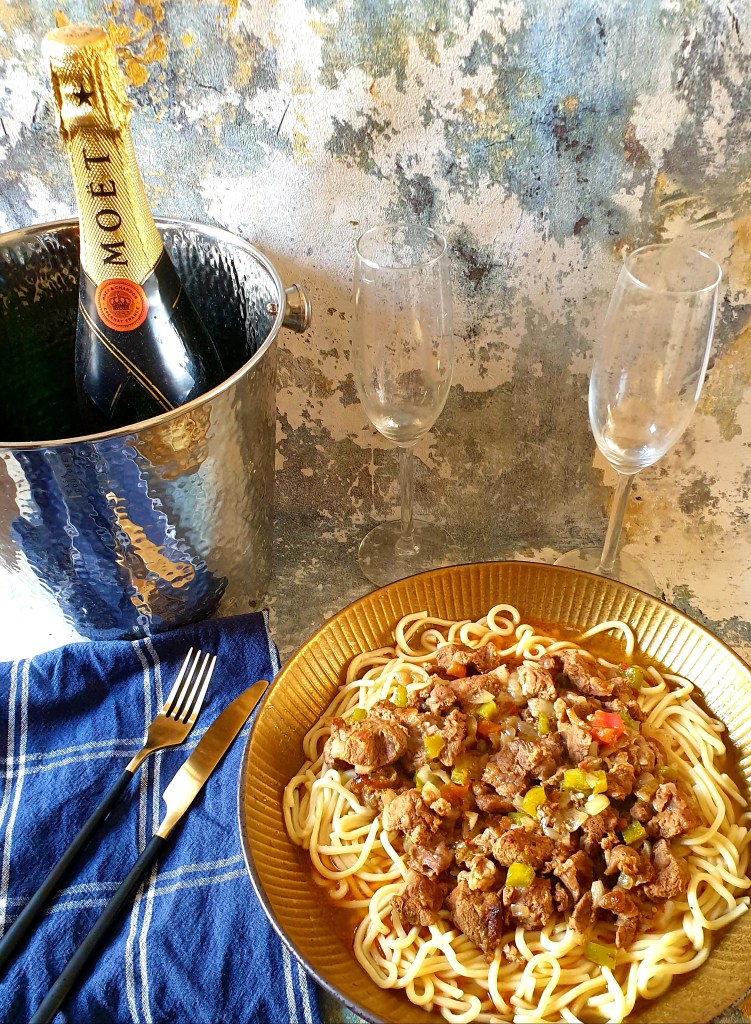


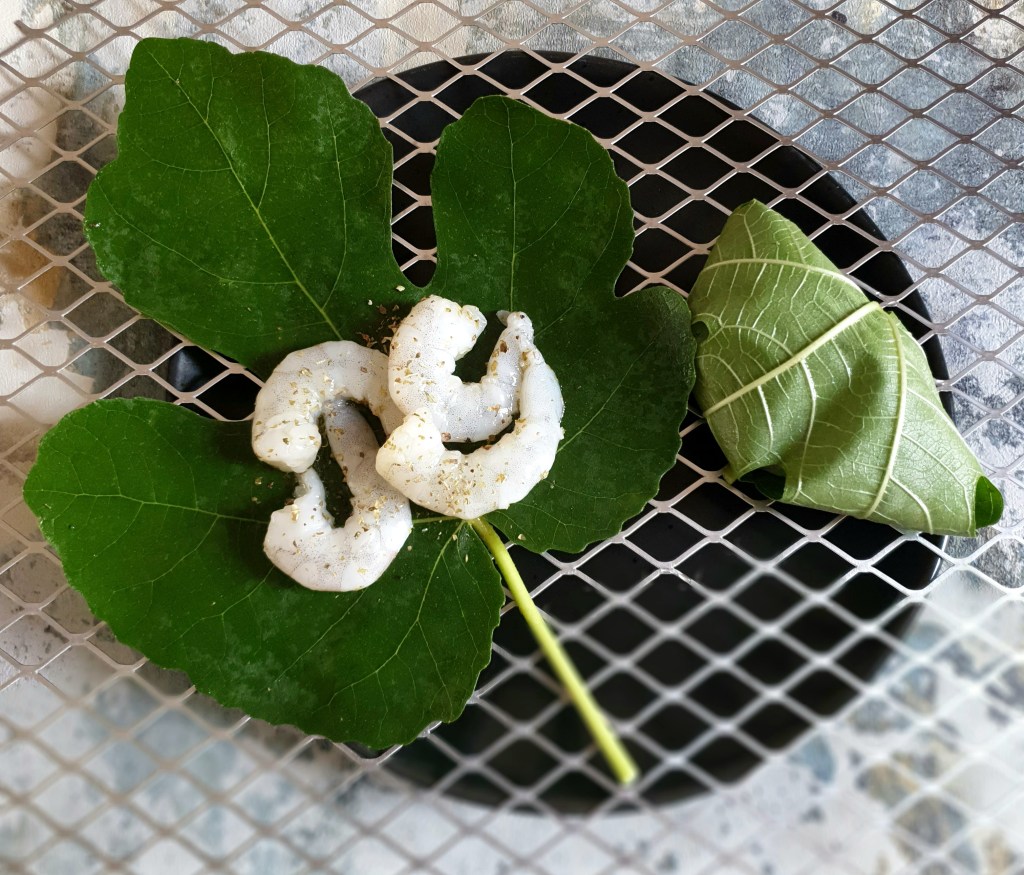


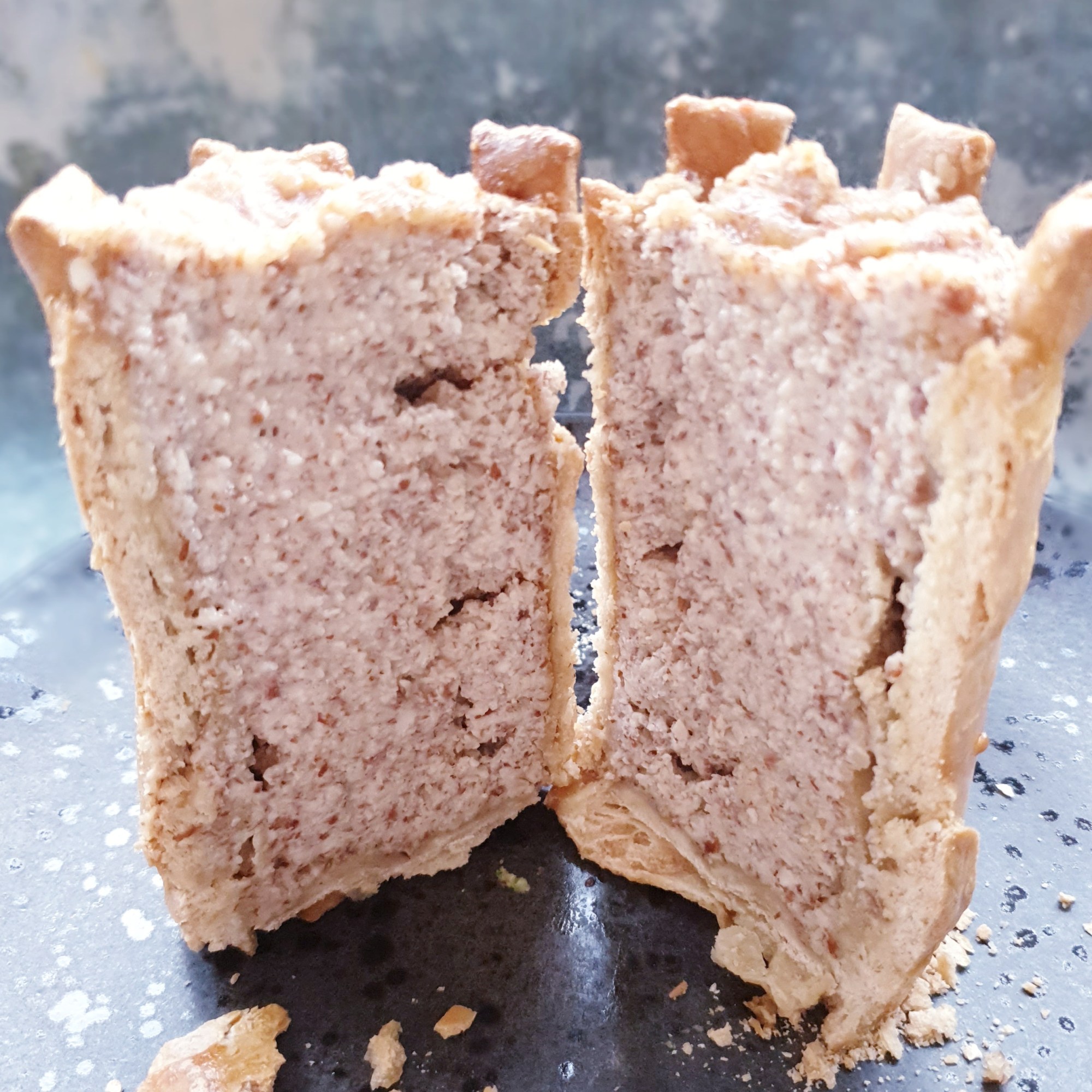

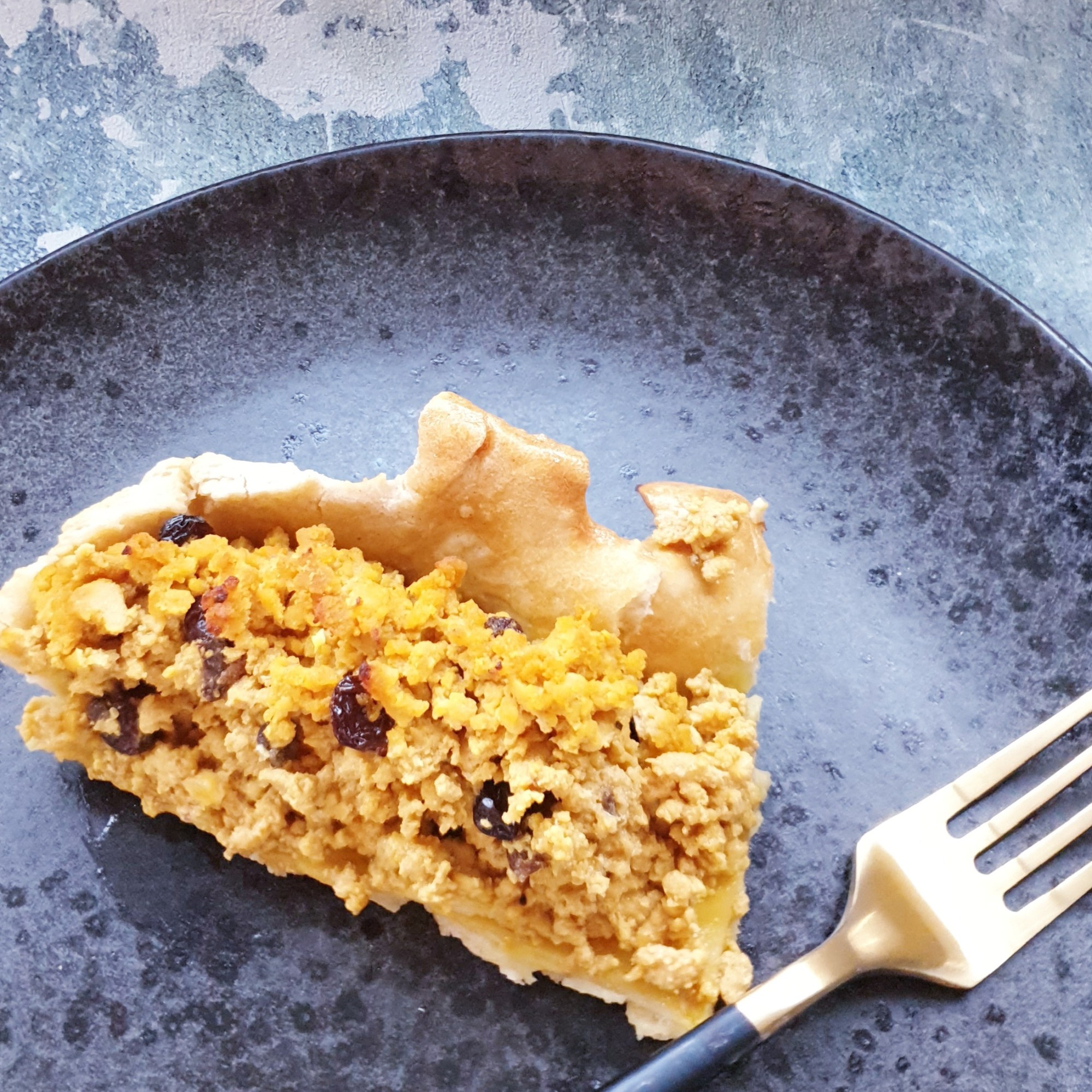


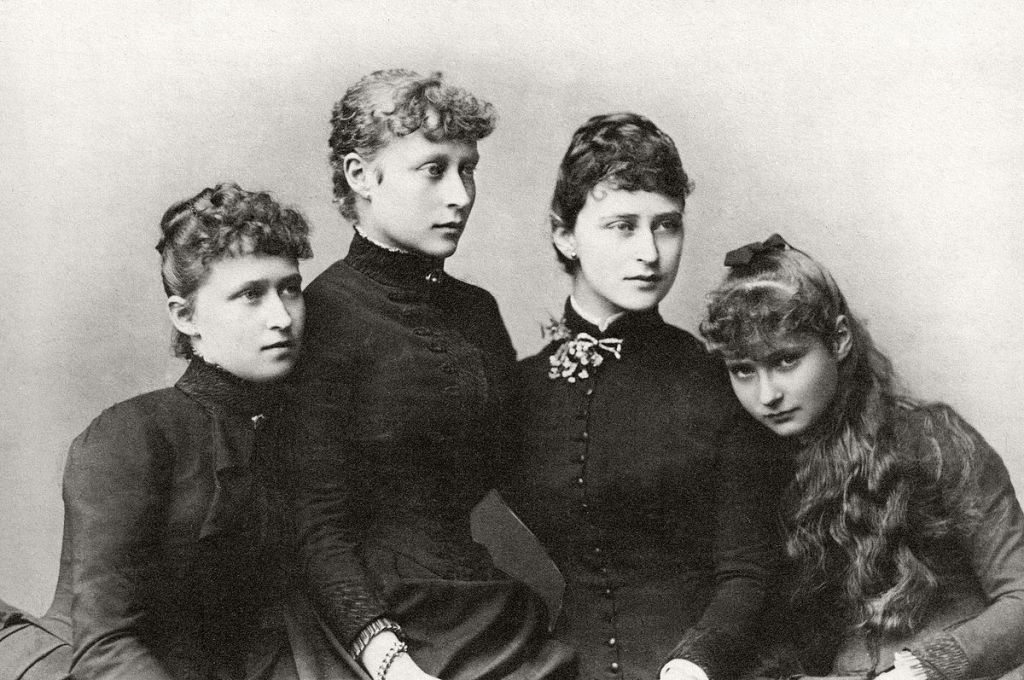
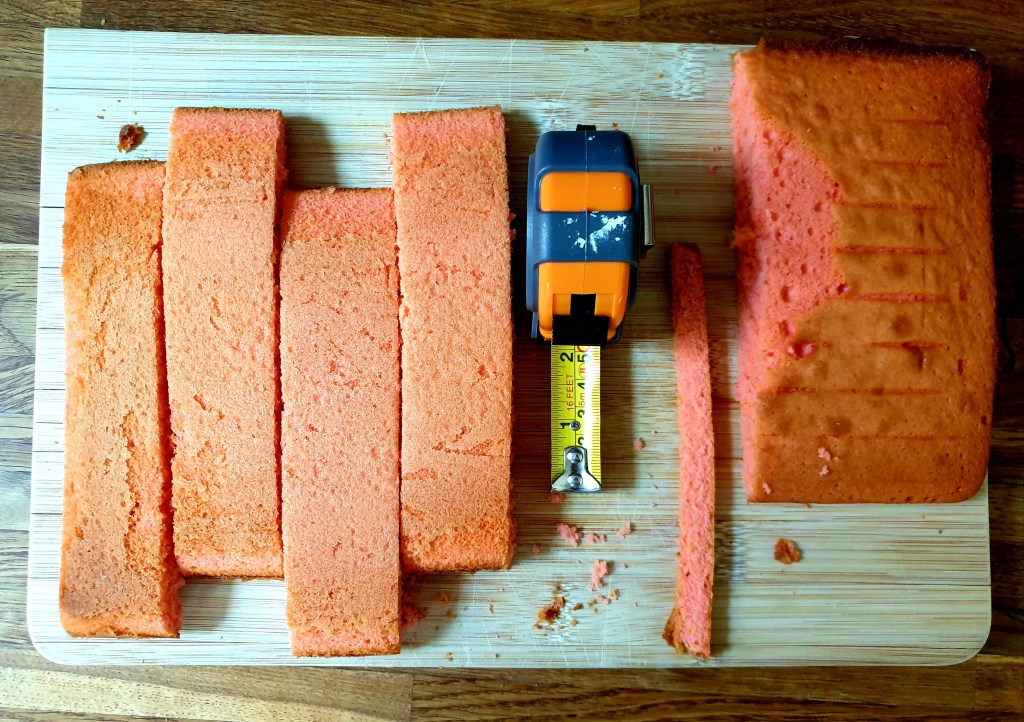





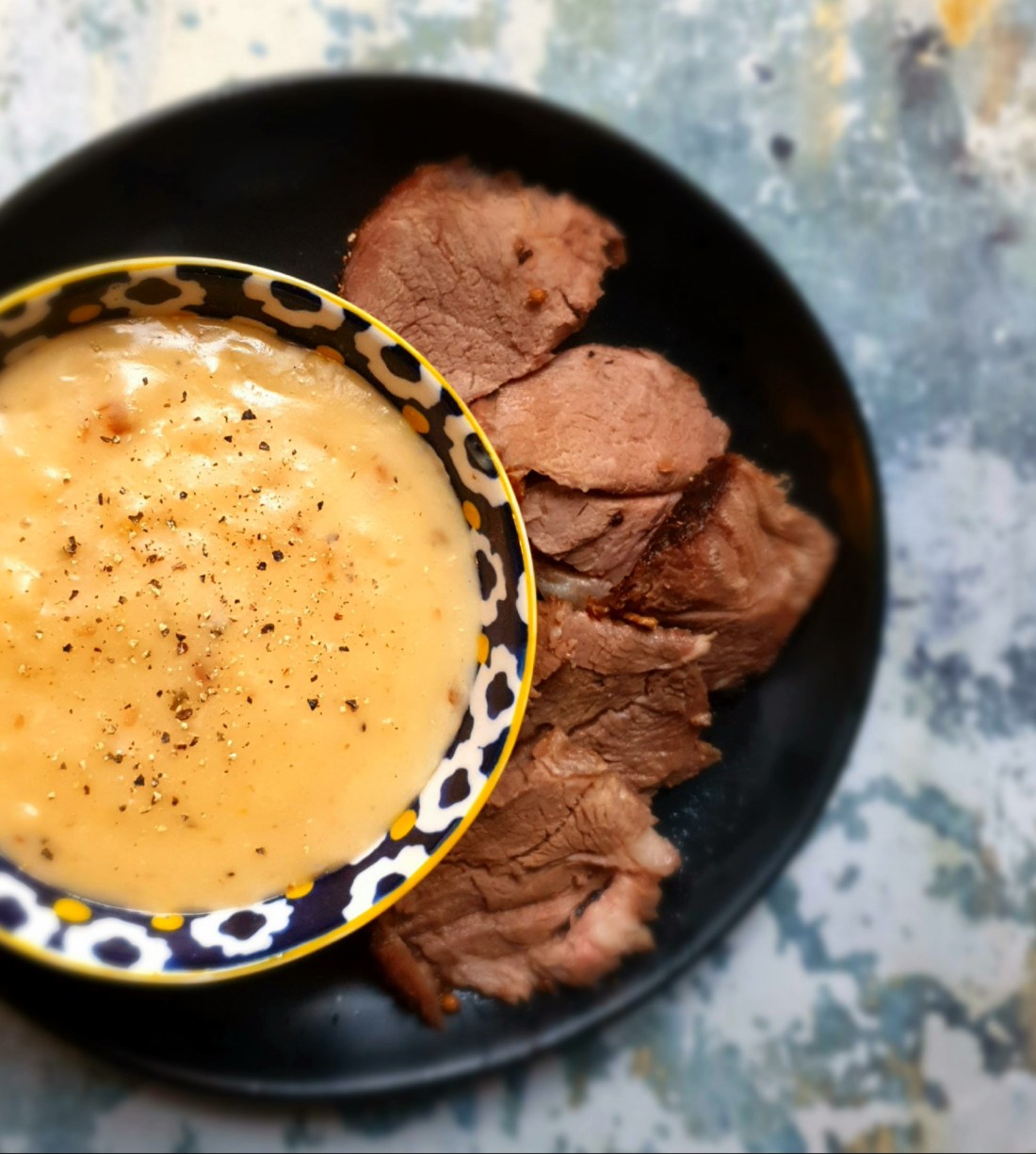


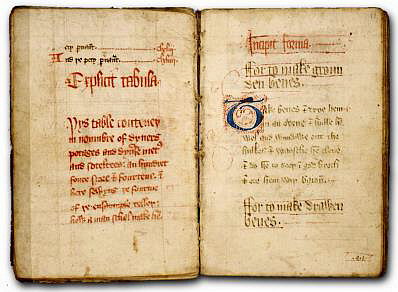


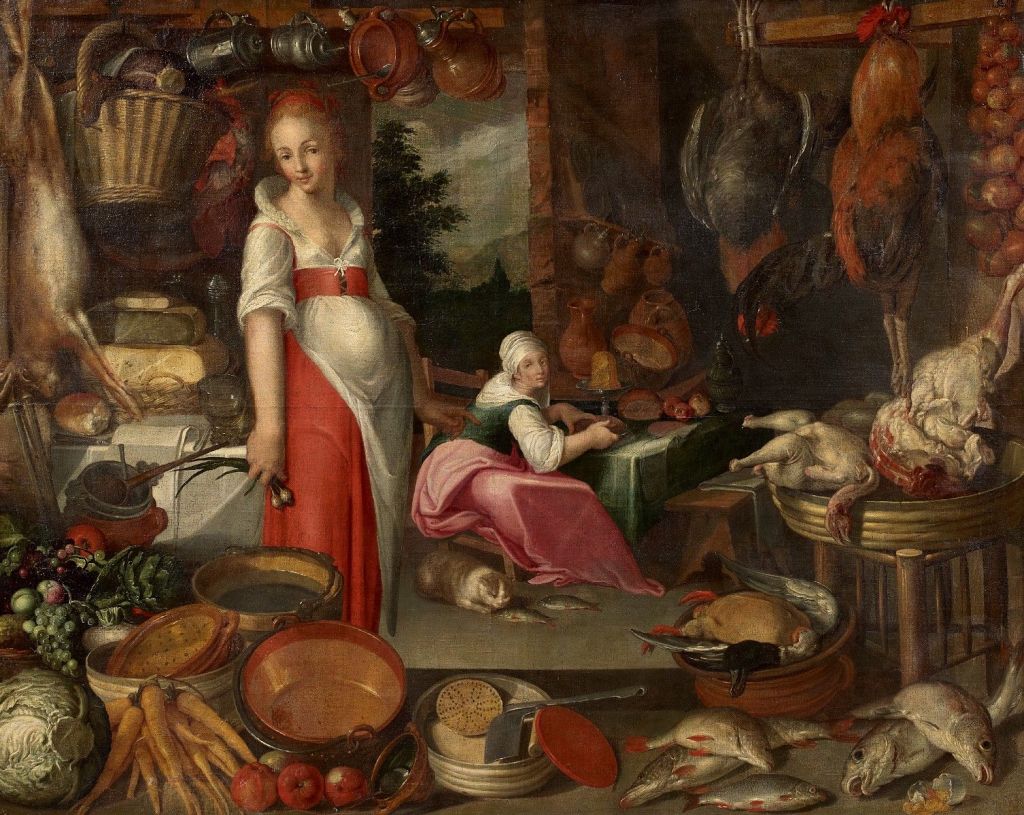


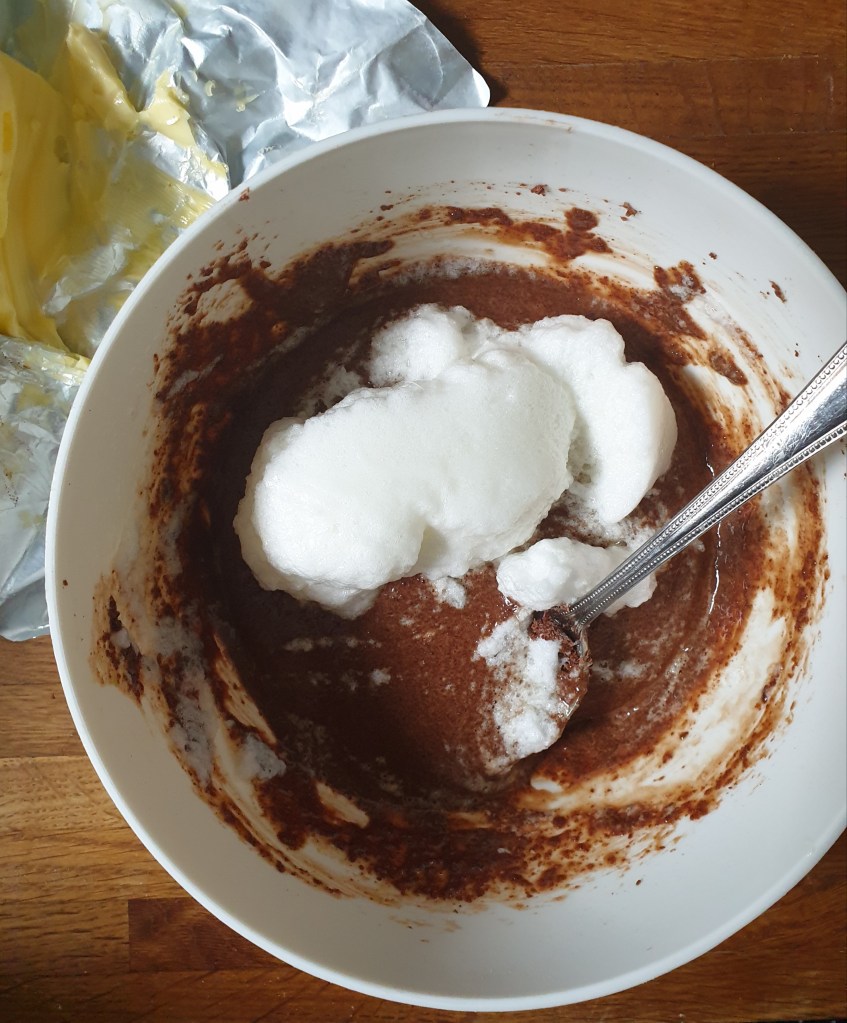

 The Past is a Foreign Pantry


You must be logged in to post a comment.