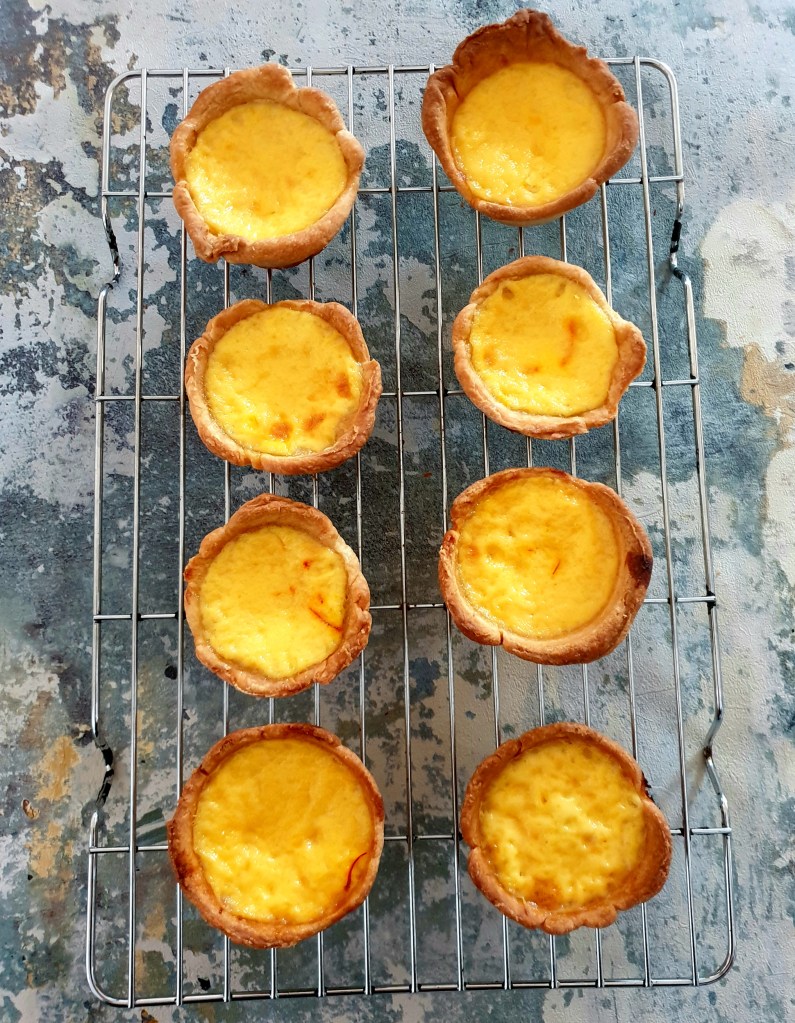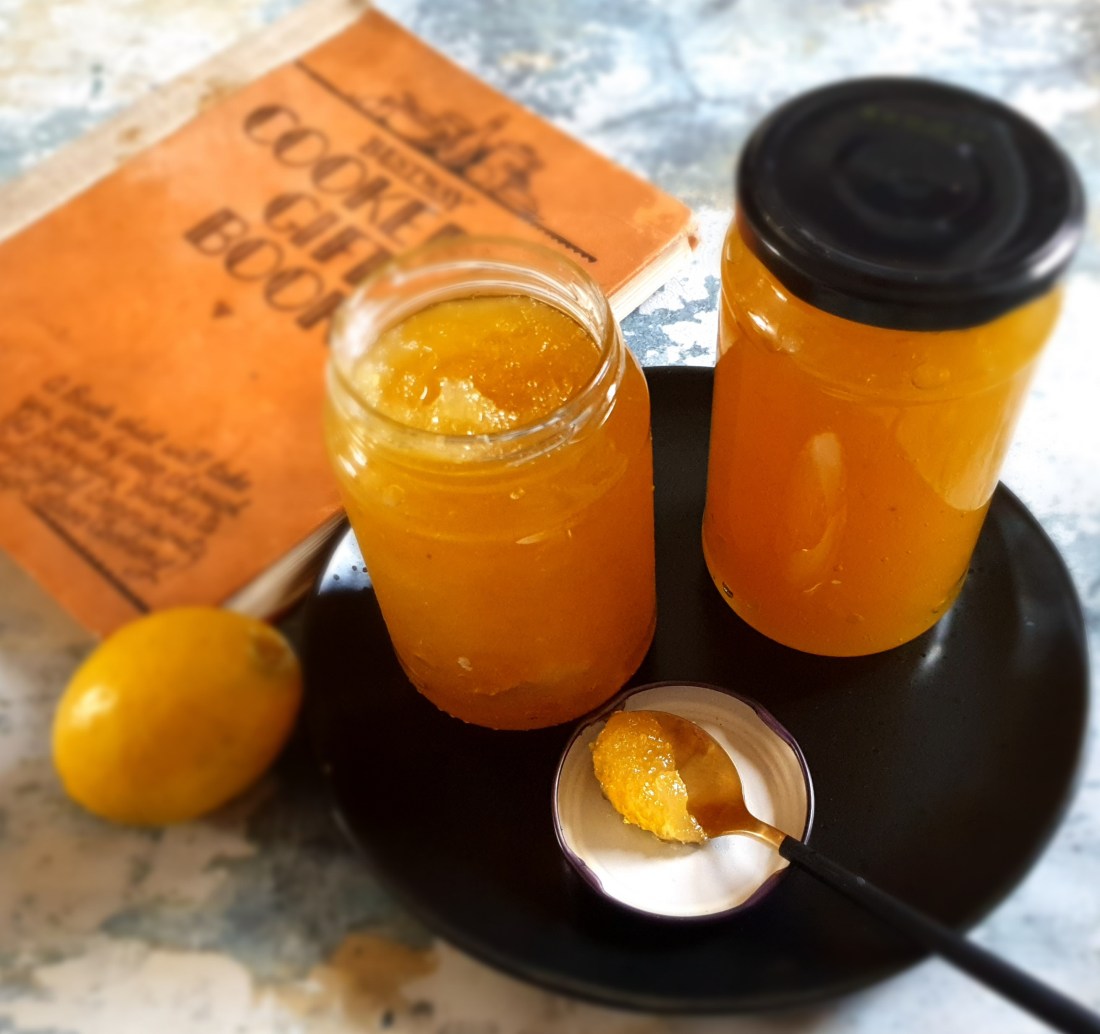
Marrow and Pineapple Marmalade: c. 1929

A couple of weeks ago I got a gift. And, to pinch a Tim Minchin lyric, “like most gifts you get it was a book.” Actually, it was several books (and for any Minchin fans who were wondering – no, none of them were the Bible.)

My gift was a bundle of retro cookbooks from Lyalls Book Shop containing such gems as Dainty Dishes and Cyril Scott’s Crude Black Molasses: The Natural “Wonder-Food” – a pamphlet dedicated to promoting black molasses as an alternative medicine for almost all injuries and illnesses known to man. Scott, a composer and musician, also published other ‘medical’ works including Victory Over Cancer Without Radium or Surgery. This publication gave Scott a chance to flex his medical credentials as a “musical composer with a taste for philosophy and therapeutics”, which must have come as a blessed relief to the doctors of the time who Scott describes as being knowledgeable but “not necessarily wise or even skilful” and who had become “so cluttered up with accumulations of academic learning” they could therefore no longer see the simple and obvious facts surrounding the causes and treatments of cancer. He sold himself as a layperson who, unlike medics with “professional prejudices” (you know, like using cutting edge science to treat people), was blissfully unburdened with any medical training whatsoever and was therefore perfectly positioned to advise the public on the kinds of cancer treatment available to them – the more molasses involved, the better. An unfortunately prolific writer, Scott also published other works such as The Art of Making a Perfect Husband (actually I might get that one) and a 1956 opus magnum entitled Constipation and Commonsense.

But among the comedy was a Bestway Cookery Gift Book that promised to take me “step by step through the Everyday Dishes to Delightful Experiments in high class Cookery!” I couldn’t find too much info about the Bestway series (my book was a fourth book) but it seems that the offices of the “Best Way” series published a yearly book of recipes during the 20s and 30s for housewives. The books covering a range of recipes ranging from simple household staples like sandwich cakes to more challenging dishes such as Galantine of Beef (an inexcusable serving suggestion implied this dish should be served with the word ‘galantine’ piped over it in butter forced through an icing bag.)
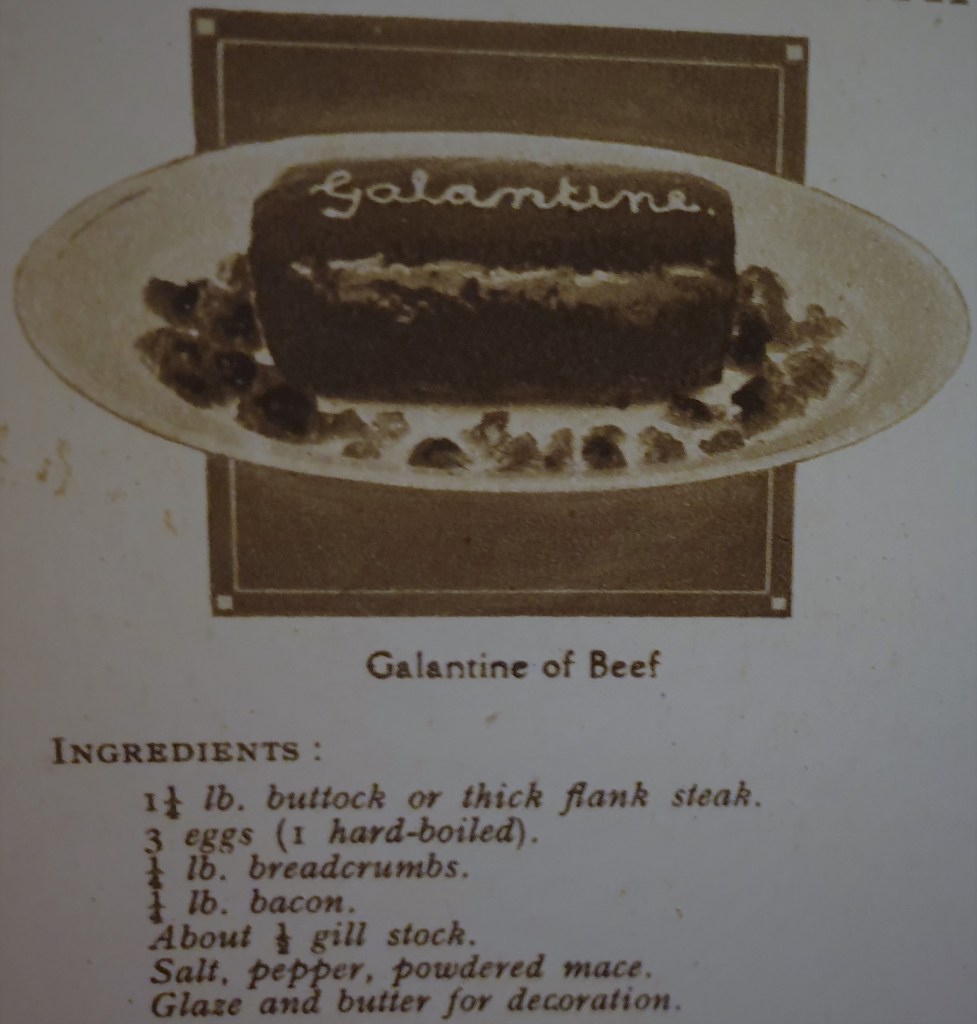
The answer to all those times you asked your teacher when you’d ever need to know how to pipe butter in cursive.

The Bestway Cookery Gift Book was pretty functional and contained very few tips and tricks about its recipes – unlike modern cookbooks that are 30% anecdotes about how the author’s treasured and very secret family recipes were passed down faithfully through the generations only to end up reprinted in six languages.

The closest I could find by way of an introduction to today’s recipe was a paragraph called “Jam-Making Hints” which was confusingly formatted like an acrostic so that I spent a disproportionate amount of time trying to work out how to pronounce ‘UANKT BWP’ and what it meant. It actually turned out that each point was meant to be an easily remembered tip in jam making, like the world’s most impossible mnemonic; so far I just have Underdressed Androids Never Kick The Ball Without Permission which, I found out, was not a helpful jam making tip in the slightest.

Alternative suggestions in the comments, please.

Anyway, on to the jam. Straight away it was a farce. When doing these sorts of experiments I like to aim for as much authenticity as I possibly can and I start with a score of 100 and mentally deduct points for every alteration or mistake I make. Usually I end up with around 70 points left over but today I’m proud to announce I hit a new personal best: 40.

“4lbs marrow” was the first ingredient. Nowhere was selling marrows but I did have three large courgettes in. A quick Google told me that marrows were basically courgettes that had been allowed to go over (sort of) so I figured there wouldn’t be too much harm in using these instead. Minus 20 points for substitute ingredient.

I also didn’t have 4lbs of them so I had to half the recipe. Later I’d find out that this was a good thing, but at the time it felt like I was tipping further into the void and I deducted another five points. Once the ‘marrows’ had been peeled and chopped I saw I was supposed to pass them through a mincer, which we didn’t have. What we did have, though, was a blender which achieved a perhaps slightly too mushy result, but was infinitely quicker than trying to chop the courgettes by hand into mincemeat (or should that be minceveg?). Minus a further 10 points.

The recipe then instructed me to put my minced marrow into a bowl and “sprinkle with sugar and leave overnight.” So just how much sugar should I sprinkle on? Why, just over 1kg of course. It wasn’t so much a sprinkling as an avalanche but I was 35 points down already and had already seen that the words “preserving pan” appeared in later instructions (I don’t have one) so couldn’t afford to fritter away any more points. I delicately dumped sprinkled an entire bag of sugar over the courgette mess and left it overnight.

Despite the recipe recommending I return to complete the next stages “in the morning”, I actually forgot it was there until the next afternoon by which time the mixture was exceptionally stiff, almost like fondant icing, and a very faint green colour. The next stage was to add 1 large tin of pineapple, minced, to the courgette and sugar mixture. Ever so helpfully the recipe gave no indication how large “1 large tin” actually was.

At this point in the day there was a big government announcement about an advisor who had broken lockdown rules but wouldn’t be punished for it. I was therefore a bit distracted when adding my pineapple which explains why I accidentally forgot to half the amount to match the courgette and sugar, and estimated that 1 large tin was about the size of 2 small ones (which was what we had in) and added those, blended, to the mixture. Minus 15 points for incorrect quantities and over blending of pineapple, resulting in lumpy juice rather than finely minced fruit (but plus 100 for being able to stick to lockdown guidelines for 10 weeks even when those in charge can’t, am I right?)

It was now time to heat everything in my non-existent preserving pan. There seemed to be an awful lot of mixture and I doubted whether it would all fit in any of my saucepans so I chose to cook the jam in my ever reliable and ever inauthentic wok, which I’ve used to help Anglo-Saxon and ancient Persian bread rise, but have never actually used to cook a stir fry in. Yes, yes I know – minus 10 points. The trouble with cooking jam in a wok, I found, was that it didn’t heat evenly. I knew I was trying to get to about 105 degrees C for it to set, but after 15 minutes or so some parts of the wok were nearing 105 degrees and others were struggling to get past 100. I decided to transfer half of the mixture to a pan and cook it in batches, which worked much better.

After skimming off the scum and adding the juice and rind of a lemon, it was time to take the mixture off the heat. It looked pretty dubious. I don’t know a lot about jam, but I do know it relies on pectin to make it set, which is mostly present in the skins of fruits, particularly hard fruits. Not only had I used two very soft fruits, but I’d also peeled them thoroughly beforehand. The majority of the pectin was therefore coming from one measly lemon which, I now noticed, had a used by date of May 16th. I don’t know if that affected the levels of pectin in it, but with the way this whole thing was going it felt like this would only be a bad thing. I wasn’t sure my jam would set as firmly as I was used to but short of actually following the recipe properly by using the correct ingredients, quantities and methods, I felt I’d done all I could.

Amazingly, one thing I had done properly was sterilise some jars to put my jam in. The trouble was that both jars were old pickled onion jars and had retained some of their vinegar-y smell despite my best hot water and soap efforts. In a last minute attempt to find jars that didn’t have such an offensive whiff about them I raided my fridge for almost empty or gone off jars of something – anything – that I could use instead. There was nothing I could justify eating up or throwing out yet. And, I’m sorry to say, the only thing that came close was yet another jar of pickled onions sat forlorn and forgotten at the back of the fridge, left over from Christmas.

I spooned my jam, which had by now thickened to the consistency of wallpaper paste into the jars and sealed them, leaving a little in the pan for taste testing.
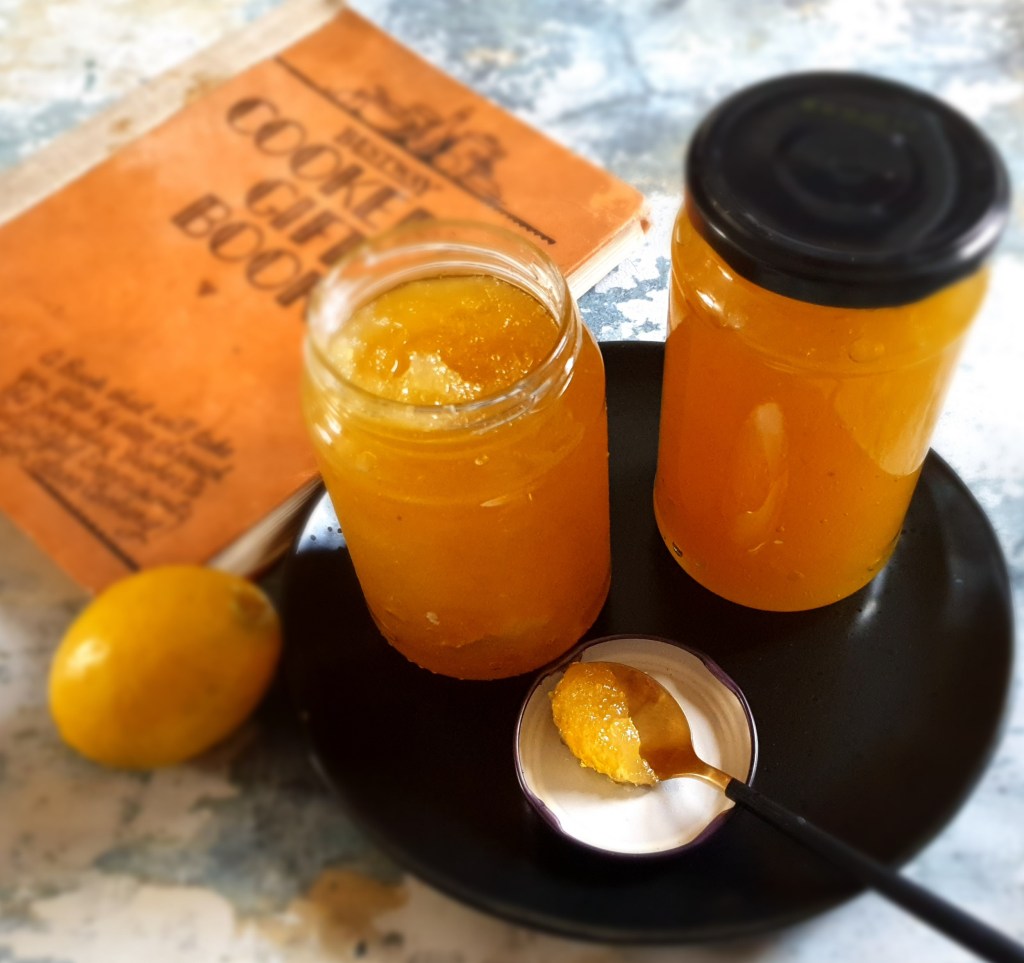
Mmm that sweet, sweet jam and pickled onion flavour!

It’s very hard to explain what this jam was like. Texture wise, it was lumpy and a bit grainy. Not unpleasant, necessarily, but not at all refined. Taste wise, it was…weird. That’s the only way I can describe it. It was sweet – very sweet – but in a plain way. I couldn’t really taste the pineapple, other than a bit of a tropically tang on the tip of the tongue, but my husband said he definitely could, so it may depend on individual palates how much comes through.

Mostly though, it tasted of very sweet courgette and I couldn’t see when you’d eat this. On toast? In puddings? Not really – it’s not fruity or acidic enough for toast or puddings or anything that needs either of those things to cut through. With cheese and crackers, like a sweet chutney or quince jam? No – it’s far too sweet for that and not spicy enough either to add an interesting dimension. The only thing I could see this being used in because you wanted to (rather than because you had to use it up) was possibly as a filling for a lemon cake that had a lemon buttercream icing on top to provide some sourness to the relative sweet blandness. Hardly a jam for all seasons, then. Now you may want to argue that some of this disappointment was down to my lackadaisical approach to this recipe, and you may be right. But, just like an aforementioned advisor, I believe that I acted responsibly, legally and with integrity at all stages of this recipe and will therefore not be taking any real responsibility for its shortcomings.

So overall what did I learn from all this?

One – as a family, we eat too many pickled onions.
Two – Like a musical composer with a taste for philosophy and ethics dipping his unqualified toe into the world of medicine, I did not posses the skills or tools needed to make this jam a true success. I ended up losing points in almost every category, like some sort of inverse jam-based Torville and Dean (weird analogy, right?) despite this recipe not actually being that hard to pull off.

Ultimately I wouldn’t recommend you make this unless you make a lot of lemon cakes (and even then, remember, that’s an untested recipe) or you really just want to try it for yourself. The concept was interesting and in the end it wasn’t bad or inedible, it just doesn’t have a clear role in recipes. With more pineapple and less marrow, perhaps it could be more of a traditional fruity jam but as it stands this is one that I’m happy to leave in the recipe books.

E x

P.S. in the end I actually was able to think of a better mnemonic – one to perfectly combine the farces of politics and jam: Unelected Advisors Needn’t Keep To Basic W.H.O. Protocol.

Marrow and Pineapple Jam

900g of marrow when prepared
1kg of sugar
500g of drained tinned pineapple
Rind and juice of 2 lemon

You will need to sterlise 2 or 3 jars for this recipe. I recommend sterilising them while the mixture is cooking which means they will be ready by the time it’s done.

  1. Peel and blend the marrow to a coarse pulp.
  2. Cover the marrow with sugar and leave for 12 hours.
  3. After 12 hours, chop or blitz the pineapple finely and add to the marrow and sugar.
  4. Over a low heat, cook the marrow, sugar and pineapple together until the sugar has dissolved.
  5. Once the sugar has dissolved, bring the mixture to a boil, skimming any scum from the surface.
  6. When the mixture reaches 105 degrees C, remove from the heat and pour into pre sterilised jars.

Moretum: 1st century CE

Salve, suckers!

Actually, I apologise. That was really inappropriate and I shouldn’t have said it; I meant salvete, suckers.

I’m going to go ahead and slap a big warning on this one for anyone who might come within 6 feet of me in the next few days: don’t. Seriously, this isn’t a joke. Especially if you’re a ‘sleeps all day, turns into a bat and drinks people’s blood by night’ kind of a person.

In fact, if there was ever a recipe made for enforced self-isolation, it’s this one. Containing a whopping four bulbs of garlic, this is one dish that’s not for the faint of heart or faint of nose.

Luckily, we love garlic in this house and (obviously) have no parties to go to where – had we eaten this beforehand – we might have been written out of the social calendar for the next decade. True, in recent times the closest I’ve come to having a ‘social calendar’ is booking my daughter’s parents’ evening slot at her nursery but you get the picture.

Today’s dish is Moretum. No, it’s not just something I see in the mirror after a heavy cake binging session, but is actually a Roman cheese paste mixed with herbs that was eaten through the Roman Republic (c. 509 – 27 BC) and into the Imperial periods (27 BC – 476 CE.) The word moretum translates to ‘salad’ (if we believe the notoriously hit-and-miss abilities of Google translate) and was enjoyed with bread. Since the main kitchen tool used in the preparation of Moretum was a mortar and pestle, there may also be a linguistic link between the recipe and the method of mixing the ingredients together. I don’t know though, and Google translate also tells me that the Latin word for mortar was mortarium, which translates as ‘trough’ – not very well linked to ‘salad’ after all.

As with previous Roman recipes, I’ve found that Farrell Monaco’s website (where she covers not one but three Moretum recipes – including the one I’m trying today) has been invaluable for advice and information. As always, if you prefer your historical cooking to be done by someone who a) knows what they’re talking about and b) has the tools and ability to carry out the cooking with as much historical accuracy as possible, then you should definitely head on over to her brilliant site. If, however, you just like the schadenfreude of reading about a woman bashing four bulbs of garlic to smithereens with a rolling pin (we’d lost our pestle) while her husband and daughter flee the kitchen, gasping for fresh air and vowing never to be in the same room as her again, read on.

The recipe I’m using isn’t really from a recipe book at all. It’s from a collection of poems from the 1st century CE called the Appendix Vergiliana – specifically one poem simply entitled ‘Moretum’. Yep, it’s my idea of great poetry: an ode to cheese.

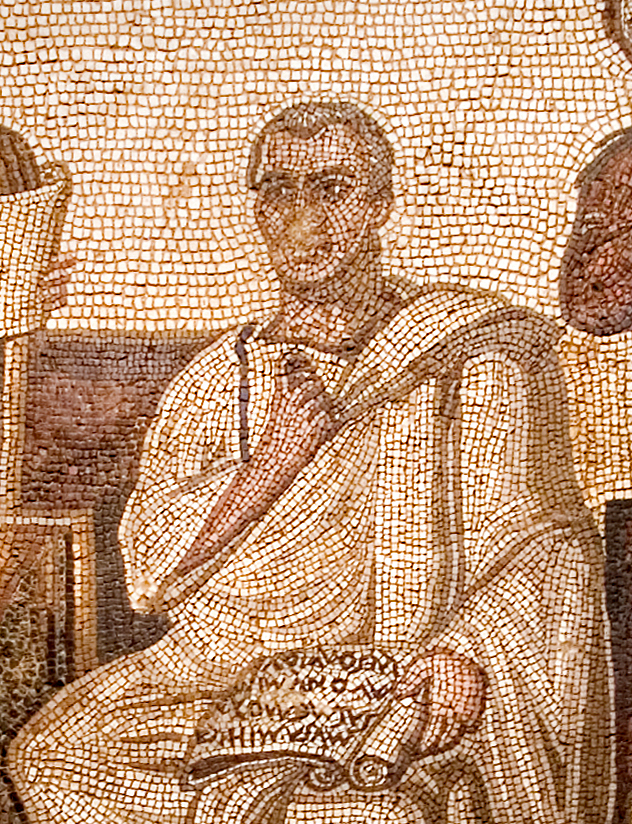
Virgil: Author of the Appendix Vergiliana?

Except it’s not really. The author (whoever he may be – despite the name, there is debate around whether Virgil or other unknown author(s) wrote the poems in Appendix Vergiliana) isn’t really writing a love song to the Roman equivalent of Boursin (however much Boursin deserves such exaltation.) No, what we have here is a pastoral poem – a mode of literature which Terry Gifford summed up as having a focus on countryside lifestyles whist highlighting the contrast between urban and rural. Virgil himself popularized pastorals in his Eclogues, which maybe explains why, if the poem Moretum was written by a copycat, they chose the pastoral mode rather than any other. Traditionally, a pastoral poem would paint an idyllic image of rural living and simple country folk. Reading it though, I was struck by how unappealing it all sounded. The main character is portrayed as sweaty, sweary and smelly. He lives a life he doesn’t seem too happy with – unable to even afford meat and going round and round in a cycle of hard toil and sleep; hardly the blissful existence most pastorals painted. If anything, I ended up reading the poem as a satire of a pastoral – but that might be my poor literary judgement.

In fact, to say I lack a sophisticated appreciation for literary art is putting it mildly; I find cracker jokes funny and am naturally wary of people who say not all poetry has be written in rhyming couplet. The problem is, if it’s more advanced than a limerick out of a children’s book I lack the required nuance to ‘get’ it and
I’m not good with free verse poetry that
Does this sort of thing
in an
Arty kind of way –
It makes me panic, I mean:
Which words should I
Emphasise?
(And why do none of them rhyme?)

So here’s my no-frills, no-nuance breakdown of Moretum: a peasant farmer called Symilus wakes up and begins his day’s chores. These include lighting the fire, milling grain, making bread, picking the ingredients for Moretum, making the Moretum and ploughing. He’s not alone, old Symilus, though. He lives with a slave woman from Africa called Scybale who is described in uncomfortable and intrusive detail – notes on her hair, facial features, skin colour, breasts, stomach and legs made for jarring reading in the 21st century. For eight lines the author daydreams through a voyeuristic fantasy and though I’m sure someone will come along to tell me that this was/is a valid literary trope and we shouldn’t push our modern sensibilities onto past cultures (fair) it doesn’t stop my initial reaction to it.

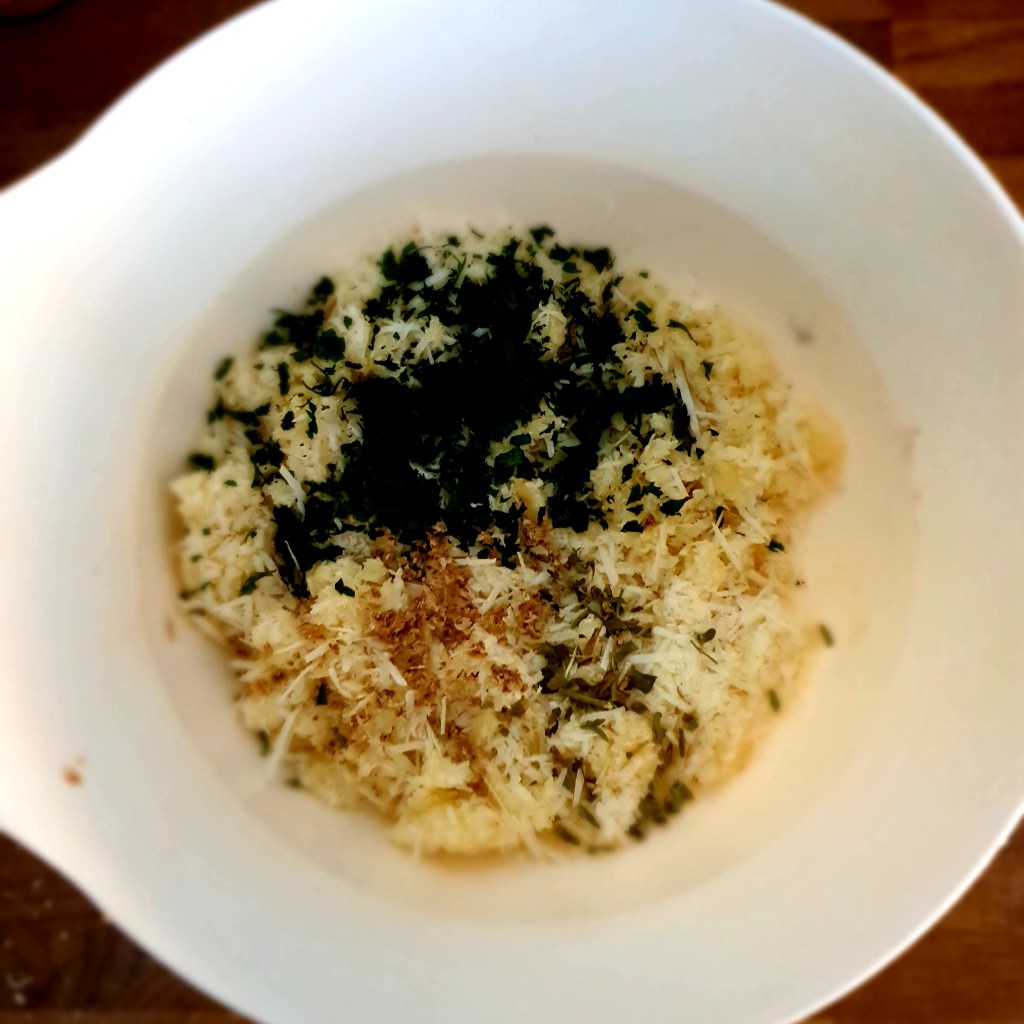
All that aside, the poem does give a very detailed breakdown of how Moretum was made, which I tried to follow as closely as possible. First, I peeled four bulbs of garlic and placed them in the mortar with salt and and entire block (170g) of grated pecorino cheese (the poem doesn’t specify how much or which cheese Symilus used but it does refer to a cheese “hard from taking up the salt” and “hanging” by a rope which suggests a salty, hard cheese. Not only does pecorino fit these criteria, it was also a stalwart of the Roman army and is still (mostly) made following original methods, making it an ideal choice for my experiment today.

Now I understood why Symilus hated his life and “cursed his early meal” when making it; this was bloody hard work. It took well over 20 minutes to pulverize the garlic cloves in a mortar (even after I’d finally located the pestle but but not before I ruined our rolling pin) and I ended up with a blister in the middle of my palm. I’ve never looked at a kitchen appliance with as much longing as I have when I gazed at our mixer, with its shiny blades and never-before-used grater attachment. But I stayed strong; if I was going to do this at all I was going to do it no less than 75% properly and I’d already lost most of my leeway because I’d grated my cheese to make it easier, instead of bashing it up in chunks too.

To the finally mashed garlic and cheese I added parsley, rue and ground coriander seeds. The rue was dried, not fresh, so wouldn’t have been exactly the same, but I’m pretty sure the general bitter flavour was still there. It’s safe to use rue in food quantities (i.e. a couple of pinches) but some people, particularly pregnant women or breastfeeding mothers, should not eat it. More info here.

The smell. Good God, the smell.

Once the ingredients were in the pot (I had to transfer them out of the mortar because it was too small), Symilus began to mix all the ingredients together with his right fist while his left hand “‘neath his hairy groin” stopped his tunic from flapping into it all. What a delightful image. What a lucky woman Scybale was to live with such an appealing sounding man.

The mixture turned quite green, matching the description in the poem where Symilus notices the white from the garlic and cheese mingling with the green from the herbs, and smelled pungent. Very pungent. Even with the window and doors open I knew we wouldn’t be rid of the smell for days. I hoped to God it was worth it.

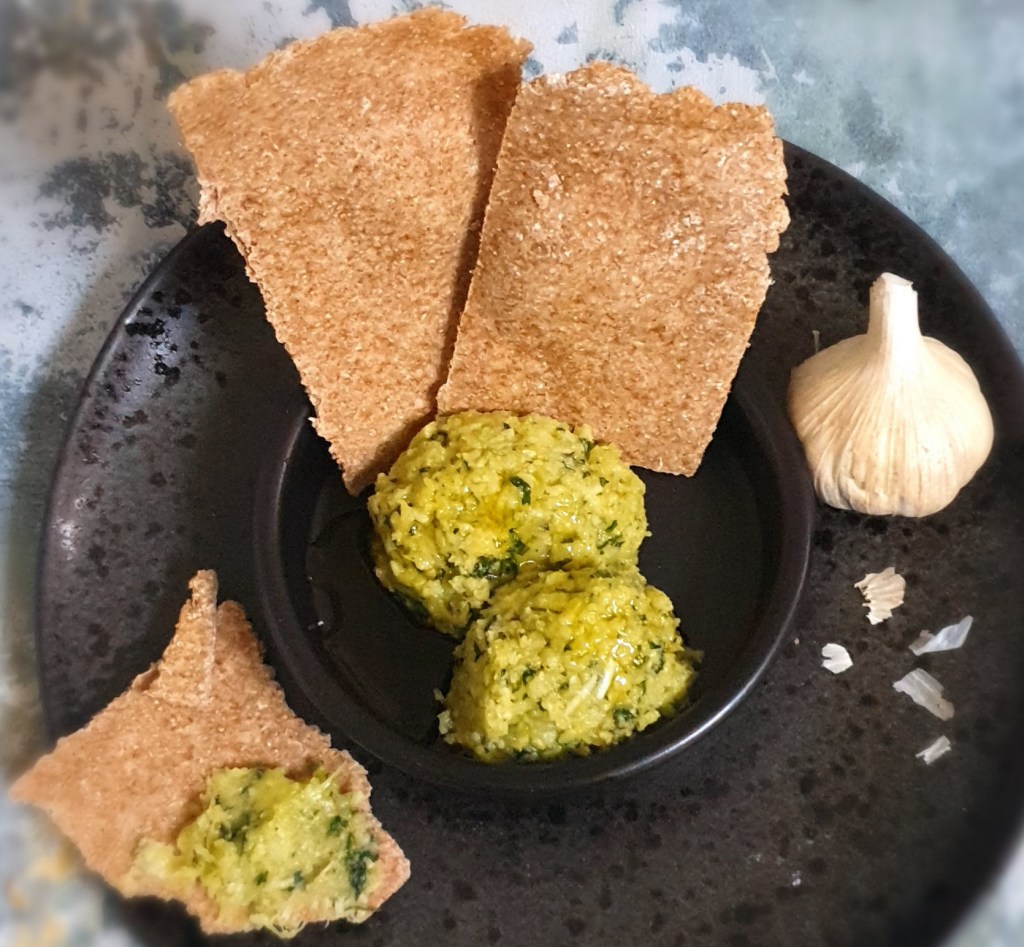
Eventually the mixture formed a stiff coarse paste. I added enough olive oil to loosen it up to the consistency of, well, Boursin (I promise I don’t get royalties from them or have shares in the company) and some white wine vinegar, as per the poem’s instructions and shaped it a little of it into a pleasing ball to serve along with some Roman flat bread (also mentioned in the poem – recipe is also below). Then there was no putting it off any more – it was time to try it.

My unsuspecting husband said these looked like veggie meatballs so I dared him to eat one whole. He’s not allowed to open his mouth for a month now.

What did it taste of? Garlic. There was just no getting away from that. But until you try it I don’t think you can know just how garlicky garlic can be. We’re used to eating it in a cooked form, which somewhat mellows it. This was raw mashed quadruple garlic and boy did I know it – it brought tears to my eyes. The first mouthful was so overwhelming I actually didn’t take anything in apart from Oh my God this is very garlicky quickly followed by why is it so spicy?! and Bloody hell I can see my own breath.

But once the heat from the first mouthful had died down, I was able to think about it more. It was fairly creamy, because of the cheese, but in the tangy way parmesan or other aged hard cheeses are (rather than the creaminess of soft cheese) and though I couldn’t really taste the herbs they did make it look more appetising. I think this could have taken even more cheese, so in the recipe below I’ve recommended two blocks of pecorino (yes, I know) and you can scale it down if you need to. The recipe is from the original poem and makes far too much for the average family to enjoy in one go, so I’d half it if you didn’t want any left over and you were feeding a (hungry) family of 4.

Garlic may have been the overriding flavour but once you got used to it, it was very moreish. I actually ended up standing in the kitchen absentmindedly dipping slice after slice of flatbread into the bowl as I watched my husband and daughter playing in the garden among the flowerbeds together (see, I can do pastoral scenes too.)

The best way I could describe it was like a very, very, very strong thick garlic butter (the olive oil obviously acting as the butter element). It was not, however, a meal. No wonder Symilus couldn’t find a partner if he was scoffing a plate of this for his lunch each day. But it was too good to just throw out once we’d tried a bit. So I froze what was left in an ice cube tray for individual portions – I reckon that one large cube or two small ones stirred into pasta would make a strong but delicious garlicky sauce for a family of 4.

I would absolutely make this again. Perhaps in smaller quantities, though, and only if I knew I didn’t have to speak to anyone the day after eating it. I recommend making Symilus’ flatbread too to go with it – it was the perfect subtle companion, offering a nutty but otherwise quite plain base for the Moretum to do its thing. I’ve yet to try the frozen Moretum but I have high hopes it’ll do well – let me know if you can think of any other cooking ideas for it other than pasta sauce.

And to the manufacturers of Boursin – if you’re reading this and now you’re thinking of making a Moretum inspired version; I would like 20% of the profits (and there will be profits) which I’ll accept in the form of money and/or wheels of your original Garlic and Herb.

E x

Moretum (half this recipe if you only want enough for 4)

For the Moretum:
4 bulbs of garlic
340g of pecorino cheese
A large handful of finely chopped parsley
One or two pinches of dried rue (or a few leaves of chopped fresh rue – but no more than a few leaves of fresh because rue can be toxic in large quantities and DO NOT use any at all if you are pregnant or breastfeeding)
1/2 teaspoon of freshly ground coriander seeds
Olive oil
White wine vinegar
Couple of pinches of salt

For the flatbreads:
320g spelt flour (or wholewheat flour)
Approx. 100ml warm water
Salt

  1. Make the flatbreads first. Heat the oven to 165 degrees C.
  2. Mix flour, salt and water until it forms a stiff dough. You may need more water – add as much as you need to get a stiff dough.
  3. Knead the dough and then turn out onto a floured surface. Roll it out to no more than 1/2 centimetre thickness.
  4. Cut the dough into equal rectangles or squares and place on a baking tray. Bake in the oven for 20 minutes. They should be crisp when you remove them. If they aren’t, bake a bit longer.
  5. Peel the garlic and place the peeled cloves into a mortar. Pulverize them until they are a coarse paste. It will take much longer than you think. Alternatively, whizz them in a blender for a few seconds.
  6. Grate the cheese into the mashed garlic and add the herbs and salt.
  7. Mix everything together, making sure the herbs and salt are well incorporated.
  8. Add olive oil to loosen the mixture to a consistency you like, and a couple of teaspoons of white wine vinegar. Mix well.
  9. Transfer to a bowl and enjoy with the flatbreads.


Payn Ragoun: c.1390

It’s another medieval one! It’s another sweet one! It’s another one where I don’t really have much idea of what it is I’m supposed to be doing!

Right from the start I’m going to attribute at least half of today’s success to Dr. Christopher Monk – a man whose knowledge of medieval cuisine (particularly the cuisine in The Forme of Cury, from which this recipe is taken) is as impressive as his patience with over-enthusiastic amateurs contacting him with screen shots of recipes they don’t understand, begging for help. He could have said no. He could have done that thing where the message pops up in notifications but you ignore it forever because you don’t want to engage with such nonsense (don’t pretend you don’t know what I’m talking about – we’ve all done it. My husband’s still waiting for my response to a photo of him trying on something he called “dress shorts” in Debenhams changing room in 2017. He didn’t buy them in the end, which I guess shows that actually this approach can work sometimes.)

To put it bluntly, he could have told me to find a hobby that didn’t so often require at least some basic understanding of Middle English and other “extinct” languages. And believe me for I speak from bitter experience – knowing all the spells in Harry Potter only gets you so far with Latin. But instead he shared his translation and notes on the recipe and offered advice and encouragement. I’ve called on his expertise before and I’m sure I will again (unless he has the commonsense to block me on Twitter), so I make no apologies for the first section of this entry basically being a big thank you to Dr. Monk.

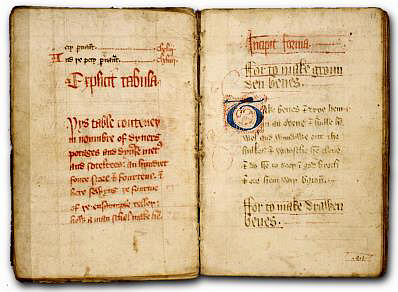
Payn Ragoun is a mystery in itself to me. Entitled “Pine Nut Candy” in Maggie Black’s The Medieval Cookbook, there is much in the original that confused me. The word “ragoun”, for example. What did it mean? Was a ragoun a style of cooking or was it a way of serving food? I wondered if it was just a word that had become lost with in time that used to mean a particular dish, like a pie, and medieval tables once groaned under the weight of strawberry ragouns and apples ragouns as well as pine nut ragouns. I decided to do a little etymological investigation, which basically meant typing “Ragoun: what does it mean?!” into Google like a madwoman until I hit on something useful. Or rather, I hit on something that just directed me right back to where I started. The University of Michigan Library’s online Middle English Compendium (yep, that’s a thing) had this explanation for the word “ragoun”:

“The name of a dish made with honey, sugar and bread.”

The associated quotations took me directly back to the recipe I was looking at, which didn’t do too much to clarify what this dish was meant to be. The compendium told me that the word “ragoun” possibly came from the Old French word “regon” meaning a mixture of wheat and rye. So, though I still felt a little nonplussed by what a ragoun was supposed to actually look like, my confidence levels rose as I turned to my husband, who hadn’t asked at all, and triumphantly exclaimed “well, at least I know it’s got bread in it.”

Reader, it did not contain bread. Let me explain…

The second thing that had confused me was the word “thriddendele” in the translation of the recipe I had. Maggie Black had explained this was a “mystery ingredient” (she translated the word “thriddendele” as meaning an anonymous “third item”) which she had taken to mean breadcrumbs. This seemed completely logical and fit in with my tenuous understanding of “ragoun” and the word “payn” in the dish’s title (meaning bread, from the French pain.) But this was where my lack of understanding of Middle English – and to be honest, modern English – came in handy. I had misread Maggie Black’s entry and thought she had meant that the word “thriddendele” was the word for the mystery ingredient itself. I wasn’t happy with my lack of knowledge of this ingredient – if it was going to be the third item in this dish I damn well wanted to know for sure what it was. And so, with all the puffed up indignation of a woman who has no idea what she’s doing but already spent money on most of the ingredients, I messaged Dr. Monk for help.

Firstly, he clarified, the dish seemed to be a type of soft toffee with pine nuts and ginger mixed in. There was a reference in the recipe to “take up a drop thereof with thy finger and put it in a little water and look if it hangs together” which indicated a method similar to the confectioner’s technique of checking when sugar has reached the “soft ball” stage for fudge.

Secondly, “thriddendele” wasn’t the name of an ingredient in its own right (as Maggie Black had also pointed out but I’d been too dense to realise) – it was from an Old English word meaning “third deal” as in part or portion. The instructions in my book may have translated “thriddendele” as an instruction to add breadcrumbs as the third part of the recipe because of how the original sentence was structured: “add thereto pine[nuts] the thriddendele (third part) & powdour gyngeuer.” However, word order wasn’t fixed in Old English, like it is today (this is also the case in Latin; Wand, Accio! would work just as well as Accio, Wand! by the way. As would Leviosa Wingardium, it just sounds a bit rubbish and means Hermione couldn’t do the special voice.) The shifting word order means that though the recipe was written “add thereto pine[nuts] the thriddendele (third part)” it could just as well read “add thereto the thriddendele (third part) pine[nuts].” Which actually makes much more sense as a cook – especially when you fall down the etymological rabbit hole and see that “thriddendele” can also mean one third of a whole – meaning, in this case, the word “thriddendele” sort of acts as two instructions; to add a final third ingredient (pine nuts) in a particular quantity (equal thirds to honey and sugar.)

Just in case you were wondering what would happen if you searched “thriddendele” in Google images.

The absence of bread and presence of pine nuts as the “thriddendele” becomes even more compelling after a quick analysis of modern understandings of the word “bread” versus medieval understandings of the word “bread”. To go back to the Middle English compendium, the word “payn” could mean a literal loaf of bread as we would recognise it today. But there was a secondary use of “payn” which just meant something of a breadlike consistency, such as pastry. Even more interestingly – that wasn’t a yawn, was it? – the compendium links this “breadlike consistency” use of the word “payn” back to the word “ragoun” as an example of a dish that matches this description. Payn Ragoun therefore wasn’t a dish made with bread; it was a dish that mimicked the consistency of bread, or bread dough.

I though this was meant to be a food blog, not an English blog?

Right. And before we move on – if there are any academics out there, or even just anyone who knows their stuff about words and… well, stuff, I guess, and thinks I’ve gone off on a huge incorrect tangent in my non-academic analysis, please let me know (nicely!) and I’ll correct it. If I can be bothered, that is, and if I can do it in a way that makes me look like I’ve grown to have the intellectual prowess of both Stephens combined (Hawking and Fry, FYI).

So, I knew I was working with equal parts honey, sugar and pine nuts. The question was how much was equal? “Thriddendele” could often mean one third of a gallon, which was about 1.5l. This was an obviously unacceptable amount for anybody who valued not having cavities in their teeth, so I scaled it down a bit and decided to switch to measurements in grams rather than ml which made everything a lot simpler.

I melted 250g of honey with 250g of sugar. This bit caused me some problems too, if I’m honest, as the recipe called for “Cyprus sugar”. This was the best quality available at the time, made in Cyprus, which had a thriving sugar industry during the 14th and 15th centuries and was considered the cream of the crop in England thanks to the many stages the cane went though to extract the molasses. The Forme of Cury was written by Richard II’s master cooks and though it was intended to be used as an instructional book for everyday dishes, it was also supposed to show off the king’s fabulous wealth and the skill of his cooks. Dishes such as “common pottages” were all well and good for the merely well off, but any dish requiring one third of a gallon of Cyprus sugar was firmly in the realm of the rich, thank you very much.

I was faced with a problem: did I stay true to the taste of the recipe – even if that meant using a non-regal unrefined sugar in an effort match the levels of refinement at the time – or did I try to copy the intent of the recipe and use the most highly processed white sugar I could? In the end I settled for an unrefined golden sugar made from 100% cane (not sugar beet). In all honesty, it was pretty much all the Co-op had on the shelf anyway, other than a packet of “Schwartz Hot Chilli Con Carne Mix” which I’m fairly sure had just been put in the wrong place.

Sugar and honey bubbling away, it was soon time to test the mixture. The author of the recipe had, presumably, a very dark sense of humour and advised dipping a finger into the seething mix of melted sugar to “take up a drop…in a little water” and see if it held its shape. I can imagine him laughing wickedly at the idea of trainee cooks taking his advice and screeching in pain as their flesh melded with molten syrup. In case you want to recreate this recipe yourself and it’s not obvious enough: do not touch boiling sugar with your fingers. Or hands. Or, (and I really shouldn’t have to spell this out), any part of your body at all, you absolute weirdo. I used a sugar thermometer – not technically authentic but far more likely not to land me in A&E and continued to boil the honey and sugar together until it reached the “soft ball” stage and registered 112 degrees C. I was a bit put out not to reach the vastly more amusing “soft crack” and “hard crack” stage but I think Richard II’s cooks were less immature than I am.

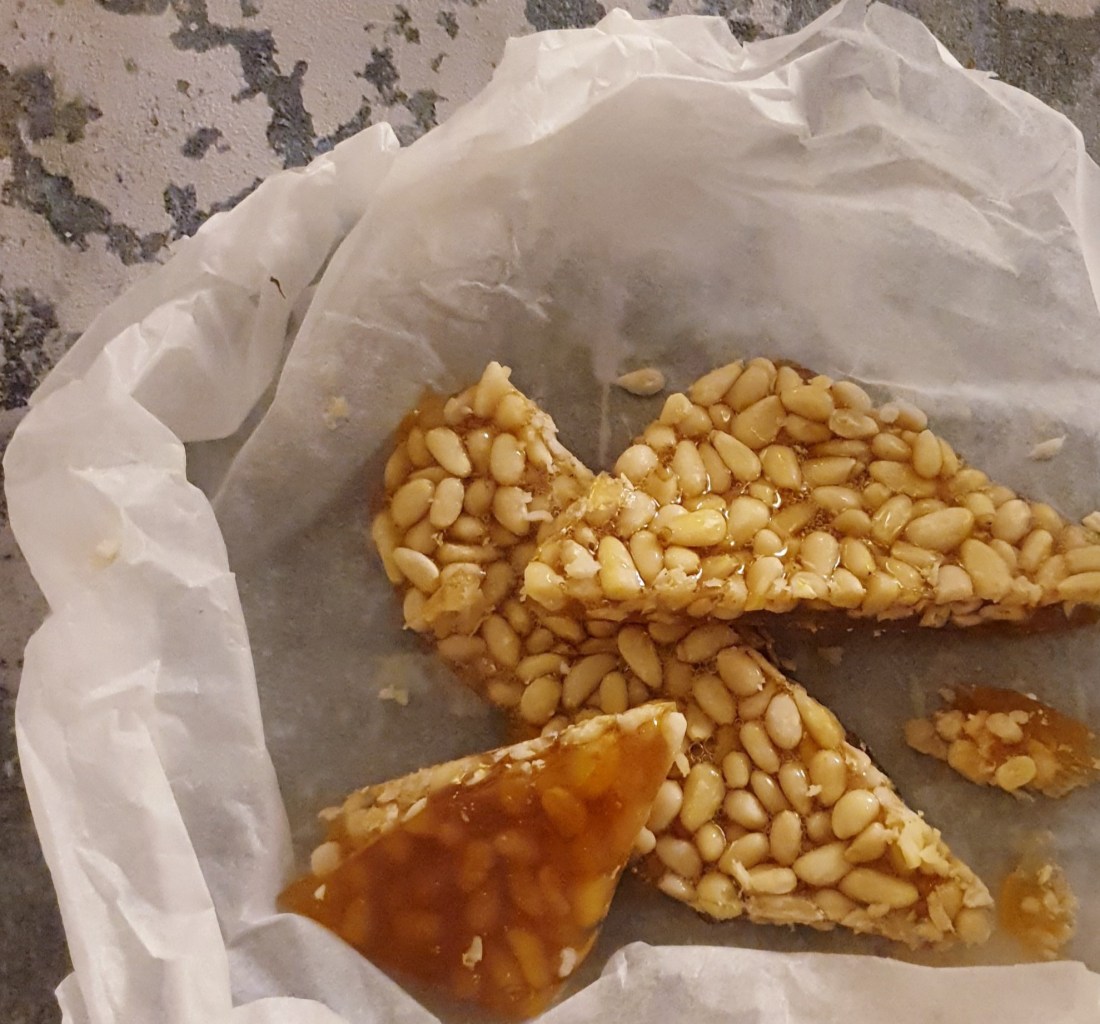
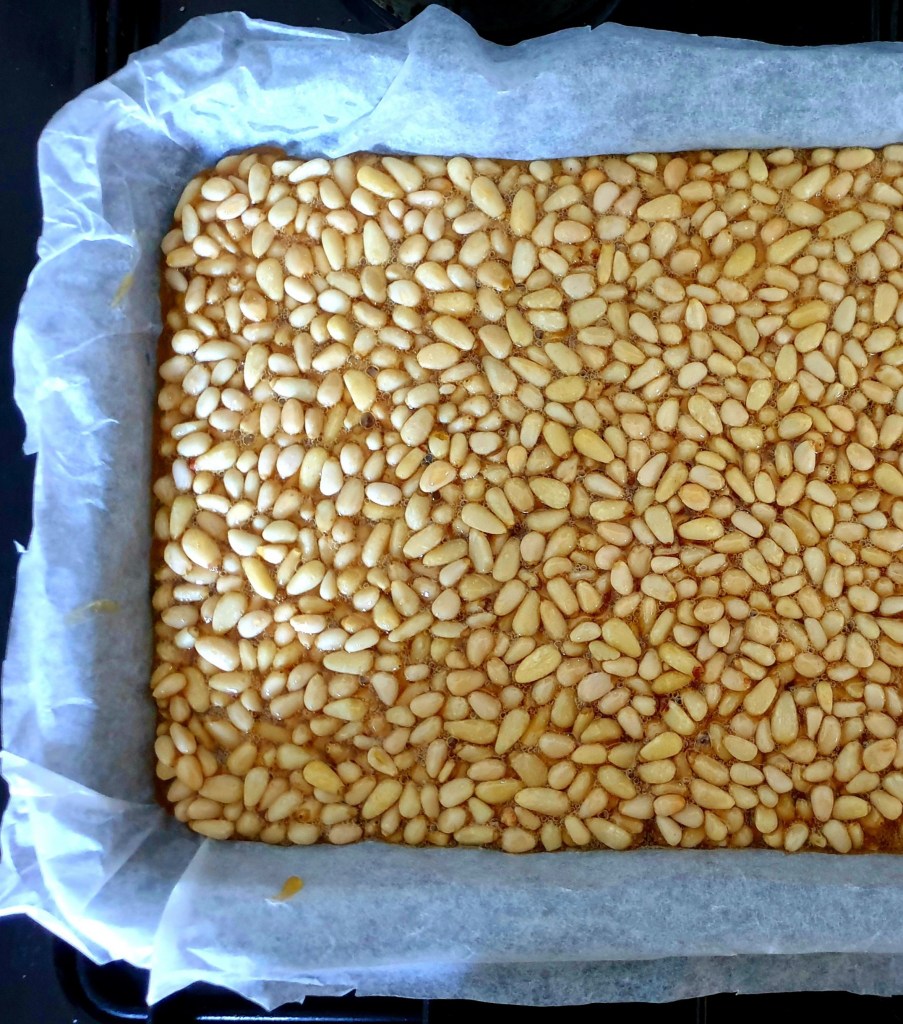
Once I’d reached the correct temperature, 250g of pinenuts were added, along with a good pinch of ginger, and stirred in. (I’m aware that is a hugely expensive amount and the fact I used a mixture of pine nuts from old open bags we had in already and a bag of specially bought ones might have skewed my perception on the overall cost of this dish, but it would still work with any similar cheaper hard nut.) The whole mixture was poured out onto a greaseproof paper lined baking tin and allowed to cool for a few hours.

I know, I was excited about this too.

The author of the recipe suggested serving this alongside “fryed meat, on flessh days or on fisshe days”, showing the medieval tradition of serving sweet foods alongside savoury, but we just decided to cut it into fudge like rectangles and eat it as it was instead.

My first thought were that it wasn’t as sweet as I’d expected. Obviously it was sweet, but it wasn’t that tooth-aching sweet you can get from fudge. It was quite woody because of the pine nuts, and very mellow. A bit like nougat is, but less smooth. The ginger was warm rather than overpowering and spicy, which worked really well. However, my results will be different from any others because a lot of the actual flavour came from the honey, which is dependent on local flowers and the nectar the bees use. Using a locally produced honey, my Payn Ragoun wasn’t overly floral or perfumed, but I can imagine that certain honeys would yield different results. Thyme honey, for example, would have a much stronger aromatic flavour.

I also think I should have cooked it for slightly longer. It held its shape when cut into rectangles, but in an oozy way. It would only take a hot afternoon to transform this back into liquid stickiness so cooking it to a “firm ball” stage (118-120 degrees C) might help a little more with that.

One for me and one for you…and one more for me.

In fact, I was sure this would be brilliant as a brittle. The instructions were vague at best about how long the mixture should boil for and, though the reference to testing a ball of mixture in water seems to correlate to the soft ball stage, there’s nothing to indicate it had to be that. It’s not outside of the realms of possibility that a cook got distracted (or had to go and plunge his hand into a bucket of cold water after trying the medieval soft ball method) and let the mixture bubble a bit longer. Furthermore, some of the recipes in Forme of Cury are similar to those found in the 14th century French/Italian cookbook Liber de Coquina, which had links to Arabic cooking. Why does that matter? Because centuries earlier Arabic cooks had been busy experimenting with sugar and were among the first to develop hard candy. By the 12th century there were clear signs of hard candy in some European recipes. While hard candy might not have been common in England by 1390, surely it would have been something the cooks of Richard II, who must have been reading other contemporary Arabic influenced works such as Liber de Coquina, would have known about? So I saved a bit of the mixture over and let it cook longer – to the hard crack (teehee) stage.

As expected, the brittle version of Payn Ragoun was even better than the fudge version. I love brittle, so didn’t mind that I was still chewing on a small piece of it two hours after I’d started, or that with each bite I could feel my teeth loosening from my gums. The brittle version seemed less sugary but more honeyed than the fudge version too, so if you prefer less sweet sweets, let your mixture boil for longer.

Just glorious.

Overall, this was a great sweet treat to make. It was surprisingly quick and easy to rustle up, if you don’t panic over melted sugar, and tasted very, very good. If you have honey and sugar in you should definitely try this – add pine nuts for a medieval version or experiment with other nuts – hazelnuts were used in medieval England too – or bits of fruit added at the last minute (just avoid super soft fruits like banana – though why would you add banana to anything anyway?!). I could even see a slab of this plain with flakes of sea salt scattered over the top of it as it cools working well too. I’d recommend the brittle version over the fudge, but it’s so easy to make you could just do two versions anyway.

Enjoy. And please, for the love of God, don’t stick your fingers in melted sugar. Just… don’t.

E x

Payn Ragoun

250g honey
250g golden caster sugar
250g pine nuts (or a combination of similar hard nuts such as almond
Pinch of ground ginger

  1. Line a small baking tray (I chose 28cm x 18cm) with greaseproof paper.
  2. Measure out all the ingredients before you start.
  3. Heat the honey and sugar in a pan over a low flame, swirling it occasionally to stop it clumping. Using a thermometer, or the cold water test, cook the sugar to 118 degrees C. If you want to make brittle keep cooking it until a thermometer reaches 146-1154 degrees C.
  4. When the sugar has reached the right temperature, take it off the heat and stir the pine nuts and ginger in until fully mixed. You will want to be a bit quick in doing this to stop the sugar and honey solidifying too soon.
  5. Pour the honey, sugar and pine nut mixture into the lined baking tray and leave to set somewhere cool, like a cupboard (not a fridge).
  6. After it is set, cut it into chunks with a sharp knife and enjoy. You should store it in greaseproof paper in an airtight container for lasting freshness.

Fritters of Spinnedge: 1596

The quest to eat more vegetables in the Foreign Pantry household is at risk of veering into saga territory. It should be straightforward, after all – two thirds of the household are adults fully aware of the five a day rule and there are (sadly) no reports of broccoli shortages in the shops. And yet. And yet.

I’ve spoken before about my good intentions and, for the sake of my daughter (whose first full sentence was “more biscuits now?”) we do keep some of the green stuff in the fridge and a bowl of f-r-u-i-t somewhere under piles of letter and papers on the table, but it’s not like I’m a natural herbivore, to put it lightly. You know those smug families with fridges full of veg organised in rainbow order, who always seem primed to tell you about a “fabulous new aubergine recipe” they discovered at the weekend? That’s not me. My fridge is arranged in whatever way will fit the most cheese in, and I had to use spellcheck to make sure I’d spelled ‘aubergine’ correctly just now (but ask me about a brownie recipe and I’ll give you five.)

Which goes some way to explaining how I ended up here: covered in beer and batter, frying balls of spinach in ever increasing quantities of butter. Hey, at least it’s a start.

Today’s recipe is from Thomas Dawson’s The Good Huswifes Jewell, an influential late Elizabethan recipe book written at a time of growing culinary curiosity when rich households began to collect cookery books to keep up with the fashions of courtly kitchens. As with many other similar cookery books of the time, The Good Huswifes Jewell contains recipes for herbal treatments for illness as well as recipes for food.

The Elizabethan era was a unique one: continuing to build on the foundations of the Tudor dynasty but with veins of medieval tradition still running throughout it, much of what went on in Elizabethan kitchens was a fusion of old and new. Clear instructions for cooking and measurements in recipes, for example, began to be used with some regularity during the Elizabethan era, which marked a shift from the medieval ‘chuck it in and hope’ approach to quantities of ingredients. Similarly, the food historian Ken Albala noted that Jewell was the first English cookbook to provide a recipe for sweet potato and used simpler flavour combinations than had been used in medieval recipes. Yet some things didn’t change; making use of seasonal ingredients was still key and combining sweet and savoury elements in one dish remained a favoured technique.

This is something that Fritters of Spinnedge highlights very well: if you asked anyone in 21st century Britain whether spinach fritters fried in beer batter was a sweet or savoury food I think most people would answer savoury. But Dawson’s recipe for spinach fritters, nestled between recipes for spit roasted mutton and boiled pigeons, is distinctly sweet. And, frankly, delicious. I’ve yet to find a better way to eat spinach.

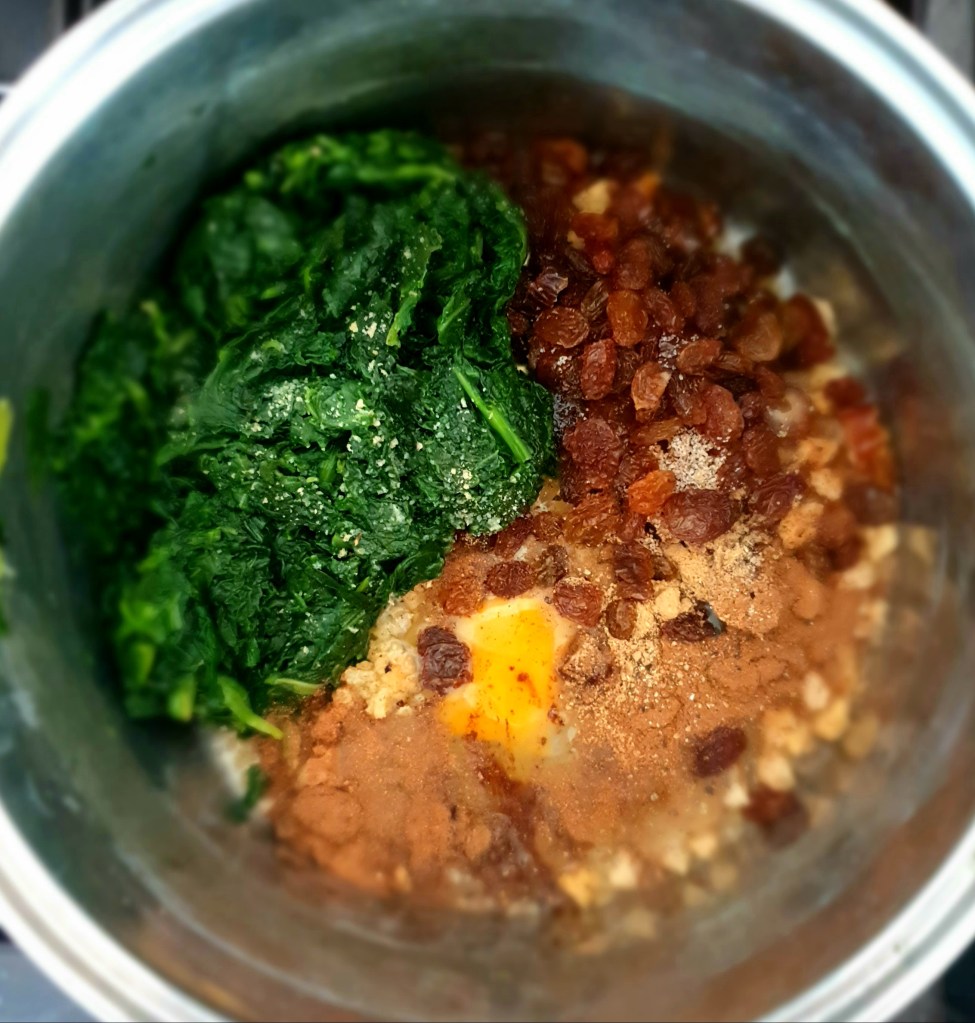
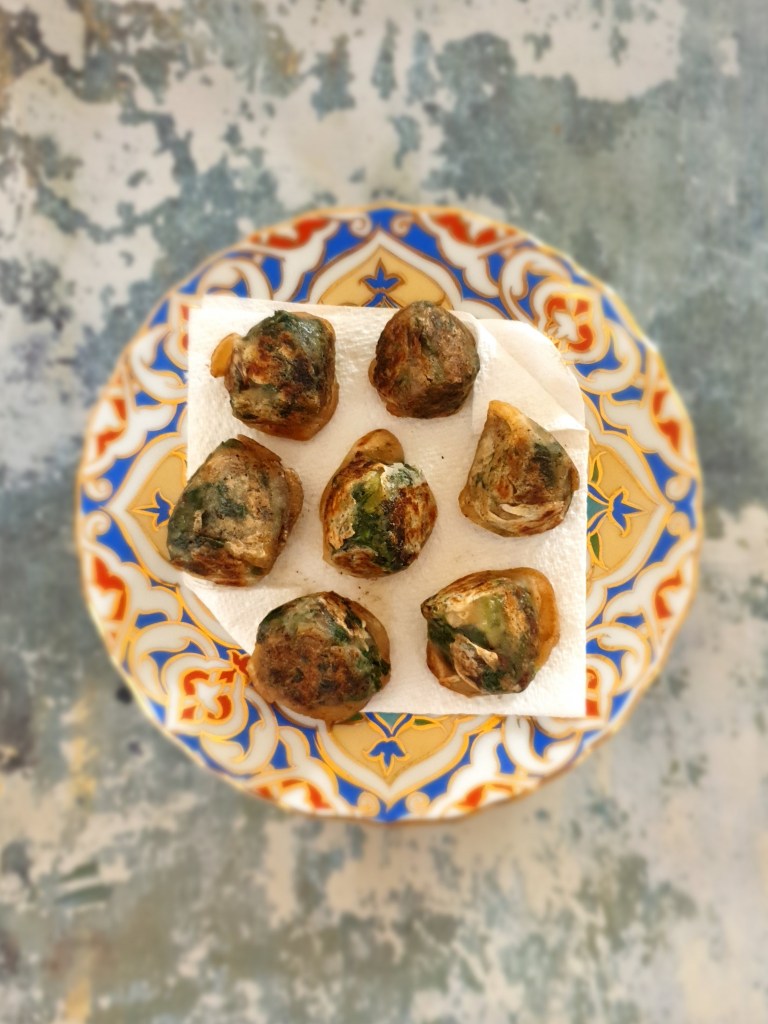
First I boiled spinach for a few minutes just until it was wilted, before straining the liquid off it and and adding a small handful of breadcrumbs. To this I added an egg, a teaspoon of sugar, cinnamon, ground ginger and pepper. Dawson then instructed me to add dates “minced fine” and currants, and then combine everything together. It looked wonderful. It smelt great. Maybe this could be our way to vegetable nirvana?

So far, so healthy.

Maybe not. After making my spinach and date mix, I had to roll the mixture into small balls to be fried. This bit took a while; despite my judicious spinach straining efforts there was still a lot of water left over so each ball had to begin in a vice like grip to squeeze excess moisture out before being shaped. It took a long time and gave me mild carpal tunnel syndrome; I’d started making fritters about golf ball size but worried they were too large to cook through so ended up downsizing to conker size. This made the process much longer and wetter than I would have liked and I wondered if maybe I just wasn’t cut out for a life of vegetables after all. Like, maybe it’s in my DNA to resist greenery whenever I encounter it and by putting so much effort into these bloody balls I was actually fighting my own inherent nature? Nevertheless I struggled on heroically, buoyed by a promise I made myself of a congratulatory hot chocolate if I completed the task successfully.

Balls finally shaped it was time to make the batter. Dawson suggested an ale and flour mixture, which I wasn’t about to argue with. Ale was the main drink of the fifteenth century and the first half of the sixteenth, after which beer began to take over. Ale tended to be sweeter than beer and was commonly brewed by women as part of regular household food production. Very good ale-brewers (AKA “ale-wives”) with a head for business could also make extra money selling their excess ale from their house, although commercially produced ale was subject to testing by local tasters (cushy job, right?) and anyone found selling sub-standard or watered down ale could face a hefty fine. The ale taster in Worcester during the reign of Elizabeth I was given the very onerous task of visiting “every brewer’s house in this city…and there to taste their ale whether it be good and wholesome for man’s body, and whether they make it from time to time according to the price fixed.”

Good ale could take a couple of days to produce, and I had as long as my daughter’s nap would last, so I had to duck out of becoming an “ale-wife” on this occasion and instead use what we had in: Doombar amber ale. I don’t actually drink beer myself, but I know some people get very het up about what counts as ‘good’ beer, so if Doombar doesn’t meet your exacting standards please direct all your outrage towards my husband, not me. Thanks.

I made up a thick batter of ale and flour and heated a frying pan with a knob of butter. Dawson didn’t give instructions for what the fat should be when frying the fritters, but in another recipe for “Fritter Stuffe” he mentions frying with butter, so I assumed he wouldn’t complain about it being used here either. Once each fritter ball had been coated with the batter it was plopped onto the pan and turned regularly in the butter to ensure it cooked on all sides. It wasn’t quite deep fat frying but apparently it was still smoky enough to set off our fire alarm, which momentarily woke our daughter, thereby threatening to ruin my fragile and newly found appreciation of vegetables. For some reason my husband had foreseen the possibility of this happening (casting no aspersions on my cooking ability, I’m sure) and was able to do the tea-towel dance under the alarm fast enough to switch it off before the toddler woke properly.

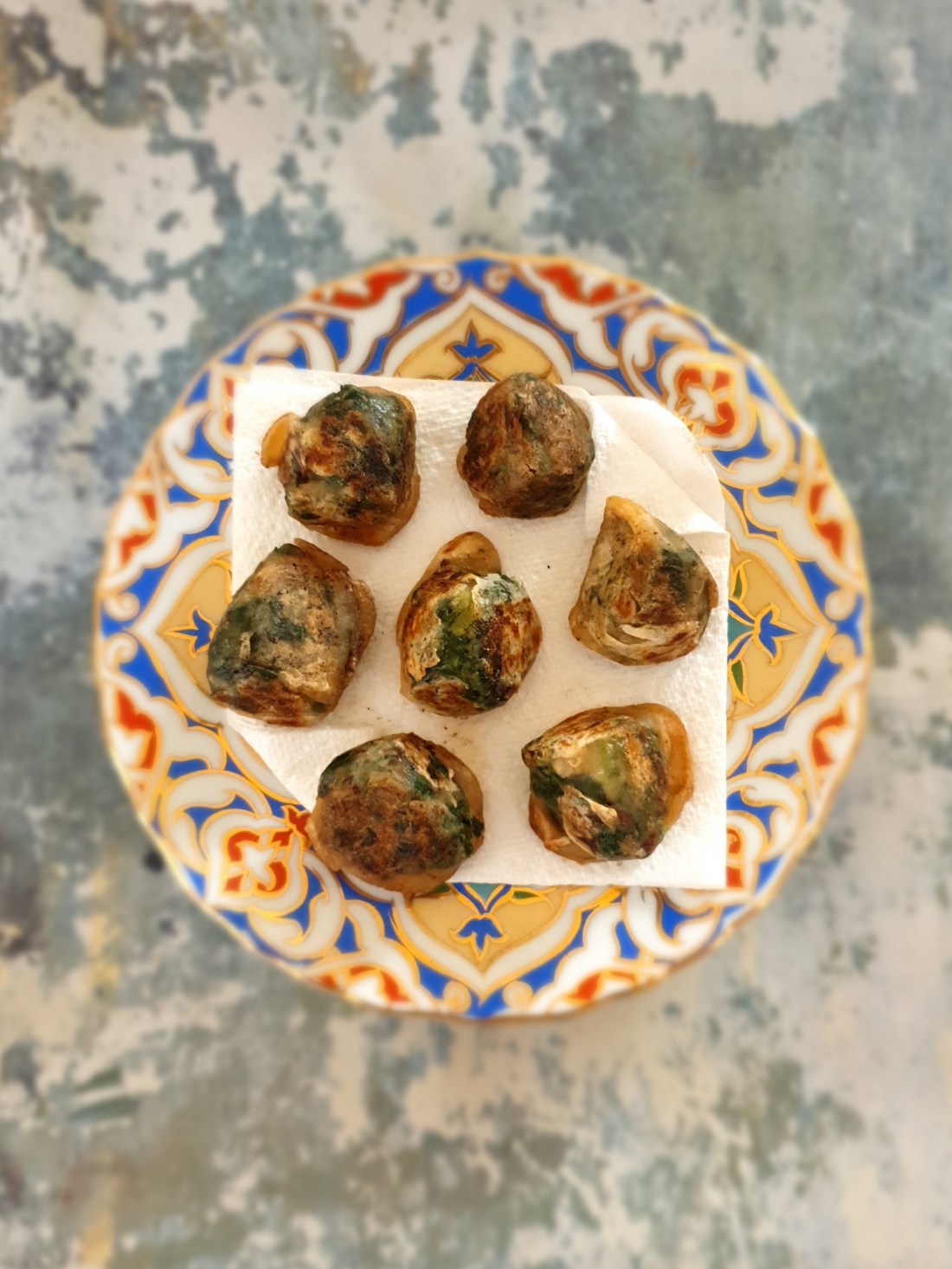
Fritters fried and toddler soothed back to slumber, it was time to taste test. Admittedly, it wasn’t an attractive dish. Plopped onto a plate with no arranging they looked like burnt sprouts oozing grease like there was no tomorrow. It wasn’t a fantastic advertisement for a new healthier lifestyle and I wondered if this had once been an Elizabethan version of avent-garde dining that had gone very wrong. Still, there was only one way to test…

…and thank the fritter gods I did. These were great! Okay, faffy and fiddly to make and ugly at the end, but really quite delicious. Definitely not healthy, though; the first taste was of buttery, beer-y batter which melted as soon as it hit the tongue.

I tried, I really tried. The plate, the napkin, the aerial angle – these really are just breathtakingly un-photogenic.

The spinach mixture was sweet, but not in a sugary, synthetic way. It was almost middle Eastern in its flavour combinations – the dates and currants lending a syrupy, treacle like element. Overall most of the spices were subtle, but the pepper was quite prominent and gave a kick to the back of the throat that lingered for a while after all of the fritter had been eaten.

Okay, so is this a feasible way to get more vegetables into your diet on a regular basis? No. Absolutely not. Not only does it take a bit of time to complete all the steps and roll out the spinach mixture into individual balls, it’s not really a healthy way to eat vegetables either (which sort of defeats the point.) But would I make it again? Yes! And that is definitely something to celebrate, if only because now I’m able to be one of those smug people who has a fab new spinach recipe to share with the aubergine lot.

But so what if these take a bit more time to prepare and are a little wonky to look at? They taste great and, at the very least, are a fun way to fritter away an afternoon (sorry).

E x

Fritters of Spinnedge

225g fresh or frozen spinach
1 egg
2 tablespoons of breadcrumbs
Teaspoon of sugar
6 or 7 dates
30g currants
1/2 teaspoon of cinnamon
1/2 teaspoon ginger
1/2 teaspoon pepper

For the batter:
75g plain flour
30ml light or amber ale

  1. Boil the spinach until wilted or defrosted. Strain it and shred it finely.
  2. Beat the egg and add it to the spinach along with the breadcrumbs and spices.
  3. Finely chop the dates and add them, with the currants, to the mixture. Mix all together until fully combined and sticky.
  4. Make balls the size of small conkers from the spinach mixture.
  5. Make the batter by mixing the flour and ale together and whisking until there are no lumps.
  6. In a frying pan, melt a large knob of butter until sizzling.
  7. Dip the balls into the batter and place them into the pan of butter. They should begin sizzling immediately and you will have to turn them on all sides to ensure they are cooked through.
  8. Eat straight away – these are better hot and fresh.

Libum: 160 B.C.

Who likes cheesecake?

Because I don’t want to live in a world the alternative is true, I’m going to assume that most of you said you did – good. Well, you’re in luck: today’s recipe from Cato the Elder’s De Agri Cultura could be seen as a type of blueprint cheesecake – one of the very earliest forms.

Before you get excited I should quickly read you the small print because there are a couple of caveats to this cheesecake recipe. For one: does it look like cheesecake? No. Does it smell or taste like a cheesecake? Also no. Essentially what we’re dealing with is a cheesecake in the sense that it has cheese in it and is shaped like a cake but really that’s where the similarities end. Libum may translate as ‘cake’ but rather than matching our modern day idea of cake as something sweet, the notion of ‘cake’ here just relates to the round shape. Some people (my husband is one of them) still use the term cake in this way today – a cake of soap, for example, which is why my toddler spent most of the night hiccuping up bubbles.

That’s not to say that ancient cakes couldn’t be sweet – far from it. Liba may not have contained any sweeteners in the dough, but that didn’t stop people serving them drowned in honey or pomegranate syrup. The Greek writer Athenaeus, writing some 350 years after Cato wrote the recipe for Libum also tells of basynias – boiled dough filled with a honey and date stuffing – and elaphos – dough shaped like deers cooked with honey and sesame – for the festival of elaphebolia.

Back in Cato’s De Agri Cultura we find a large number of different cakes listed, included the alarming entitled ‘placenta’ cake – but his concern with listing these cakes isn’t frivolous. In fact, as Nicola Humble points out in a book that encapsulates my two greatest loves with frightening precision – ‘Cake: A Global History‘ – Cato’s preoccupation with cake in a work that is otherwise serious and instructive shows how culturally significant it was to the ancients.

Libum fits in perfectly with this assessment of the seriousness of cake. Rather than be baked to be eaten (although of course they were also used for this), Libums primary function was as a sacrificial offering to the household gods of ancient Rome. Each household would have had an altar upon which one or two of these cakes would be offered to give thanks to the gods. Is there a link with the word ‘libations’, which seems to be only associated with liquid offerings to the gods? I don’t know – opinions and guesses are welcome! Someone who specialises in Roman food and who made much better Liba than I, Farrell Monaco, sheds some light onto the religious function of these cakes. Go and read her post on Libum for much more accurate history and baking than I can provide!

Copy of De Agri Cultura at the Laurentian Library. Credit here.

Cake for the gods? Must be pretty fancy.

Er…

The thing about sacrificing food to the gods in the ancient world is that people often, um, cheated. They didn’t see it as cheating, obviously, but the foods that were offered were usually not what we’d call the cream of the crop.

Take the ancient Greeks. If you know your Odyssey or your Illiad (*scoff* and who doesn’t?!) you’ll know that men of ancient epics quite frequently cook and offer up food as sacrifices to the gods. It happens fairly often – in fact, Odysseus could probably have been home a lot sooner if he hadn’t dilly-dallied around with “burnt offerings” as much as he did. And what were the offerings of choice? Why, thigh bones wrapped in fat and roasted to a crisp, just like mum used to make. Yummy!

The ancient Egyptians were little better – oh sure, they might make a show of offering their gods fruits, breads, wine, fatty meats and rich cheeses up to three times a day, but once the prayers had been said the altar was cleared before the gods could tuck in and the food was taken home to be eaten by the priests (who later died of blocked arteries – true story.)

And finally, the Persians. Herodotus tells us they had no temples to their gods as they believed altars to be “a folly” but when they felt the need to do some praying they stuck with good old fashioned human sacrifice. Even with this unconventional offering the gods might not get long to enjoy the meal; the butchered victim later had his flesh carried away by a holy man (Magi) to make “whatever use of it he may please.” Hmm. Whether or not we trust Herodotus’ account of human sacrifice – notorious anti-Persian sensationalist that he was – is of course another matter.

Engraving dating from 500-475 BC possibly of Persian king Xerxes killing Spartan king Leonidas to make a tasty kebab with later (also possibly not.)

All of which is meant to say: humans are greedy and don’t like sharing. Why offer Zeus an actual saddle of lamb when you can just burn some bones and say that the gods appreciate the smell of burning fat more than the taste of meat? Why allow cheese and meat to fester away on an altar to Osiris when you, a priest, can just eat it and claim that your actions were divinely inspired? Why sacrifice something as useful as a cow to Ahura Mazda when you can kill a potential criminal and ask for a successful harvest in one go?

Liba were no different. No one was going to stuff them with expensive spices or insist they be filled with precious honey just to be left at the altar to some god of lost car keys or getting red wine out of the carpet. Of course, if one were to make enough Liba for the gods to take their share and for everyone else to enjoy then that was another matter. Then all sorts of toppings and additions could be added.

So what’s in them?

Ricotta, spelt flour and egg. They could not be simpler!

The recipe is as follows:

Make libum by this method. Break up two pounds of cheese well in a mortar. When they will have been well broken up, put in a pound of wheat flour or, if you wish it to be more delicate, half a pound of fine flour and mix it well together with the cheese. Add one egg and mix together well. Then make into bread, places leaves beneath, and cook slowly on a hot hearth under an earthen pot.

Cato, De Agri Cultura

I used wholemeal spelt flour because 1) spelt was a very common grain in ancient Rome, 2) we already had it in, and 3) like any good victimarius before me I wasn’t about to waste my best quality plain flour in a time of flour shortages.

I mixed all the ingredients together until a sticky and quite wet dough formed. Although I kneaded it for a few minutes I found that there was only so much it would actually stiffen up, so turned quite quickly to the baking of it.

I greased a cake tin with olive oil and made a bed of bay leaves which I placed my wet dough, rounded to perfection by my own fair hands, onto, and placed the pan into the oven. Cato stated that the dough should be cooked “under an earthen pot”, which panicked me slightly because I imagined the steam would only make my already damp dough damper, which could hamper the dough de-dampening – d’oh! Nevertheless, I complied and in lieu of an authentic earthen Roman pot, I placed a stoneware lasagne dish over the pan and left it to cook for an hour.

After an hour the Libum was firmer but still felt a bit undercooked. It lacked any sort of brownness, so I put it back under the lasagne dish for another thirty minutes and crossed my fingers that I wasn’t about to give our household gods indigestion from under baked dough. After half an hour it looked much better and was ready to offer up to the goddess of house and hearthside, Vesta.

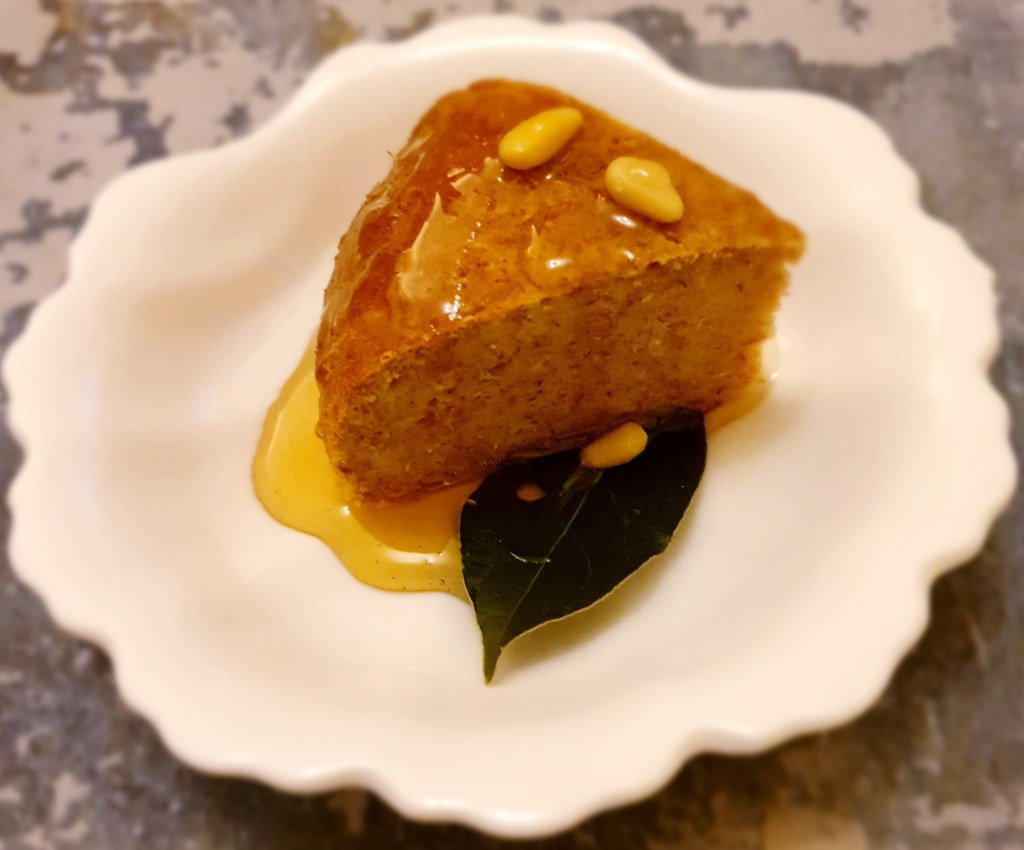
Before we placed it on our household altar, though, we thought we should probably try it. Cato’s original recipe was somewhat plain but would probably have been embellished with all sorts of additions. For authenticity I chose not to add any of these additions to the actual dough, but instead heated honey and toasted pine nuts, both very common features of Roman kitchens, to have as accompaniments.

Eaten alone, Libum was perfectly pleasant. Both my husband and I struggled to equate it to a modern day food – it didn’t taste cheesy but there was a creaminess to it that was thanks to the ricotta. The base of the cake where it had been sat on the bay leaves was particularly delicious and fragrant. I’d never really tasted bay before, not having a palate sophisticated enough to pick up on bay in stews or casseroles, but here it was unmistakable. The spelt was also a great choice of flour as it provided additional texture that fine white flour wouldn’t, as well as a contrasting nuttiness that worked very nicely. The Libum was dense – very dense – but not exactly heavy or stodgy, and it cut beautifully. It wasn’t, however, like a cheesecake. There was no light moussiness or whipped quality to it.

So far, so good. Of all the things I’ve tried to cook, this felt like something that was as close to the original as I could make it – it tasted ‘old’ and looked authentically simple. One Libum fit comfortably in the palm of a hand and I could imagine a young girl laying a couple of these at the household altar and munching absentmindedly on one for herself as she made her way back to the kitchen.

With honey was where Libum really shone, however. I drizzled a little, then a lot, over a slice and sprinkled it with pine nuts. It was glorious. I would now consider honey and multiple little Liba an essential on any cheeseboard, if I were the sort of person who was fancy enough to serve cheeseboards after dinner, or pick them instead of cheesecake for pudding at a restaurant. In fact, if I’d ordered a cheesecake for dessert and a slice of Libum with honey arrived instead, I don’t think I’d send it back.

Cheesecake it isn’t, however. Libum is much closer to bread than cheesecake and there can be no doubt that like most bread, Libum performs best when warm and fresh from the oven.

Unfortunately, this morning I realised we’d run out of bread (fresh or otherwise) for our morning toast and wondered whether leftover Libum would work instead. Cato may have argued that the best Liba were the ones that were offered to the gods, but what he might have been pleased to know is that a day old Libum, slathered with lemon curd and eaten on a rainy morning in front of the TV also holds up well, with or without the gods’ blessings.

E x

Libum (makes 1 cake)

250g ricotta
125g spelt flour or wholemeal plain flour
1 egg
Bay leaves

  1. Preheat oven to 180 degrees c.
  2. Break up the ricotta in a large bowl to a rough paste.
  3. Add the flour and egg to the ricotta and combine thoroughly.
  4. Grease a round cake pan with olive oil and make a bed of bay leaves in the bottom. You want enough bay leaves to completely cover the base of the dough.
  5. Shape the dough into a round disk, about the size of a hand.
  6. Place the dough on the bay leaves in the cake pan and place in the oven. If you have an ovenproof dish to cover the pan and help create steam you can place it over the dough. If not, don’t worry and just bake as you would a normal cake but check on it after 1 hour.
  7. After 1.5 hours if baking under a pot (and after 1 hour if baking as normal) check on the cake. It should be golden brown on top and the edges and firm to touch, like bread. If not, bake for another 5-10 minutes and check again.
  8. Take the cake out of the oven and while it is cooling, place some pine nuts in a dry frying pan and toast for a couple of minutes. Keep an eye on them as they turn quickly and you don’t want them to burn.
  9. Heat some honey in a microwave or add it to the frying pan with the pine nuts if you want to combine the two and heat until runny.
  10. Serve the Libum on a dish and honey and pine nuts in a jug or plate to dip slices into.

Vanilla Ice Cream: 1949

I love condensed milk. I love it so much that having even one tin of it in the house would constitute a genuine health risk to me; what my husband calls ‘previous incidents’ have shown that in a mere matter of hours I can eat a whole tin on its own. A few years ago I read that some children who were evacuated to the countryside during WW2 were often given small tins of condensed milk to sip on during the train ride to give them a sweet treat to shut them up cheer them up as they were wrenched from their families. Nobody can know how they’d react in a historical situation, but part of me feels that I would have been loudly and enthusiastically volunteering to be evacuated from the second I found out what would be in my lunchbox. To put it another way: if Roald Dahl had written about Charlie and the Condensed Milk Factory I would have replaced the Augustus Gloop character and would have been very happy indeed to drown in a pool of the stuff.

I don’t want anyone to think I’ve got a problem here; I can go months and months, a year maybe, without it. I feel smug when I pass it on the shelf in Sainsbury’s and ignore its saccharine call – “Not today, Satan!” I chuckle to myself to the alarm of other shoppers – but then a well meaning relative will invite me over for coffee and baking and it all goes to pot the second I have a bite of anything made with it. Move over, marijuana, there’s a new gateway drug in town and its name is millionaire’s shortbread.

So imagine my disappointment – nay, my horror – when I got back from the shop and furtively unpacked a tin of it to stash somewhere secret, away from exasperated husbands and perpetually hungry toddlers, and found…I had bought evaporated milk instead. Not my lovely thick, creamy, sweet condensed goodness at all but something altogether different. “Send me back home,” my imaginary evacuated self cried, “this isn’t what I was promised! Make it go away!”

I turned to Twitter for help, hoping someone would swoop in to reassure me that if I added x amount of sugar I could make my own condensed milk and all would be well. How much would I actually need?

“A shed load” came the reply.

Well, bugger.

Luckily I was assured that a bit of evaporated milk worked wonders in rice pudding and was very generously offered a delicious recipe that used up half my tin. But what to do with the other 200ml?

I’d always associated evaporated milk with rationing and frugality – it was the sort of thing I imagined my grandparents continued to eat on top of fruit despite cream being readily available again, just because that’s what they’d had as children. So I turned to WW2 for inspiration. More accurately, I turned to the years immediately following WW2.

In the years immediately after WW2 rationing continued and for some items got worse. Bread, which hadn’t been rationed during the war years, was added to the list of rationed foods in July 1946 – over a year after Victory in Europe Day. It was a bad time for children up until 1953 when sweets were finally de-rationed, and even worse for carnivores who had to wait until 1954 for meat to be de-rationed too. However, imported foods that had disappeared from Britain during the war began to be brought back into the country in small quantities such bananas in 1946 – much the bemusement of children who had never seen one before and tried to eat them with the skin on.

1943 sheet music for that famous chart smash “When can I have a banana again?” I don’t know, blame Hitler.

In 1940 the Ministry of Food issued a report called The National Food Survey to be compiled. The survey was to provide “independent check[s] on the food consumption and expenditure of the population during the war…to assess to effectiveness of the Government’s war time food policy.” It continued to monitor the food consumption of those it termed the “urban working-class” until 1949 and was published in 1951 because the information it had compiled was useful for helping show which foods could be de-rationed.

The data for 1947 and 1948 showed that, thanks to rationing, on average people from the sample were eating 12% and 20% less cheese, 7% and 12% less meat and 30% and 17% fewer eggs (including dried) respectively than compared to 1945 – the year the war ended. Milk consumption – in all its forms – was also down slightly in the two years after the war. But by 1949 consumption of milk, cheese and eggs had begun to rise, with milk being consumed at 107% of 1945 levels (though consumption of cheese and eggs as a percentage was still below 1945 levels and fresh eggs in particular remained conspicuously absent from many post war recipes.)

If you want to get really nerdy about it (and I do) you can even see the breakdown in the percentages of type of milk consumed. The amount of milk produced in 1948 rose by 50% compared to 1945 and by a further 7% in 1949. At these higher levels of production the government could afford to remove the restrictions placed on milk sales for a record fifteen weeks during 1949, which meant more people could drink more of it at much cheaper prices. This is partly shown in the data for 1949; we can see that “liquid milk” retailed at full price (excluding “School milk” and National Scheme milk which was subsidised) was consumed at a rate of 3.26 pints per head per week during this year compared to a rate of 2.93 pints per head per week in 1945. That’s an increase in consumption of 11.26% which doesn’t quite match up to the 57% increase in production – suggesting that less than half of the newly produced milk was being used as drinking milk.

(Hope you’re enjoying my rarely used GCSE maths skills because there’s more to come. Or you could skip ahead to the recipe, I won’t judge.)

Though milk and milk products might have been more readily available (although drinking milk was still rationed to 3 pints) tins of condensed and evaporated milk were still needed and could be bought on the points based system – with a can of condensed milk taking a whopping 10 of the 20 allocated points a person received in a month. But the beauty of canned milk was that a tin of condensed – or evaporated – could replace cream and sugar (and in some cases the binding qualities of egg) in one go, meaning that households could preserve their precious weekly rations of sugar and eggs (1 egg per person, about 200g sugar per person.) And as for cream? Ha! A luxury most had to give up – emphasied by the rise of numerous recipes for ‘mock cream’ from the time period.

We get it – you like data. But we’re really only here for the ice cream…

I actually hate data but I hear what you’re saying.

The best ice cream is made with sugar, egg yolks and cream – but all those things were still rationed in 1949 and a woman would really have to love her kids to use up her own weekly rations to make frozen dairy goodness for them. I’m not saying some women didn’t choose to forgo sugar and cream for themselves so their children could have a little treat, I’m just saying I wouldn’t. My daughter knows where she stands when it comes to my love of sweet food.

What mothers could do, however, was make fake ice cream using a tin of evaporated milk like the one I had shoved to the back of the fridge to wait forlornly before mould or cooking inspiration struck – whichever came first.

I used Marguerite Patten’s Post-War Kitchen for my ice cream recipe. Patten was a employee of the Ministry of Food during WW2 and was in charge of the Ministry of Food Bureau at Harrods demonstrating to customers the wild and wonderful recipe ideas that could be achieved on rations. This included recipes that some might call resourceful (others might call them abhorrent), as the government’s 1947 recipe for whale mince meat proves. Remember – any unexpected meat was a bonus and nothing was off limits, even whale carcasses that floated up the Thames were fair game.

Ice cream was a luxury whichever way it was served – fake or not. I halved Patten’s recipe to match the quantities of evaporated milk I had left over and found that half of the recipe was still plenty for a family of three. The recipe below shows the full quantities.

First I had to make the ‘cream’. That’s not me putting quotation marks around the word cream, that’s genuinely how it appeared in the book. I never really realised it before but my doubts for how well a recipe is going to turn out directly correlate to how many times quotation marks are used around seemingly normal ingredients.

For this I melted 25g of butter in a pan with 75ml of whole milk. I then spent quite some time whizzing it together in a blender to try and emulsify it. I think it worked, though it wouldn’t have passed for cream next to a jug of the real stuff; by the end of whizzing it was frothy and slightly thicker and there were no globs of butter floating on the surface, but it was still thinner than cream. Patten would have used a manual cream-maker to make her cream, but since the price of one of those today is around £20 on ebay and the price of actual cream is under £1 I didn’t think it was worth investing in one this time round.

While my ‘cream’ bubbled quietly in the background I whipped the remaining 200ml of evaporated milk with 25g of caster sugar (12.5% of my weekly sugar ration, that) and a teaspoon of, er, vanilla essence. I did have a quick Google as to the availability of vanilla essence in 1949 and as far as I could see it seems the jury’s out on whether it would have been present in many households. Certainly it wasn’t as commonplace as it is today. Let’s assume I got it on the black market, but don’t tell anyone.

Once the evaporated milk was whipped and foamy I folded in the ‘cream’ (still suspicious), poured it into a container and froze it – the recipe assured me it would not need mixing during freezing, so I was free to get on with some other post war things, like listening to the wireless. My husband and daughter – somewhat pointedly, I felt – instead chose these spare hours to make numerous trips to the freezer for Magnums and Fruit Pastille lollies.

After half a day the ice cream was done. And it looked good! It was pretty soft to scoop and I noticed that it seemed to have separated into two layers – a fluffy white layer on top that was soft and a yellowish harder layer underneath that was more icy.

I also bought some hazelnuts on the black market.

In terms of taste we were all really surprised. It was delicious! I wouldn’t say it felt like a traditional ice cream – the frothy white layer ended up turning to a mousse after only a few minutes out of the freezer and it wasn’t as sweet as modern day ice cream (which isn’t a bad thing necessarily.) Although it was less silky and had some ice crystals in it, it was somehow still very creamy and rich. I was also surprised at how strong the vanilla taste actually was given the small quantities of it, but it was unmistakable.

On a warm day in the garden my daughter had no complaints and finished a bowlful before demanding more.

“Hush sweetie,” I told her kindly. “I don’t love you enough to share my food or rations with you. You’ll just have to wait until next week.”

E x

This post is part of Twinkl’s VE Day Campaign, and is featured in their Best Wartime Recipes to Celebrate VE Day from Home post”

Vanilla Ice Cream

For the ‘cream’:
50g butter
150ml whole milk

For the ice cream:
‘Cream’ as above
400g evaporated milk
1 teaspoon vanilla essence
50g caster sugar

  1. Melt the butter and milk for the ‘cream’ in a saucepan until just warm but not simmering.
  2. Pour ‘cream’ mixture into a blender and combine for several minutes until there are no bits of butter floating on the surface and the mixture is a creamy colour, slightly thicker and fully combined.
  3. Whip the evaporated milk with the caster sugar in a bowl until foamy. It should be like soft peak meringue.
  4. Add the vanilla.
  5. Pour the mixture into a freezable container and freeze for several hours until set.

“The Best Sausages That Was Ever Eaten”: 1658

I mean, how could I say no?

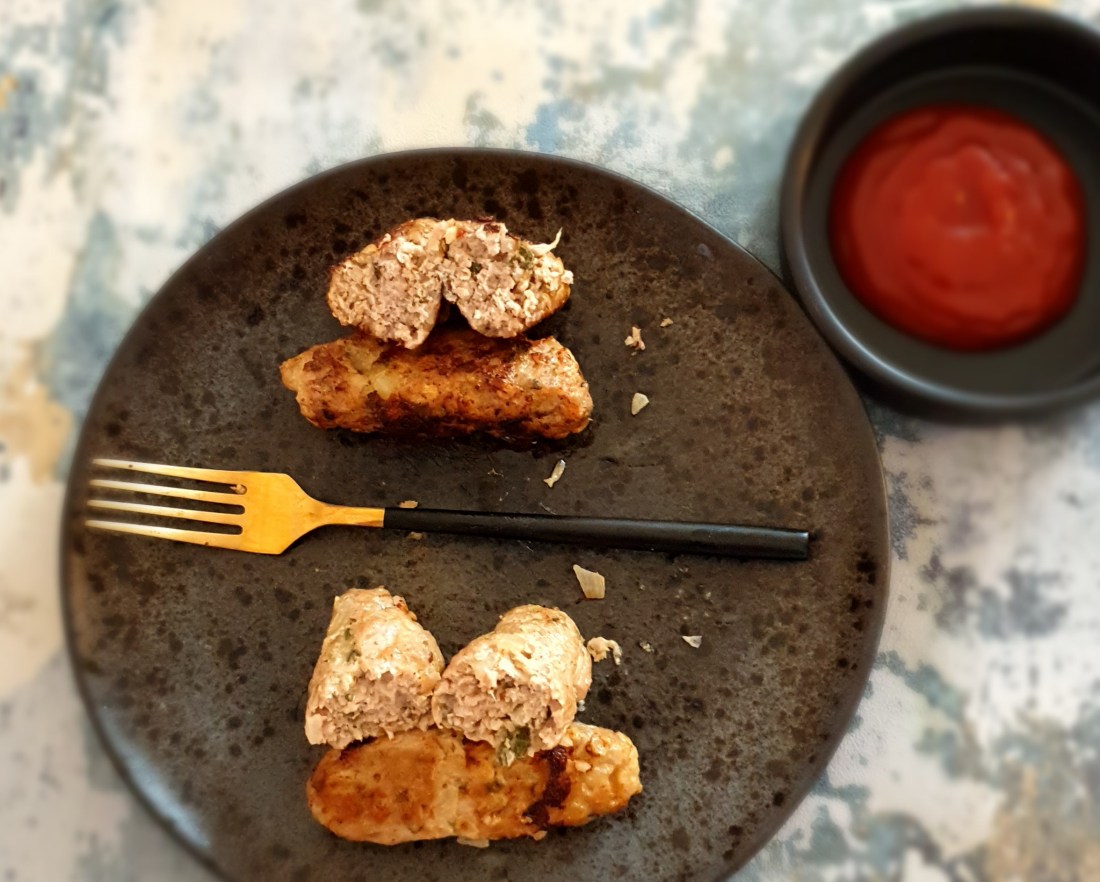
It was a bold claim for a book that also contained recipes for “Fritters of Sheeps feet” and something called “Pap” (which as far as I could see was just a bowl of milk, flour and egg) so I wasn’t filled with confidence that these would in fact be the best sausages ever. Nevertheless, I bought pork mince instead of our usual Cumberlands and told my husband and daughter to expect the best bangers and mash they’d ever tasted; there was now no other option but to trust in the conviction of an author so sure of the recipe that he had published it anonymously.

The Compleat Cook, or to give it it’s full title in all its pomposity: The Compleat Cook, Expertly Prescribing The Most Ready Wayes, Whether Italian, Spanish Or French, For Dressing Of Flesh And Fish, Ordering Of Sauces Or Making Of Pastry was not one for humility. I mean, if the title itself didn’t fanfare the skill of the anonymous author, three of the recipes have “excellent” their title, two refer to themselves as “the best” and four refer to themselves as “good”. In fact, there was a second recipe for sausages in The Compleat Cook for “good sausages” should one feel unprepared or unworthy to try “the best sausages” (incidentally, if this is you, have a believe in yourself a bit more – of course you’re worthy of the best sausages.)

Of course, all this showmanship does make you wonder why the author felt the need to explicitly state that the recipes in his book were actually worth eating. Were there other cookbooks with recipes for “Substandard Syllabub” or “Gruel to make you gag?” Were some cooks, punished by their masters for burning dinner, secretly flicking through recipes to find a lowest grade of sausage they could to serve in quiet revenge? Well actually, in a way – yes.

Really appreciate the use of curly brackets here. Definitely feels more ‘expert’.

The Compleat Cook is actually part of a wider work originally published in 1655 called (slightly pervily) The Queen’s Closet Opened. Part one ‘The Pearl of Practice’ deals with medical concerns, part two ‘A Queen’s Delight’ deals with confectionery and part three ‘The Compleat Cook’ is more of a general set of recipes. And who was the Queen of England in 1655?

Mary? No.

Elizabeth I, then? Also no. Try harder.

I don’t know – Victoria?! Well now you’re just embarrassing yourself.

In truth, there wasn’t a Queen. That’s right – we’re slap in the middle of the good ol’ Interregnum years where Christmas celebrations were curtailed, Puritans decreed that fine foods (such as the best sausages you ever did eat) were outlawed and high taxes saw growing public resentment of what had once seemed a bold new way of running a country. Oliver Cromwell, the king Lord Protector who ruled the UK from 1653 – 1658 had pretty much the same powers as a king but without the title. In 1649, following years of bloody Civil War, Cromwell signed his name on the death warrant for Charles I. Four years later, he had all but replaced Charles. Just as Charles I had believed in the divine right of kings and executed those who did not give him what he wanted, Cromwell also believed in shutting down anyone who disagreed with him until they capitulated and asked him to rule as sole Lord Protector, which was very different from being king because there were more syllables. When he died in 1658 he passed his power to his eldest son and was buried in Westminster Abbey – but remember you better not call him a king!

Cromwell’s ‘reign’ was marred by unbelievable brutality against the Irish by troops he was in charge of (see: Drogheda) and his hope for a 16th century version of religious tolerance towards the various Protestant sects, despite his own strongly held Puritan beliefs, just contributed to huge mistrust among his contemporaries.

After the monarchy fell in all but name many rich households looking to find favour with the notoriously austere self styled ‘Puritan Moses’ would have had to let their distinguished chefs go. Puritan England didn’t look kindly on feasting and frivolity. So the chefs, whose reputations were based on their ability to conjure up fine banquets and ingenious dishes had to advertise their services in the hope that they might find employment in new households – ones that were less concerned with kowtowing to the new Lord Protector. The Compleat Cook can therefore be seen as the worst type of C.V.; long-winded, pompous and well over the accepted 2 page limit. The Queen of the wider Queen’s Closet of which Compleat Cook was a part, was probably Henrietta Maria, wife of the executed Charles I.

This was a bold move which perhaps explains the anonymity of the author; he must have hoped that discreet word of mouth would help him find new employment if his book rose to prominence. People were fascinated by the ways of the rich and The Compleat Cook allowed them to glimpse behind the veil at a way of life that had been, quite literally, killed off.

So what about these sausages then?

Oh yes, the sausages.

A glance through the recipe suggested these wouldn’t be too bad at all – all they were was pork mince, suet, onions and herbs and spices. Interestingly and reassuringly there was no casing involved, just a confident conviction that binding the ingredients with egg yolk would create a meat paste that would hold its shape when fried.

First I combined pork mince, beef suet, diced onion, sage, nutmeg, salt, pepper and egg yolk in a bowl until it formed a thick mush. I’m not sure I’d call it a paste and I was unconvinced it would hold its shape during cooking, but if I wanted to experience the best sausages I’d ever eaten I had to respect the process.

I had high hopes for this…

It became apparent that rolling the meat into sausages wasn’t going to work; bits of onion and suet kept flaking off and ruining the shape. I ended up rolling balls of the mixture in my hands and patting each ball into a sausage shape.

And that was it. It was all really straightforward. The recipe assured me that the uncooked ‘paste’ would last for 14 days but I saw no reason to make my un-Puritan heathen family wait that long and risk food poisoning, so I cooked them straight away.

Usually I bake sausages rather than fry them, and since the mixture was enough to make 10 good sized ones, I fried four and baked six to see if there was a difference.

I was surprised to find that both fried and baked, the sausages retained their shape well. Even when being turned and prodded to see how much longer to go, they held up. They even smelled pleasant – much meatier than shop-bought ones and fragrant with the sage. The only worrying thing I noticed was that thanks to the suet there was a lot of fat in the pan. But more fat meant more flavour, right? Maybe these were going to be the best sausages I’d ever eaten.

After twenty minutes or so it was time. I arranged the sausages as artfully as one can arrange tubes of meat without making it look like a sculpture of solid turds, squeezed some tomato ketchup that I’m sure Heinz followed an authentic civil war recipe for into a pot, and served my meal.

The least appealing ‘arty’ photo you’ll ever see.

My husband took an enthusiastic bite. I waited.

“Is it good?”

A nod.

“But is it the best sausage you’ve ever eaten?”

A shake of the head.

No matter, I was prepared for this. “Well, is it the second best?”

“No.”

“Top five?”

“I don’t know! Who keeps a mental list of their top five sausages ready to reel off? It’s good. It’s a bit bland, but it’s fine.”

He wasn’t wrong.

I can’t think of another way to describe them apart from meaty. I don’t know if it was because lots of shop sausages include breadcrumbs, or mince the meat very fine, but these felt almost more like burgers. The lack of casing made the fried ones slightly drier than I was used to – for some reason, though, the baked ones weren’t as dry.

The sage and nutmeg were noticeable and worked well with each other, particularly the nutmeg which created a subtle spiciness at the end of each mouthful that I wasn’t used to with modern sausages.

Overall, if I were a noble family looking for a new chef in 1668 I’d need to see another showstopping dish from The Compleat Cook before employing the author. They were good – but not the best I’d ever eaten.

In a weird way, maybe the simply “good” sausages which followed a similar recipe (with more spices and no onion) but encased the mixture in traditional “hoggs guts” would have tasted better, but the rulers of 17th century England were unlikely to find out; in 1660 Charles II retook his father’s throne ending the Protectorate and restoring the monarchy. Upon his return the custom of spectacle and lavish dining (usually at the expense of the nation) came back into fashion. Charles II would often be served 26 dishes and used silver-gilt and gold plates as he sat at a table covered in embroidered linen under a canopy of state. Spectators who could only dream of such luxuries were invited to witness the royal gorging from behind railings. “Good” sausages probably wouldn’t have cut it anymore.

E x

The Best Sausages That Was Ever Eaten

500g pork mince
450g beef suet
1 onion
2 egg yolks
Nutmeg
Salt and Pepper
2 handfuls of sage

  1. Mix all the ingredients together in a large bowl until well combined and sticky.
  2. Take enough mixture to form a ball in the palm of your hand and shape into sausages.
  3. If frying, place sausages in pan and cook for 15 minutes, turning regularly to ensure they are cooked through.
  4. If baking, place sausages on a baking tray and cook for 20-25 minutes in an oven at 180 degrees.

Poor Knight’s Pudding: 1859

A friend of mine was visiting New Zealand at the end of February. All was going well – she’d been welcomed by her daughter and son-in-law, was enjoying immersing herself in the local customs (read: doing the park run every weekend) and had eschewed traditional tourist sites in favour of public toilets so splendid and magnificent they had their own tourist marker on the map and 4/5 stars on Tripadvisor.

And then: lockdown. Months have passed and she remains, in her own words, stuck passing the time on the phone to the airport trying to book various flights home, only for them to be pushed back indefinitely or cancelled. It gives her something to do now the toilets have stopped taking visitors, apparently.

One thing she did manage to do before we were all plunged into quarantine was visit Poor Knights Islands, whose English name possibly comes from the islands’ resemblance to an English dish called Poor Knight’s Pudding – a sort of Anglo version of French toast. Poor Knight’s Pudding was a popular dish at the time of Captain Cook; the man who ‘discovered’ the islands, much to the surprise of the Ngatiwai people who already lived there, in 1769. The islands are also famed for their red flowering summer pohutukawa blossoms which mimic jam on Poor Knight’s Pudding. Maybe I could do some research on the dish, she wondered, and possibly recreate it?

Jammy French toast? Count me in.

The earliest records of Poor Knight’s Pudding comes from ‘W.M.’s 1658 work The Compleat Cook (“To make poore knights”) where bread is dipped in cream and eggs, fried in butter and drizzled with rosewater, but this recipe doesn’t shed much light on why it was called Poor Knight’s Pudding. Foods Of England reveals that there are similar European dishes with equivalent names (a German recipe called arme rittera and a Finnish one called köyhät ritarit), but that none of these alternatives gives any indication as to the dish’s name either. To add some more confusion to the mix, Regula Ysewijn points out that after 1791 the English version of the dish seems to have changed name to Poor Knights of Windsor and the cream was replaced with white wine and sugar before being fried and served with cinnamon.

The original Poor Knights of Windsor were a group of knights who became financially ruined during the Battle of Crécy in 1346 by having to ransom themselves after being captured by the French; probably the most awkward and expensive realization of one’s own unpopularity that ever existed. Though Edward III clearly didn’t think enough of them/have enough money to pay their ransom personally, he did set up The Alms Knights of St. George’s Chapel which provided shelter and a pension to twenty-six ‘Poor Knights’ in exchange for them attending four Church services a day and praying for the king. As time went on, the Alms Knights for retired impoverished military personnel continued to lodge ‘Poor Knights’ at Windsor Castle with subsequent kings and queens decreasing and increasing the number of ‘Poor Knights’ on roll as they saw fit, until William IV renamed them the Military Knights of Windsor in 1833.

Whether or not this dish was named after them, one thing was becoming clear: there was a distinct and disappointing lack of jam in all of the early recipes. Now, it’s very probable that jam or stewed fruit was served alongside traditional Poor Knight’s Pudding so maybe Captain Cook wasn’t totally delusional when he looked at flowery rocky islands and saw a bread and jam based pudding, but as jam is absent from all the recipes I looked at I didn’t include it in today’s experiment.

The recipe used today is a Victorian incarnation from J.H. Walsh’s 1859 The English Cookery Book, chosen for one thing alone: its accompanying side dish.

First I took a stale white bread roll and sliced it thinly into five slices. The slices were then dipped into a mixture of whole milk, one egg, one tablespoon of sugar and nutmeg and left to absorb it for an hour. After an hour the soggy, swollen slices were lifted and drained on a wire rack over a bowl for another hour.

Poor, flabby, blob knight’s pudding.

Once the dunking and draining had been completed it was time to transform the bread from globby blobs to golden brown toast. I fried each slice in a pan of butter for a few minutes on each side and then turned to the reason I’d chosen this version of the dish – the wine sauce.

Walsh insisted the way to serve Poor Knight’s Pudding was with wine sauce, which it turned out was melted butter and sugar mixed with sherry and brandy. Who was I to argue?

For some reason (probably because we are both in our 20’s and neither of us is landed gentry) we didn’t have any brandy in. We did have sherry though, left over from Christmas and – inexplicably – cherry brandy. God knows why, maybe we won it in a raffle?

It wasn’t quite what Walsh recommended, but it would have to do. Almost as soon as I added the sherry and cherry brandy to the melted butter I knew I was onto a winner. The liquid turned a deep amber and the smell became intense and fragrant. I added lemon rind and nutmeg and took it off the heat. There might have been a chronic lack of jam, but I felt confident that the wine sauce would make up for it.

Everything looked great, and I was looking forward to eating this alone. I’d timed it all to perfection; the fried bread was still steaming, the wine sauce was warmed through and, best of all, my daughter was napping upstairs only able to dream of stealing my food rather than attempt it for real. And then. And then.

“That looks good. What is it?”

A shadow in the doorway loomed larger and my husband came into the room.

“I’ve just been outside fixing the trellis, like you asked” he said to my plate of food. “I’m starving.”

“Oh?”

“Yeah. Really hungry.” Eyes still on the plate.

There was a pause almost as awkward as a knight realising he was going to have to pay his own damn ransom.

Long story short: I did 100% of the research for these myself, I made 100% of these myself, I ate 40% of them. Ladies, add Poor Knight’s Pudding to things that are victims of a gender-gap.

I didn’t even get the bigger slices. Outrageous.

They were bloody brilliant, though. Which kind of made the fact I semi-voluntarily gave three of the five slices up even more bitter. The fried bread was much softer and richer and less ‘toast-y’ than normal French toast because it had been soaking for so long. It had a slight spiciness to it thanks to the nutmeg and a sweetness thanks to the sugar.

But the real star was the wine sauce. Buttery and boozy, it was almost too indulgent. Even once the fried bread had been eaten we sipped at the leftover sauce with spoons. As time went on the butter separated from the alcohol which created a pretty two-tone element to the sauce; gold overlaying amber.

French toast, eggy bread, Poor Knight’s Pudding – call it what you want. As long as you’ve got wine sauce (or jam if you prefer a modern version) I can think of no better way to use up a stale bun.

E x

Poor Knight’s Pudding with Wine Sauce

For the fried bread:
1 white roll
1 egg
1/2 pint whole milk
Sugar to your taste (I added 1 tablespoon)
Grated nutmeg

For the wine sauce:
50g butter
2 tablespoons sugar
1 sherry glass of sherry
1/2 sherry glass of brandy
Rind of 1/2 lemon
Grated nutmeg

  1. Slice the bread roll into slices approximately 2cm thickness.
  2. Add egg, milk, sugar and nutmeg to a large bowl and mix together well.
  3. Place the bread slices into the mixture and coat each slice. Then leave the slices in the mixture for 1 hour.
  4. After an hour, pour off the mixture and drain the bread on a wire rack for 1 hour.
  5. Fry the slices of bread in a frying pan with a knob of butter. Fry each side for 2-3 minutes or until golden brown. Transfer to a warm plate.
  6. In a pan heat the butter for the wine sauce. When melted, add the sugar and dissolve over low heat.
  7. Add the sherry and brandy and swirl into the butter and sugar.
  8. Add the lemon rind and nutmeg and heat on a low heat for a couple of minutes to give time for the flavours to infuse.
  9. Remove wine sauce from heat and drizzle over the fried bread. Eat immediately before your husband can see.

Seed Cake: 1928

There’s something so comforting about the idea of afternoon tea, isn’t there? Like a scene straight out of an Agatha Christie novel; dainty ladies of a certain age in floppy hats and charmingly flowery dresses sitting outdoors, sipping tea out of china cups and chatting about the Church fundraiser. Maids laying delicate slices of loaf cake on three tiered cake stands already groaning with scones and cucumber sandwiches while men play croquet in the background. You know, just before the murder starts.

Very comforting indeed. And I realised, as I gazed at my own wasteland garden with its pigeon-poo-pebble-dashed picnic table, so very, very unobtainable.

For one, I didn’t own any proper china. Most of my cups are of the novelty, chunkier than a brick kind and none of them will ever match unless I happen to be given two of the same sets of hot chocolate kits for Christmas.

Secondly (and I really can’t stress this enough) I will never be dainty, delicate or charming enough to fit in with the quintessential afternoon-tea-on-the-lawn set. How do they not descend into animal grunts every time they bite into an eclair? Why must they wear those restrictive (but still charmingly flowery) dresses when a bin bag with a hole in it would cover one’s modesty whilst allowing for maximum bloat and serve as a ready made ‘take home’ bag if there are any cakes left at the end. Which, let’s face it, there would be. There are always cakes left over at those sorts of afternoon tea parties; hundred of cakes to choose from yet people only ever select one and then spend the whole afternoon taking sparrow-like pecks at it. Because apparently it’s not “decent” to slide an entire plate of fondant fancies into your handbag, or “socially acceptable” to stand by the buffet table windmilling shortbread into your mouth and trying to roundhouse kick anyone who approaches you with a plate of their own and laughably optimistic views about the notion of ‘sharing’.

It wasn’t my finest hour and no, I’m not expecting any more invitations to my grandma’s afternoon tea parties.

I have nothing in common with this girl.

Catherine Ives’ recipe

Today’s experiment is an attempt to conjure up some of that classic nostalgia that surrounds a good Marple-esque afternoon tea. Seed cake was a classic guest of vintage tea parties. Its presence at village fetes and W.I. meetings was as guaranteed and cliched as finding out that yet again the murderer was the doctor (butlers of the world rejoice; it’s always the doctor now.)

The recipe I’m using is from Catherine Ives’ 1928 book When The Cook Is Away – a handy companion aimed at alleviating pressure on a whole generation (and class) of women who had suddenly found themselves cook-less and somewhat unwillingly independent following the end of World War One some ten years previous. Ives’ recipe was re-printed in Arabella Boxer’s Book of English Food which focused on recipes from the interwar period. Boxer highlighted that after WW1 the heavy, bloated Edwardian dining habits of the middle and upper classes ended thanks to the fact no-one could afford to pay for a full set of household staff. A whole host of well dressed, well spoken, well helpless women were suddenly faced with an unimaginable prospect: learning to cook for themselves. Catherine Ives’ When The Cook Is Away was therefore aimed at young aristocratic women with little prior experience in the kitchen who needed a few tips (although in reality many of these women were able to continue employing at least one member of staff who might help out with cooking.)

Boxer also argued that the 20 years or so between WW1 and WW2 were largely forgotten about, food wise. With stodgy Edwardian puddings at one end and strict rationing at the other, the interwar period had quietly slipped out of society’s recollection. Thanks to the work of historians like Annie Gray, the whole scope of 20th century food is coming back into focus, but Seed cake remains one of those ‘forgotten’ dishes, occasionally remembered by a nostalgic relative or Nigel Slater.

It’s not even an interwar creation, which makes the fact it’s been consigned to the dusty corners of kitchen memory even more upsetting (I imagine; I don’t know all the emotions cakes have.)

There are references to Seed Cakes throughout pre-20th century literature: Miss Temple dazzles Jane Eyre with a “good-sized seed cake” in 1847, David Copperfield shares a “sweet seed-cake” with Miss Clarissa and Miss Lavinia in 1850 and as far back as 1573 the poet Thomas Tusser used not at all annoying rhyming couplets to advise wives that the best time to prepare seed cake was during the harvest.

Recipe books mention cakes and tarts containing caraway seeds as far back as 1591, such as A. W’s ‘Tarte of Prunes’ in Book of Cookrye. But the beginning of seed cake’s heyday was the 1700’s where it appeared in Hannah Glasse’s 1784 edition of The Art of Cookery Made Plain and Easy multiple times: “A Cheap Seed-Cake”, “A Fine Seed Cake”, “A Rich Seed Cake”.

Reassured that seed cake’s withdrawal from common society was an unexpected consequence of the outbreak of WW2, given its previous popularity, and not because it was a disgusting waste of sugar, I set about recreating my own from Ives’ recipe. “We’ll see who’s a “disgrace to polite society” when they see this”, I muttered (or I would have, if I’d been a real murder mystery character.)

Firstly, I beat butter into a cream and added sugar. I used a hand held mixer for this but it woke my daughter, who sleeps in the room above the kitchen, and my husband assured me that if I didn’t stop making noise he’d add “thief of domestic harmony” to my list of cake-based crimes. Also that I would have to do all of the subsequent nighttime settling if she woke for good, which was the bigger incentive to stop, to be honest.

Butter and sugar combined, I added half the flour and one egg, stirred it in and then added the rest of the flour and another egg. Catherine Ives then said to add between 1/2 and 1 tablespoons of caraway seeds (I chose 1/2) and the rind of 1/2 a large orange, which we didn’t have. What we did have, though, was Tropicana With Bits – so I spent 10 minutes sieving juice into a jug and scraping out the pulp into the cake, much to my husband’s exasperation.

“Just say you used an orange – who’s going to know?”

I said people would, because I’d tell them. He said I was cutting off my nose to spite my face so I said he wouldn’t be saying that once it was baked and he wanted a slice. He told me that with the length of time it was taking to get enough pulp, I’d never get round to baking the damn thing anyway and I replied that I’d be sure to include this exchange as part of the blog so people could see how unsupportive he was being. So there you go.

The next part of the cake was physically demanding. I didn’t expect it to be because, well, it’s a cake. It’s literally the food of people who aren’t good at physically demanding things. I had to beat the mixture for 10 minutes by hand because of my bat-eared toddler and because it was lacked any liquid it was a very dough like batter and not very pliable at all. There was a huge disparity in the ratio of dry ingredients to wet ingredients and it was like beating cement. I managed about three minutes before I limped back to my husband sweating profusely and gasping for air, and begged for help.

Like the gentleman he is really, he obliged and spent the next seven minutes huffing and puffing as he walked round the living room stirring and complaining about the bowl “too flimsy!”, the handle of the spoon “too sharp!” and the speed of time in general “too slow! There were four minutes left when I asked three minutes ago!” Finally, after about 12 minutes (sorry darling, but I was still a bit annoyed with you) it was done. The mixture was less solid but still very dense. I spooned it into a loaf tin and baked it for 1 hour.

I had high hopes for this cake; it was no longer a simple, humble seed cake in my opinion but had taken on a more significant meaning. In its making it had caused a minor rift in my marriage and helped me drop a dress size. With its completion I anticipated my triumphant return to tea party society where I would resume my rightful place at the buffet table and no one would dare come near me or the shortbreads again.

WHO’S LAUGHING NOW, GRANDMA?

I hate liquorice, which I know caraway can be reminiscent of, but when I tasted this cake I was very surprised. Yes, there was an aniseed hint there but it was very subtle rather a flavour that shone through. Mainly the flavour was mild and creamy – there was a hit of almond that I couldn’t work out since there was no almond in the recipe. The cake was also surprisingly light given its dense appearance pre-baking, and quite dry, but not unpleasantly. For all its simplicity of appearance it tasted and felt rich and buttery; I began to wonder whether grandma would even need shortbread at her next tea party if she had this.

But therein lies seed cake’s biggest problem (other than getting bits of caraway seed stuck in your teeth): it’s not pretty. It isn’t attractive like a fondant fancy or sugary sweet like Battenberg. It lacks the gleam of ganache on fudge cake, the call of caramel in millionaire’s shortbread, the appeal of apple in a tart (and so on, and so on. Have fun making your own up.) Yes it tasted great, but it has to convince people to actually choose to eat it before they realise that it tastes great, and when faced with a scone topped with cream and jam or a slice of plain seed cake, I know which one I’d go for.

Still, we enjoyed our seed cake – my husband, daughter and I. Sat among weeds and wildflowers on furniture that had seen better days, sipping out of a Sports Direct mug fighting over the last few slices – there was no other tea party I’d rather be at. And since there weren’t any Christie-inspired doctors invited to our tea party, no one ended up murdered which was an added bonus.

E x

P.S. By the way – since this is a tea party cake and I haven’t mentioned any tea I recommend a variation of masala chai without the heat of the peppercorns or cloves (recipe below). Its combination of mild spices and sweetness perfectly matches the creamy notes (who do I think I am?!) of the seed cake. Try it – you won’t regret it.

Seed Cake

180g unsalted butter
120g caster sugar
2 large eggs
225g self raising flour
1/2 to 1 tablespoon caraway seeds
Grated rind of 1/2 large orange

  1. Set the oven to 160 degrees C.
  2. Beat butter to a cream, add the sugar and cream both.
  3. Beat in one egg and half the flour and combine.
  4. Beat in the second egg and the rest of the flour and combine.
  5. Add the caraway seeds and orange rind.
  6. Mix the mixture by hand for 10 minutes (or blend with a handheld mixer/food processor for 2 or 3 minutes.)
  7. Pour mixture into a loaf tin and bake for 1 hour or a little longer, until the the cake is set and golden brown on top.

Masala Chai

Almond sized piece of fresh ginger
3 cardamom pods
1 cinnamon stick
2 teaspoons of black tea (or 2 teabags if you don’t have loose tea)
Milk
Sugar to your taste (or honey, maple syrup, agave syrup etc)

  1. Fill a medium saucepan 3/4 of the way with water and bring to boil.
  2. Crush or grate the ginger into the water.
  3. Crush the cardamom pods and cinnamon sticks and drop into water.
  4. Allow the spices to boil in the water for 3 or 4 minutes before adding the tea.
  5. Once the tea has been added, turn the heat off and allow tea to infuse into water. You want a strong brew, not a weak one. Wait about 5-10 minutes.
  6. Pour milk into a cup – just under 1/2 of the way up.
  7. Strain the tea and spices and pour into the cup of milk.
  8. Add sugar to your taste – though I think the sweeter the better.

Doucetes: 15th century

We were all in need of something that wasn’t chocolate this morning. Don’t get me wrong – no one loves the stuff more than me, but our cupboards were beginning to look like we were an accredited wholesaler to the Easter Bunny and when my daughter picked up a large mud covered pebble from our garden path and tried to eat it shouting “Egg!” I knew things had gone too far.

So – what to make that was 100% chocolate-free but was still as indulgent and delightful as a Dairy Milk bar you’d forgotten was in the bottom of an Easter Egg? Egg custard tarts, obviously!

Today’s treat is from Two Fifteenth Century Cookery Books. These cookery books were first published in 1888 by Thomas Austin who, along with others, had prepared two sexily entitled manuscripts: Harleian MS. 279 and Harleian MS. 4016 (archivists aren’t big on marketing and PR, it would appear) and published them together to create one historical cookery book. In 1964 the texts were republished by the equally excitingly named Early English Text Society and a little more light was shed on their origins.

Harleian MS. 279 dates from about 1430 while Harleian MS. 4016 dates from about 1450. As was standard for cookbooks of the period, there are instructions in each not only for individual recipes but also feasts and table designs – a bit of a how to manual for cooks of rich households.

Not from the Harleian MS, but a good reminder that fine medieval dining required epilepsy inducing backdrops.

Some of the recipes in Two Fifteenth Century Cookery Books appear alarming: Cinnamon Soup, Fried Brawn, Swan Neck Pudding. I quickly shifted my laptop as my husband asked hopefully what treat I was making.

“Oh…something, haven’t decided yet.”

“Just as long as it doesn’t have anything too weird in it!”

I glanced down at the screen, my eyes resting on a recipe for something called Meat Custard.

“Nope. Nothing weird here.”

Luckily this time I was able to stick to my word.

Medieval egg custard tarts

Yep – this is exactly what Doucetes turned out to be. I don’t know the etymology of the word (if anyone does please let me know!) but they were delicious and very easy to bake. Seriously, if you’re a fan of eggy puddings but not of sugary saccharine stuff, then this is the thing for you.

Douceteȝ.—Take Creme a gode cupfulle, & put it on a straynoure; þanne take ȝolkys of Eyroun & put þer-to, & a lytel mylke; þen strayne it þorw a straynoure in-to a bolle; þen take Sugre y-now, & put þer-to, or ellys hony forde faute [leaf 40.] of Sugre, þan coloure it with Safroun; þan take þin cofyns, & put in þe ovynne lere, & lat hem ben hardyd; þan take a dysshe y-fastenyd on þe pelys ende; & pore þin comade in-to þe dyssche, & fro þe dyssche in-to þe cofyns; & when þey don a-ryse wel, take hem out, & serue hem forth.

FIFTEENTH CENTURY COOKERY BOOK. I.
HARLEIAN MS. 279, ab. 1420 A.D.

As with all good medieval recipes, there were no instructions. Well, none that would have been helpful – quantities, measurements, baking times. It was all a bit of a guessing game. The only thing I felt confident about was that I was making several small tarts rather than one big one – thanks to the references to ‘cofyns’ which were medieval pastry cases. Big ones for morbid imagery, medieval cooks.

Medieval pastry was sometimes little more than flour and water because it wasn’t always intended to be eaten but instead was just a vessel for the filling. Stuffing meat into a pastry case was a good way to ensure the food could be baked without fear of burning or going dry (and could also provide a laugh – when serving chicken pie, cooks might leave the legs of the chicken dangling out of the top of the case. How those long winter evenings in manor house kitchens must have flown by.) For that reason some cooks didn’t want to waste precious ingredients on pastry that would end up being thrown to the dogs. However, other cooks took a more modern approach to pastry making, recognising that a good pastry crust was as much a part of a meal as the filling it protected.

True medieval recipes for pastry never contain fat, such as butter. If an enriching agent is used it is usually egg. The recipe for Doucetes didn’t give instructions about which sort of pastry I was dealing with (egg or not) but I had high hopes for the yumminess (to use a technical term) of these, so I allowed myself some creative freedom and decided that I’d treat my family to Paest Royall – an early version of shortcrust pastry that required eggs and butter. True, it was from A Proper New Booke of Cookery which was about 100 years after my Doucetes recipe, but who was going to stop me? If you would like to compromise on flavour in the name of authenticity then simply sub out the butter in the pastry ingredients below.

Pastry made and shaped into tart cases thanks to a very un-medieval muffin tin, I blind baked it and turned to the filling.

First I mixed cream, milk and three egg yolks together to form a thin custard. I expected to have to heat this mixture, but the original recipe didn’t call for it. To this I added sugar and saffron for colouring and that was the custard done. It couldn’t have been easier. Thanks to previous historical experiments I knew that something always goes wrong, it’s something of an unspoken code, a game between modern cook and historical cook – part of the fun is trying to spot what it will be before it happens. I began to get very suspicious indeed.

Once the pastry had blind baked for 15 minutes, I poured my silky smooth custard into the cases and popped them back in the oven for 20 minutes. Surely here was when the monstrous reality of the dish would rear its ugly head? Would the saffron react with the egg in the heat? Would the medieval pastry twist out of shape and the custard burst forth, creating an eggy mess I would quietly and without explanation leave for my husband to clear up later? I awaited with a mounting sense of excitement and foreboding.

But…nothing. It was almost disappointing.

After 20 minutes or so the tarts were a pleasing golden colour. The custard had set without issue with a suggestive, almost scandalous, wobble. Apart from the couple that seemed to have developed major cellulite during baking, they looked very appealing. Even the little runty one (you know the one – the scrag end of the pastry where you’re trying to gather all the scraps together to force one last case) was standing proud. They were really rather splendid.

Glorious eggy, cellulite-y tarts. Mmm!

I tentatively brought them to my husband and daughter.

“No chocolate?” she asked me incredulously.

No chocolate indeed. I couldn’t imagine anything could improve these further. The anonymous author of MS. 279 knew what he was talking about – they smelled and tasted bloody delicious.

The pastry was rich and buttery, exactly as pastry should be. My daughter treated her first tart as though the pastry case was just a vessel and scooped the filling out, leaving the pastry behind. Fool. I ate the empty pastry shell before she could realise her mistake.

The filling was divine. Creamy and rich – there was nothing stingy about it at all. I had worried that it would end up a bit like scrambled egg, or that egg would be an overwhelming flavour, but there was nothing of the sort. If anything cream with saffron were the main flavours – a sort of milky richness with an earthiness to it that made these tarts incredibly moreish. In fact, they were brought out of the oven at 11:00am and were all gone by 11:30 (and 10 minutes of that was spent fighting my daughter off them as I tried to get a decent photo.)

Had to pin my daughter to the floor to get this picture.

It was then that I realised what had gone wrong with this particular dish, as I knew something must. It was me. Wary of ending up with hundreds of burned scrambled egg tarts I had made a conservative number of them – eight small ones. I should have made more – these were easily one of the best things I’ve made so far. I have doubled the quantities I used for the recipe below to yield 16 small cases.

If you’re looking for something indulgent but not too sweet, give these a go. I know I’ll be making them again and will continue making them until my daughter begins picking up things from our garden path shouting “Doucete!”

E x

Doucete (makes about 16 small tarts)

For the pastry:
225g plain flour
100g butter
2 egg yolks

For the filling:
6 egg yolks
350ml double cream
125ml milk
65g white sugar
Saffron strands

  1. Make the pastry: Rub butter and flour together until combined to a sand like consistency.
  2. Add egg yolks to flour and butter and combine to form a dough. Add water if needed.
  3. Roll pastry out and cut into discs. Push each disc into a well of a muffin tin to form the pastry cases (you might need to do some re-shaping!)
  4. Using baking beans or weights, blind bake the pastry cases for 15 minutes at 200 degrees.
  5. Remove the weights and continue baking at 160 degrees for 5 minutes.
  6. Begin on the filling: Beat egg yolks in a bowl.
  7. Mix in cream, milk, sugar and saffron and combine well to form a thin custard.
  8. Pour custard into pastry cases and return to oven, baking at 160 degrees for 20-25 minutes, or until the tops are golden and filling is wobbly but set.